Construction sites are loud, chaotic, and dangerous. They are the absolute last place you expect to find a fragile newborn kitten. Yet, that is precisely where one impossibly small feline decided to start its life. When construction workers near an active excavation site heard faint mews coming from the bucket of a massive digging machine, everything stopped.
You wouldn't think heavy machinery operators double as animal rescue workers, but crews face unexpected wildlife scenarios all the time. This specific rescue didn't just end with a safe extraction from the iron jaws of an excavator. The crew went a step further. They built a custom, miniature piece of safety gear for the tiny survivor. If you liked this piece, you might want to check out: this related article.
Let's look at why animal rescues on industrial sites happen more often than you think, how workers handle them, and what happens when a stray kitten steals the hearts of a heavy equipment crew.
Finding Life Inside Heavy Machinery
Heavy construction equipment sits idle overnight. Warm engines, dark crevices, and piles of loose dirt attract stray cats, raccoons, and rodents looking for shelter. When operators fire up massive diesel engines in the morning, sleeping animals face immediate peril. For another angle on this development, see the latest coverage from The Washington Post.
In this rescue, the operator heard a strange sound right before moving the bucket. Instead of ignoring it, he climbed down to investigate. That split-second decision saved the animal's life.
Operating heavy machinery requires intense focus, but situational awareness includes watching out for local wildlife. Construction zones disrupt natural habitats. Animals adapt by treating job sites like urban jungles.
When workers spot an animal trapped inside an engine compartment or undercarriage, standard protocol involves shutting down operations immediately. You don't just poke around with a stick. You gently coax the animal out or dismantle protective panels if necessary. This kitten was wedged deep within the mechanics, requiring careful hands to pull it free without causing injury.
The Story Behind the Mini Hard Hat
Every tough construction crew loves a good mascot. Once the dust settled and the kitten was safely out of danger, the crew noticed its gritty, determined attitude. It survived a brush with industrial machinery, after all.
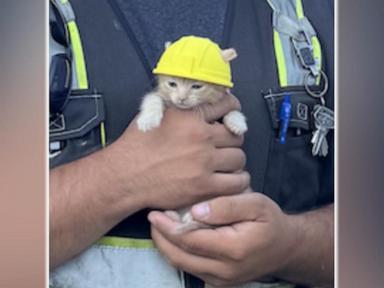
To celebrate its survival, the workers crafted a custom prop. Someone took a scrap piece of hard hat plastic, trimmed it down with utility shears, and fashioned a tiny safety helmet that actually fit the cat's head.
Photos of the kitten sporting its miniature yellow hard hat quickly went viral. People love a good redemption story. But beyond the internet cuteness, gestures like this highlight the human element of heavy industry. Construction workers deal with strict deadlines, harsh weather, and dangerous conditions daily. Taking ten minutes to craft a tiny helmet for a rescued stray shows a softer side of the trade that rarely makes the news.
What to Do If You Find Animals on a Job Site
If you work in construction or trades, you will eventually encounter wildlife in places it shouldn't be. Knowing how to react keeps both you and the animal safe.
Never pull an animal out of a running machine. Wait until all parts are completely powered down and cool to the touch. Hot exhaust pipes cause severe burns to small paws and fur within seconds.
Check your local resources before panicking. Keep the numbers for local animal control, humane societies, and wildlife rehabilitators saved in your phone. If you find a newborn kitten, don't assume it is abandoned immediately. Mother cats often leave kittens hidden while hunting. Watch the area from a distance for at least a couple of hours.
If the mother doesn't return, or if the animal is in immediate danger like an active excavation pit, step in. Provide a warm, safe box, some fresh water, and a quiet space away from heavy equipment until professionals can take over.
Why Job Site Rescues Matter
Stories like this resonate because they remind us of empathy in high-stress environments. Construction sites aren't just about concrete, steel, and schedules. They are run by people who care about the living creatures sharing their workspace.
That tiny kitten didn't ask to be born under the treads of an excavator. But because a watchful operator listened closely and a creative crew built a custom helmet, it got a second chance at life. Keep your eyes open on site. You never know what you might find hiding in the dirt.