A single text message in the summer of 2025 changed everything we knew about New England's coastline.
El Fernekees Hartshorn, a recent graduate from the University of Rhode Island, was walking on Spectacle Island in Boston Harbor. She spotted a clam that looked out of place, snapped a quick photo, and texted it to marine scientist Aly Putnam.
That text set off a scramble among local marine biologists. Up until that moment, the Atlantic coast of the Northeast United States was the last major stronghold in the Northern Hemisphere free of Manila clams.
Now, that streak is officially over.
In a study published in the journal Biological Invasions, a collaborative team of scientists from UMass Amherst, MIT Sea Grant, and the Center for Coastal Studies confirmed that the Manila clam (Ruditapes philippinarum) has established reproducing colonies in New England. They are breeding in Boston Harbor, Quincy, and all the way down to Cape Cod.
While headlines scream about an ecological disaster, the reality of this invasion is far more complicated, surprisingly tasty, and incredibly educational.
The $7 Billion Dollar Paradox
The Manila clam is not some obscure, sludge-dwelling bivalve. It is a global superstar. It is sweet, tender, and the star ingredient in classic dishes like pasta alle vongole or steaming bowls of clam chowder. Globally, the farming and harvesting of this single species is a massive $7 billion-per-year industry.
The species is native to a stretch of the Pacific running from southern China up through Japan to Russia's Sakhalin Island. Because people love to eat them, humans have spent the last century deliberately and accidentally introducing them to the Pacific coast of North America and across Europe.
But New England’s cold waters remained untouched. For decades, local marine experts assumed the region’s harsh winters or native ecosystem dynamics kept them at bay.
We now know that is no longer the case.
How Scientists Proved It Was a Real Invasion
When James T. Carlton, an emeritus professor of marine sciences at Williams College, first heard rumors of Manila clams in Boston Harbor, he was skeptical. He knew that people buy these clams at seafood markets all the time. A few empty shells on a beach usually just mean someone had a nice clambake and tossed the trash over their shoulder.
He gave the research team a direct challenge: "Find me living clams." Specifically, he wanted to see babies and signs of active reproduction.
The team went to work. They spent hours digging through the mud and sifting sediment.
- At Squantum in Quincy and Calf Pasture Park in Boston, researchers used fine sieves to pull up dozens of tiny, live juvenile clams.
- On Cape Cod, researchers led by Owen Nichols at the Center for Coastal Studies analyzed female Manila clams and found clear, undeniable evidence that they had recently spawned.
- Sightings have popped up on citizen science databases like iNaturalist, with reports stretching as far north as Salem Sound.
Finding juveniles and actively reproducing adults means these clams are not just visiting. They have moved in, bought the house, and started raising a family.
Why Environmentalists Are Worried
Any time a new species moves into an ecosystem, it creates friction. Manila clams do not need to be aggressive predators to cause trouble. They are filter feeders, meaning they pump water through their bodies to strain out microscopic algae and nutrients.
Because they grow fast and reproduce efficiently, they can easily crowd out native shellfish. New England’s famous softshell clams and quahogs rely on the exact same food sources. If Manila clams take over the prime real estate in muddy intertidal zones, native species could find themselves starved of nutrients and squeezed out of their natural habitats.
There is also the risk of hybridization. Manila clams are closely related to other bivalves, and cross-breeding could alter the genetics of local populations in unpredictable ways.
The Weird Silver Lining for New England Predators
Biologists are pointing out a bizarre potential benefit to this invasion. It has to do with another notorious, long-established invader: the European green crab.
Green crabs have wreaked havoc on New England’s native softshell clams for decades, crushing young shells and decimating local wild harvests. Manila clams might end up acting as an ecological shield.
Because Manila clams live in high densities and have relatively thin shells when young, they are an easy target for predators. If green crabs, raccoons, and hungry seabirds start gorging themselves on the newly abundant Manila clams, they might actually reduce the pressure they put on native softshell clams.
It is a classic "enemy of my enemy" scenario. Marine scientists are eager to see if this buffer effect helps native species bounce back or if the sheer volume of new clams simply fuels an explosion in the green crab population.
What Happens Next for Clammers and Coastal Managers
We cannot undo this invasion. Eradicating a marine bivalve once it has established breeding populations across hundreds of miles of coastline is virtually impossible.
Instead of panic, we need smart management. Here is what needs to happen right now:
1. Identify and Report New Sightings
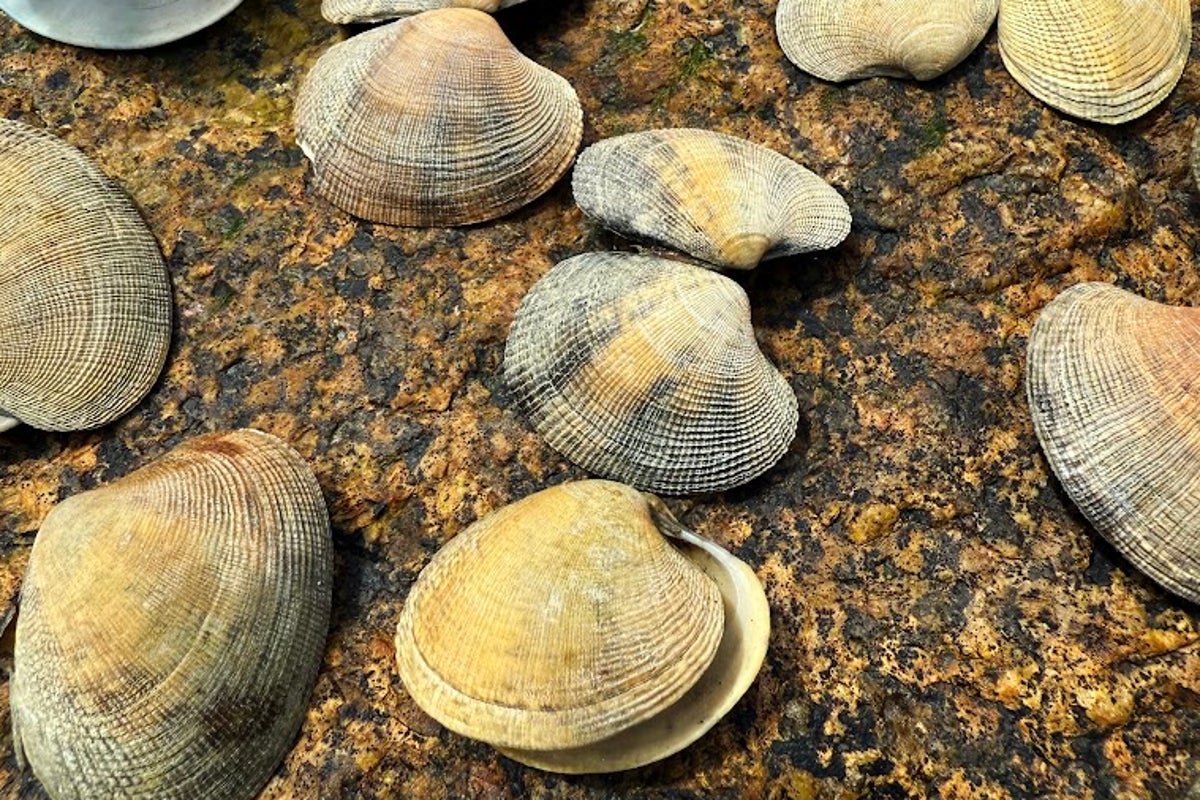
If you are a recreational digger, a commercial clammer, or just someone who loves walking the beaches of New England, keep your eyes open. Manila clams look different from native softshell clams. They have a more rounded, oval shape with distinct radiating ridges crossing over concentric growth rings, often showing beautiful, intricate patterns of browns, grays, and yellows. If you find a live one or a fresh shell, take a clear photo and upload it to iNaturalist. Local Sea Grant programs are actively monitoring these uploads to map the expansion.
2. Standardize Harvesting Regulations
Currently, Manila clams are perfectly safe and legal to eat, provided they are harvested from clean waters approved for shellfish collection. State agencies in Massachusetts need to quickly clarify the rules. Can commercial diggers target them? Do they count toward recreational catch limits? Setting clear guidelines early will help manage their numbers through targeted harvesting.
3. Fund Long-Term Monitoring
We need to know how fast these populations are growing. The state needs to back research teams at UMass Amherst and MIT to run yearly population surveys. Understanding whether warming Gulf of Maine waters are accelerating this spread is vital for protecting the wider New England seafood economy.
This newcomer is officially a resident of the Atlantic. Whether it becomes a dominant ecological force or just another quiet neighbor depends entirely on how quickly we adapt our coastal management to meet it.