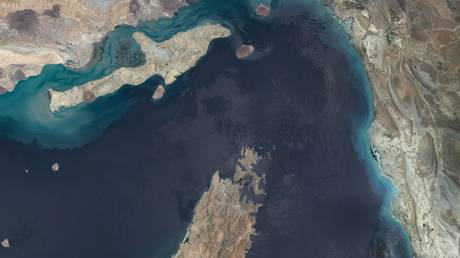
If you think the chaos in the Strait of Hormuz is just another temporary blip in Middle Eastern shipping, you're missing the bigger picture. The reality on the water today is far grimmer than the headlines suggest. The fragile June truce is dead, civilian vessels are taking direct hits, and the world's most critical energy chokepoint is grinding to a halt once again.
Let's get straight to the point. The brief period of relief we saw in late June, when oil tanker transits briefly ticked back up, was a mirage. By July 14, 2026, the maritime highway connecting the Persian Gulf to the global economy has turned back into a shooting gallery.
If you are trying to understand where global energy markets, shipping rates, and military actions are heading next, you have to look past the political theater in Washington and Tehran.
Why the June Truce Collapsed So Fast
To understand the current mess, we have to look at what went wrong with the June 17 interim agreement. Signed in the wake of devastating US and Israeli airstrikes that decimated Iran’s air defenses and left their political leadership in shambles, the deal was designed to buy time. Under the agreement, the US lifted its crippling port blockade, allowing Iran to export millions of barrels of stranded crude. In exchange, Tehran was supposed to guarantee safe passage through the strait.
It didn't last three weeks.
The truce was built on a fundamental misunderstanding of Iran's post-war strategy. Even with a shattered navy and a ruined domestic economy, the Islamic Revolutionary Guard Corps (IRGC) still holds one massive card: geographic proximity to a 21-mile-wide bottleneck. They used the shipping window to quickly move over 34 million barrels of stockpiled crude out of the Gulf. Once their immediate cash flow was secured and the supreme leader's funeral concluded, the IRGC reverted to its default playbook.
They struck first on July 7, targeting commercial vessels near the coast of Oman. By July 11, the attacks turned deadly, with an Emirati-owned tanker taking a direct missile strike that killed a merchant mariner.
Tehran’s logic is simple. If they can't secure long-term relief from Western pressure, they will make sure no one else in the Gulf can export oil either. It is a classic "if we burn, you burn with us" strategy.
The Cold Hard Numbers of the Standstill
A lot of commentators are still talking about the strait as if it is open for business. It isn't. The data paints a terrifying picture for global logistics.
During the peak of the July reopening, Kpler tracked roughly 38 to 43 cargo vessels transiting the strait daily. Today, that number has collapsed. MarineTraffic reported a staggering 52% drop in vessel activity through the strait in the second week of July.
Shipowners aren't stupid. They aren't going to risk a $100 million vessel and the lives of their crew for standard freight rates. Insurers have responded by pulling coverage or raising war-risk premiums to astronomical levels.
Some vessels are still trying to run the gauntlet. Interestingly, data shows that while traffic using the US-backed southern shipping lane near Oman has dried up due to Iranian missile strikes, several tankers continue to hug the Iranian coast. These are primarily ships carrying Iranian crude or vessels linked to nations that Tehran wants to keep on its good side. For everyone else, the passage is effectively closed.
Trump's Guardian Play and the Toll Controversy
The political response from the White House has been loud, aggressive, and highly unpredictable.
On July 13, President Trump declared that the US was reinstating its full naval blockade on Iranian ports. In the same breath, he announced on social media that the US would now act as the "Guardian of the Strait of Hormuz". He floated a radical proposal: a mandatory 20% toll on all commercial cargo transiting the waterway to reimburse the US military for its escort operations.
The shipping industry went into a panic. The UN's international shipping regulators immediately rejected the idea, pointing out that charging compulsory tolls on international straits violates maritime law.
By July 14, the White House backed away from the toll threat. The administrative nightmare of enforcing a tariff on thousands of global merchant ships—combined with furious pushback from European allies and Gulf partners—made the idea dead on arrival.
However, the military blockade on Iranian exports is very real. US Navy assets are actively turning away or seizing ships bound for Iranian terminals. The military has also launched fresh waves of airstrikes against Iranian missile sites on Qeshm Island and port facilities in Bushehr and Bandar Abbas to suppress Tehran’s launch capabilities.
The Asymmetric Nightmare of Strait Defense
We often hear about the overwhelming firepower of the US Navy. While a US carrier strike group can easily win a conventional battle, the Strait of Hormuz is not a conventional battlefield.
Iran does not need a massive blue-water navy to close the strait. In fact, most of their conventional navy is already sitting at the bottom of the Gulf. Instead, they rely on three highly effective asymmetric tools.
Naval Mines
Iran possesses thousands of sea mines, including smart mines that can distinguish between military and civilian acoustic signatures. Sweeping these mines in a narrow, shallow waterway while under fire is a slow, incredibly dangerous process.
Drone and Missile Swarms
Using small, cheap, one-way attack drones and anti-ship cruise missiles launched from highly mobile, truck-mounted launchers, Iran can overwhelm the air defense systems of transit vessels and their escorts.
GPS Spoofing and Electronic Jamming
By manipulating civilian GPS signals, Iranian electronic warfare units have repeatedly forced commercial vessels to drift off-course into Iranian territorial waters, creating easy pretexts for illegal boardings and seizures.
The US military's attempt to establish "Project Freedom"—a convoy escort system—has struggled to scale. Escorting a handful of tankers is possible, but protecting the hundreds of cargo ships that need to pass through every week is an operational impossibility.
What Happens Next on the Water
The crisis is entering a highly volatile phase. With the toll proposal discarded but the physical blockade tightly enforced, the immediate path forward requires concrete action from shipping operators and energy analysts.
Here is what you need to prepare for right now.
- Reroute immediately if you can. If you have cargo that can bypass the Gulf via the East-West pipelines in Saudi Arabia or the land routes through the UAE, use them now. The capacity is limited, but it is the only way to guarantee your cargo avoids the shooting gallery.
- Expect Brent crude to remain highly volatile. With 20% of the world’s oil supply bottlenecked, prices will continue to spike on every fresh report of a tanker strike. Do not plan your fuel budgets around pre-war baseline prices.
- Do not rely on informal "safe passage" promises. Iran’s regional diplomacy is highly fragmented. A green light from one diplomatic channel does not mean an IRGC speedboat commander won't launch a drone at your hull tomorrow.
The Strait of Hormuz is no longer a shared global waterway governed by international law. It is a militarized zone where the rules change daily, and anyone transiting its waters is playing Russian roulette with global energy supply.