The illusion of a quiet Middle East just shattered.
If you thought the ceasefire brokered just weeks ago would hold, the events of the last twenty-four hours have given you a cold, hard dose of reality. The Islamic Revolutionary Guard Corps (IRGC) did not just cross a line; they drew a brand new one in the sand. By launching "Operation Nasr 2," Tehran directly targeted American military assets in Bahrain and Kuwait, bringing the region closer to an all-out, direct war than at any point in recent memory.
Let's cut through the official press releases and diplomatic talk. This is not just another proxy skirmish. This is a direct, coordinated attempt by Iran to challenge the entire security architecture of the Persian Gulf.
The Sudden Death of a Fragile Ceasefire
The backdrop to this sudden escalation makes the situation even more volatile. Only a few weeks ago, the United States and Iran signed a memorandum of understanding (MoU) designed to stop the cycle of violence. That peace deal had a 60-day window to iron out the massive sticking points: shipping access through the Strait of Hormuz, the removal of US blockades, and the status of Iran's highly enriched uranium stockpile.
It did not last.
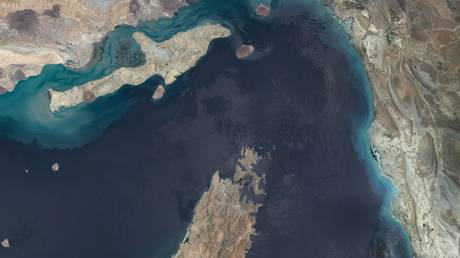
The trouble started when Iranian-backed forces allegedly targeted commercial shipping in the Strait of Hormuz, including an attack on the Singapore-flagged cargo ship M/V Ever Lovely and a Panama-flagged tanker, the M/T Kiku. The US Central Command (CENTCOM) wasted no time. On July 13, US forces conducted a massive, five-hour bombing campaign along Iran's southern coast, hitting military targets in Bushehr, Chah Bahar, Jask, Konarak, Abu Musa, and Bandar Abbas.
CENTCOM wanted to degrade Iran's ability to threaten global shipping.
Iran’s response was swift, aggressive, and highly organized.
Instead of hiding behind regional proxies like they usually do, the IRGC claimed direct responsibility. Under the banner of Operation Nasr 2, they launched waves of ballistic missiles and suicide drones directly from Iranian territory at US bases in neighboring Gulf states.
What the IRGC Targeted in Bahrain and Kuwait
Tehran is running a sophisticated public relations operation alongside its military campaign, releasing highly detailed lists of the assets they claim to have destroyed. While independent verification is hard to come by, the targets they selected show a deep understanding of US operational vulnerabilities.
Sheikh Isa Air Base and Juffair Base in Bahrain
Bahrain hosts the headquarters of the US Navy’s Fifth Fleet, making it the crown jewel of American naval power in the region. The IRGC claims it hit this presence hard.
According to official IRGC statements, the second wave of Operation Nasr 2 targeted the Al Juffair military installation and Sheikh Isa Air Base. The specific assets targeted reveal the level of detail in Iran's battle plans:
- P-8 Electronic Warfare Hangars: The IRGC claimed to have struck hangars housing P-8 Poseidon maritime patrol and electronic warfare aircraft at Sheikh Isa, which are essential for tracking Iranian submarines and minelaying vessels.
- Drone Command and Control Centers: Iran claimed a direct strike on a US drone command hub in Bahrain.
- Radar Systems and Air Defenses: IRGC Statement No. 8 boasted about disabling a Patriot missile defense radar, the Fifth Fleet's air control radar, and a C-RAM early-warning radar system.
- Fuel Depots: The Iranians claimed that fuel storage facilities at Port Salman caught fire during the strikes.
Ali Al Salem Air Base in Kuwait
Kuwait hosts thousands of American service members and serves as a vital logistics hub. During the third wave of Operation Nasr 2, the IRGC turned its attention northward.
Iran claims its missile and drone swarm successfully targeted the deployment ramp for US MQ-9 Reaper drones at the Ali Al Salem Air Base. The IRGC claims several of these high-value, multi-million-dollar surveillance drones were either damaged or completely destroyed on the tarmac.
The Expanding Regional Footprint
The operation did not stop at Bahrain and Kuwait. In a telling sign of how broad this conflict has become, the IRGC also announced strikes against an airbase in Jordan. They claimed this Jordanian facility was being used by American forces to launch strikes against Iran.
While the IRGC was targeting US installations, their naval forces were also busy in the Strait of Hormuz. They targeted and disabled two supertankers that they claimed were trying to bypass their maritime regulations with their transponders turned off.
Separating Iranian Propaganda from Reality
You have to take battlefield claims from Tehran with a massive grain of salt.
The IRGC wants its domestic audience and regional allies to believe that they have crippled American capabilities in the Gulf. They claim to have completely wiped out air defense radars, drone ramps, and command facilities.
The reality on the ground is likely much different.
While Kuwait and Bahrain did sound air raid sirens and activate their air defenses, the damage reports from the ground do not match Iran's dramatic claims. In Kuwait, officials reported that air defense systems successfully intercepted the bulk of incoming drones and missiles, resulting in no major damage or casualties. In Bahrain, authorities reported that an Iranian drone managed to strike a residential building near the international airport. While it caused property damage, it did not hit the Fifth Fleet headquarters, and no one was killed.
But don't let the high interception rate fool you.
Even if 90% of the missiles and drones were shot down, the strategic victory for Iran lies in the attempt itself. They proved that they can coordinate simultaneous, multi-front strikes against heavily defended US bases across three different sovereign nations (Bahrain, Kuwait, and Jordan) while simultaneously choking the Strait of Hormuz.
Why This Strategic Shift Matters
This is a massive departure from the old rules of engagement. For decades, Iran operated under a doctrine of plausible deniability. They let the Houthis in Yemen, Hezbollah in Lebanon, or various militias in Iraq do the dirty work.
Now, the gloves are off. By claiming these strikes directly, the IRGC is sending a series of deliberate messages to Washington and the global community.
1. The Threat of the Energy Chokehold
The IRGC explicitly warned that if the US continues its military campaign, they will ensure that "not a single drop of oil or gas will be exported from the region". This is not an empty threat. The Strait of Hormuz handles roughly a fifth of the world’s petroleum liquids. By mining the channels and disabling tankers, Iran is holding the global economy hostage to force the US to back down.
2. Testing the Trump Administration's Resolve
This escalation is a direct test of US President Donald Trump and Vice President JD Vance. Vance, the administration’s chief negotiator on the conflict, was quick to lay the blame entirely on Tehran. He publicly stated that while the US honored the ceasefire, "violence will be met with violence". Trump went further, warning that the US might be "forced to militarily complete the job".
Iran is betting that the American public has no appetite for another long, grinding war in the Middle East. By striking US assets directly, they are daring Washington to escalate further, hoping the threat of a global energy crisis will force the US to the negotiating table on Iranian terms.
3. Putting Host Nations in a Bind
By striking bases in Kuwait and Bahrain, Iran is punishing its neighbors for hosting American military personnel. These Gulf nations are caught in an impossible position. They rely on the US for security, but hosting US bases now makes them direct targets for Iranian missiles. Tehran is trying to drive a wedge between Washington and its regional allies.
How to Read the Next Move
The situation is incredibly fluid, but you can expect several immediate developments.
First, look for a surge in global oil prices. Even if the actual physical flow of oil is only temporarily disrupted, the risk premium on shipping through the Persian Gulf is going to skyrocket. Insurance rates for tankers will soar, and some shipping companies may refuse to enter the Gulf altogether.
Second, watch the deployment of American air defenses. CENTCOM already has over 50,000 service members in the region, but they will need to rapidly reinforce Patriot and C-RAM batteries around key bases in Kuwait, Bahrain, and Saudi Arabia to handle the threat of saturated drone swarms.
Finally, expect the diplomatic track to freeze completely. The 60-day window to finalize the peace deal is practically dead. Iran has threatened a "complete halt" to all negotiations if US strikes continue, and the Trump administration cannot afford to look weak in the face of direct attacks on American troops.
The region is on a knife-edge. The transition from a shadow war to a direct, state-on-state conflict is no longer a hypothetical scenario. It is happening right now.
If you are tracking these developments, keep your eyes on the daily shipping schedules in the Strait of Hormuz and the official CENTCOM deployment notices. They will tell you far more about where this conflict is heading than any diplomatic press release ever could.