You've probably heard the dramatic headlines. Cambodia is building a massive, $1.7 billion canal to break free from Vietnam's economic grip. Western analysts warn that the project is a Trojan horse for the Chinese military. Regional neighbors are sweating over environmental impacts, and geopolitical forums are treating Phnom Penh like a pawn on a global chessboard.
But most of these hot takes miss the point.
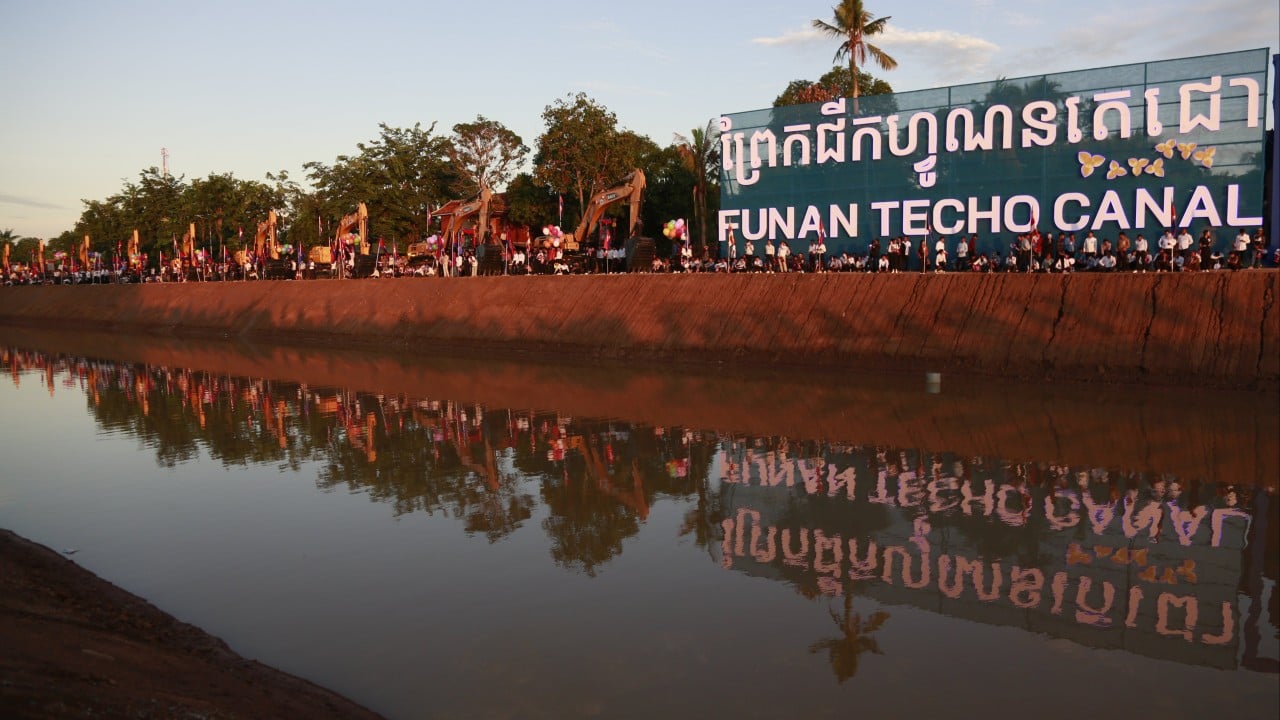
Cambodia's push for self-reliance isn't just about escaping Vietnam's transit fees or pleasing Beijing. It's about survival. For decades, Cambodia has been a transit captive. It relies on foreign ports to ship its own garments and agricultural goods to the world. The Funan Techo Canal, which broke ground on its massive second section on April 11, 2026, is a physical attempt to rewrite this vulnerability.
Yet, concrete can't solve every geopolitical headache. You can dig as many canals as you want, but you can't dredge your way out of your geography. If Phnom Penh relies purely on infrastructure to assert its independence while ignoring the delicate art of regional diplomacy, it risks trading one dependency for another.
The Illusion of Concrete Sovereignty
There's a common trap in developing economies. Leaders often think that building megaprojects automatically translates to national sovereignty.
We see this playing out right now in Cambodia. The country is in the middle of a massive logistics overhaul. They are upgrading the Sihanoukville deep-sea port. They are expanding Kampot's port facilities. And, of course, they are digging the 172.6-kilometer Funan Techo Canal.
On paper, the economic math looks brilliant.
- The canal will connect the Phnom Penh Autonomous Port directly to the Gulf of Thailand.
- It cuts out the long, costly detour down the Mekong River through Vietnam's Cai Mep port.
- Officials project a massive 70 percent reduction in Cambodia's dependence on Vietnamese ports.
- The first-year revenue is estimated at $88 million, scaling up to $570 million annually by 2050.
It sounds like a done deal. But infrastructure is only as good as the political stability surrounding it. Cambodia's leadership, now led by Prime Minister Hun Manet, is betting big on these physical links. They want to turn the country from a passive recipient of regional trade into an active architect.
But there's a catch.
Building a giant ditch through four provinces—Kandal, Takeo, Kampot, and Kep—requires massive amounts of capital. Originally, the story was that the China Road and Bridge Corporation would fund the entire thing under a build-operate-transfer scheme. That narrative quickly shifted when local authorities realized the optics of a 100 percent foreign-funded strategic waterway looked terrible.
Now, the ownership structure sits at 51 percent Cambodian-owned and 49 percent Chinese-funded. It looks better on a press release. But don't let the percentages fool you. Cambodia is still heavily reliant on Chinese engineering, machinery, and financial backing to get the dirt moving. True independence is hard to buy when someone else is holding the checkbook.
The Vietnam Dilemma and the 70 Percent Shift
To understand why Cambodia is so obsessed with this canal, you have to look at its historic relationship with Vietnam.
For years, if a Cambodian factory owner wanted to ship a container of T-shirts to Europe or the US, that container had to travel down the Mekong, cross the border into Vietnam, and load onto a ship at Cai Mep. This wasn't just expensive. It was a strategic choke point.
Every time border tensions flared, or customs regulations tightened, Cambodian exporters held their breath.
The Funan Techo Canal aims to change that dynamic. By creating an internal waterway capable of handling vessels up to 3,000 deadweight tonnes in the dry season and 5,000 in the rainy season, Cambodia can bypass its neighbor entirely. It's a massive middle finger to regional transit monopolies.
But bypassing a neighbor doesn't make them disappear.
Vietnam has raised serious environmental and security concerns. Hanoi worries that the canal will divert water from the Mekong Delta, which is already struggling with severe salinity intrusion and freshwater shortages. Farmers in southern Vietnam are terrified of crop failures. While Phnom Penh insists the canal will only draw a tiny fraction of the river's flow, the trust isn't there.
If Cambodia pushes forward without addressing Hanoi's fears, the diplomatic fallout could cost more than any transit savings. You don't build security by making your neighbor insecure.
The Cost of Bypassing Neighbors
Let's talk about Thailand.
While Cambodia is trying to manage its complex relationship with Vietnam, things on its western border haven't been smooth sailing either. A territorial dispute with Thailand over maritime borders broke out into brief armed clashes in late 2025, reminding everyone how fragile Southeast Asian peace can be. Although a ceasefire was signed, tensions linger over lucrative offshore gas reserves in the Gulf of Thailand.
This is the ultimate irony of Cambodia's current strategy.
The country is building a canal to reach the Gulf of Thailand, yet its relations with the major power in that same gulf are highly volatile. What good is a sovereign waterway if it empties into a disputed maritime zone where your Navy is outmatched?
This is where the pure "infrastructure-first" mindset falls apart.
Cambodia is desperately trying to connect itself to global trade lanes, but it's doing so while fraying its relationships with the very countries that border those lanes. It's a classic case of prioritizing physical connectivity over diplomatic connection.
Land, Compensation, and the Real Human Cost
Step away from the high-level geopolitics for a second. Let's look at what's happening on the ground.
While the second section of the canal kicked off construction in April 2026, local communities are facing massive disruptions. Thousands of families live along the 172.6-kilometer route. They are facing displacement, lost farmland, and shattered livelihoods.
Many residents are stuck in a painful state of limbo. They know the canal is coming, but compensation packages are slow, opaque, and highly contested. In provinces like Kandal and Takeo, locals complain that they haven't received clear answers about where they will go or how they will survive once their ancestral land is dug up.
If the government wants this project to be a symbol of national pride, it cannot treat its own citizens as collateral damage. A nation isn't strong because it has a deep canal; it's strong because its people are secure. Ignoring the domestic social cost to speed up construction for foreign investors is a recipe for internal instability.
Why Soft Diplomacy Beats Hard Infrastructure
So, what's the path forward?
Cambodia needs to realize that true independence isn't about isolation. It's about balance.
Instead of treating the Funan Techo Canal as a weapon to sever ties with Vietnam, Phnom Penh should use it as a bargaining chip to negotiate better regional trade terms. They need to build diplomatic bridges with the same intensity they use to construct concrete locks and sluices.
That means:
- Opening up data sharing: Don't just dismiss Vietnam's water concerns. Provide transparent, real-time hydrological data from the canal's operations to prove there's no harm to the Mekong Delta.
- Resolving the Thai maritime dispute: Use international arbitration or joint development agreements to turn the Gulf of Thailand from a conflict zone into a shared economic engine.
- Diversifying investment: Stop relying solely on Chinese state-backed firms. Invite European, Japanese, and regional ASEAN investors to build the logistics parks and special economic zones along the canal corridor.
If Cambodia plays its cards right, this massive canal can be a tool for regional integration rather than a source of division. But if they keep playing a zero-sum game of logistics dominance, they might find themselves isolated in a very crowded neighborhood.
The heavy machinery will keep digging, and the dirt will keep piling up. But the real test of Cambodia's future won't happen in the muddy trenches of the canal. It will happen in the quiet diplomatic meeting rooms of Hanoi, Bangkok, and Jakarta.