Late November hits western Gujarat, and suddenly a seemingly barren salt desert starts breathing in pink, white, and silver. Flocks of migratory birds begin arriving in the Little Rann of Kutch as daytime heat softens and seasonal wetlands hold shallow, mineral-rich water around pockets like Tundi pond and the Bajana edges. Local reports at the end of November 2026 note tens of thousands of birds gathering across these marshes, turning a stark expanse of mud and brine into one of India's most dramatic winter staging grounds.
If you've only ever seen photos of cracked white salt pans, the Little Rann can catch you off guard. Honestly, it's not a lifeless desert at all. It's a shifting hybrid of salt flat, seasonal wetland, and raised bet islands that rises and dries on a rhythm set by monsoon rain, river runoff, and tide-linked salinity.
When winter settles in across Central Asia, the Himalayas, and northern latitudes, birds move south along major flyways toward warmer feeding grounds with enough open water and food to last through the cold months. The Little Rann sits right along that western Indian corridor, offering shallow water for filter-feeders and waders, open flats for cranes and raptors, and quiet pockets away from constant crowds.
What Makes the Little Rann of Kutch Work for Winter Birds
Birders love to treat a sanctuary like a simple checklist, yet the Little Rann of Kutch works because of a delicate hydrological balance that shifts month by month. After monsoon rains and inflows from surrounding rivers flood low-lying stretches, the water slowly recedes into shallow pools, creeks, and brackish pans. That receding water concentrates invertebrates, algae, small fish, and aquatic plants at depths where long-legged birds can wade without swimming.
Greater and lesser flamingos get plenty of press—and fair enough, watching hundreds of pink-and-white birds lift off together never gets old—but they're only part of the picture. Over winter, you can also spot cranes like common and demoiselle cranes, pelicans, ducks, shorebirds, and raptors sweeping over open scrub and salt margins. Alongside them live resident wildlife such as the Indian wild ass (Equus hemionus khur), which makes the area even more unusual because you're scanning for waterbirds on one side and desert equids on the other.
There's a common misconception that birds arrive on a strict calendar date every year. In reality, timing shifts with rainfall patterns, water retention in specific ponds, and how fast cold snaps push birds south. If a pocket dries early or stays too deep, flocks move between wetlands across Kutch and Saurashtra rather than staying locked in one spot.
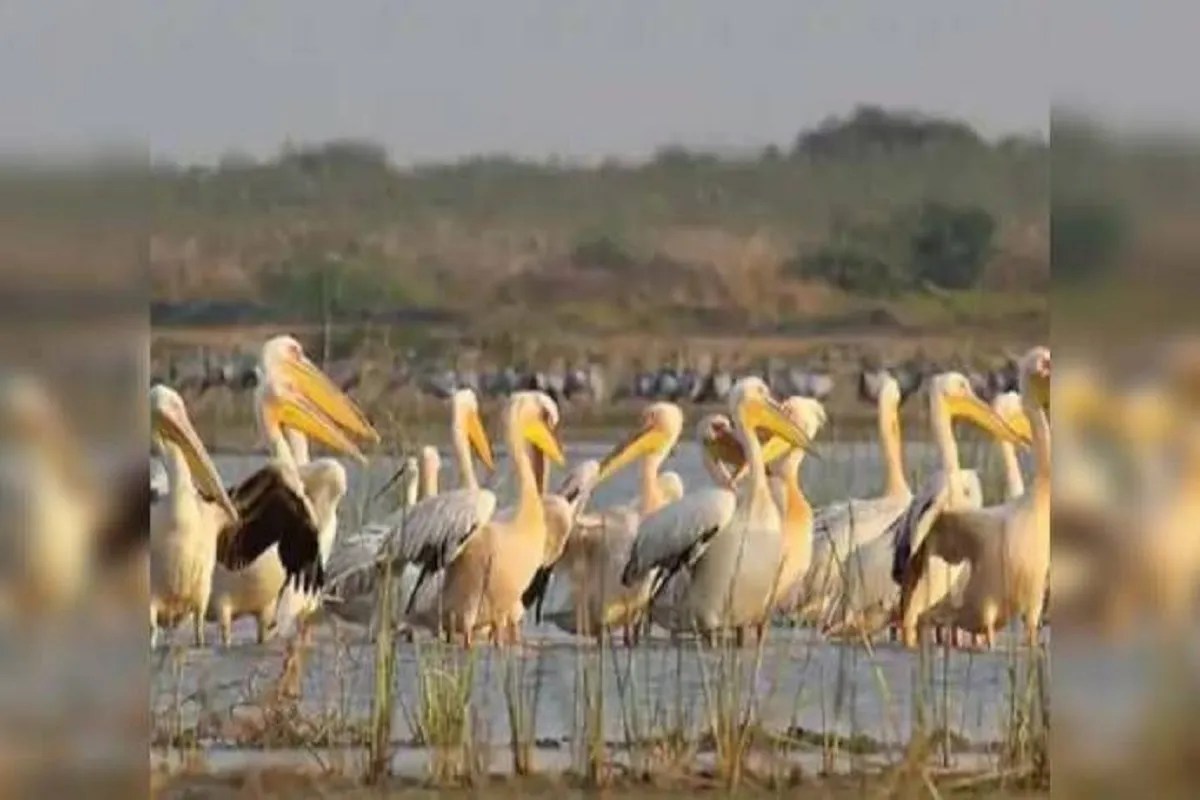
Look closely at how those long legs and curved bills handle the margins in the photo above. Shallow, calm water lets waders feed steadily while keeping an eye out for movement across open flats.
The Friction Nobody Mentions on a Birding Trip
Going to the Rann sounds effortless until you actually plan the logistics. Distances across the flats are deceptive, tracks change with moisture, and a spot full of birds at dawn can look quiet by midday once heat shimmers rise and flocks shift toward shaded edges or deeper pools.
Salt extraction and human activity add another layer of complexity. Gujarat's salt industry is woven into the regional economy, and conservation researchers studying the Rann have long pointed out pressures like habitat fragmentation, vehicular disturbance, power lines in flight corridors, and changing water flows. That tension isn't simple good-versus-evil; local livelihoods and wildlife survival collide on the same ground, which is why regulated zones, designated tracks, and guided visits matter so much.
Another mistake visitors make is treating the Little Rann and the Great Rann as interchangeable quick stops on a rushed itinerary. They sit in the same broader Kutch region, sure, yet the habitats, access points, and travel times differ enough that cramming both into a single hurried day usually means spending half your trip staring out of a car window.
How to Plan a Smarter Visit Without Missing the Action
If you're heading out for winter birding, keep expectations grounded and build flexibility into your days. Numbers can surge dramatically as winter deepens, and single-day snapshots only tell part of the story.
- Book official permits early: Entry into protected parts of the Wild Ass Sanctuary requires proper permits and fees through authorized channels, so don't show up expecting to wing it at every gate.
- Work with a local guide: Experienced local drivers and trackers know which water pockets currently hold birds, how to read soft or salty ground safely, and how to position vehicles without flushing flocks.
- Chase early and late light: Start right around sunrise and return in the late afternoon, using the warmer midday hours to rest, check notes, or scout dry scrub edges for raptors and desert species.
- Pack for sharp temperature swings: Mornings near open wetlands and salt flats can feel chilly, while midday sun reflects hard off pale ground—bring layers, a good hat, sun protection, and optics with enough reach for wide mudflats.
- Keep a respectful distance: Never drive straight into feeding flocks or push birds into flight just to get a fuller frame; calm birds stay longer and behave naturally.
You can check regional context through Gujarat Tourism and look up site profiles via Key Biodiversity Areas before locking in dates. Pick two or three mornings in the field rather than rushing in and out, stay on permitted tracks, and give the salt flats enough time to show you their quieter shifts.