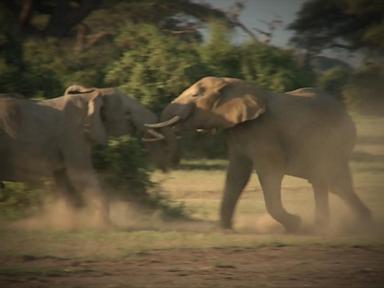
A Swiss hiker is dead after wild elephants charged a tour group in Cameroon, leaving other trekkers injured and scrambling for cover in dense brush. Reports following the incident near Mount Cameroon National Park noted that some hikers hid for hours while park staff and military personnel worked to recover the body and bring the group out.
That kind of headline stops you cold. Most travelers picture walking treks as gentle, slow-paced, and somehow safer than hopping into a roaring safari truck.
They're wrong. On foot, you have zero metal armor between you and a multi-ton animal that can outrun a sprinter in thick vegetation. And in dense forest habitats, you often don't see an elephant until it's already a few paces away.
What Hiking Near Wild Elephants Actually Looks Like on the Ground
People who haven't walked through elephant country tend to imagine wide-open savanna grass where you can spot danger from a mile off. That's rarely how forest treks play out.
Around Mount Cameroon—which rises above 4,000 meters as the highest peak in West and Central Africa—and across other forested reserves, terrain can be steep, tangled, and visually tight. Sound travels strangely in thick foliage and wind. An elephant moving quietly through undergrowth can be right next to a trail before anyone hears a branch snap.
According to coverage from The Guardian, the fatal encounter involved Swiss hiker Alain Throo, with British and American tourists also hurt in the charge, and local media pointing to a decade-long pattern of human-elephant conflict in the region. Meanwhile, conservation groups such as Global Conservation estimate roughly 6,000 forest elephants remain in Cameroon, a species listed as critically endangered by the International Union for Conservation of Nature.
When a critically endangered animal is under constant pressure from habitat loss, agricultural expansion, and poaching syndicates, its stress levels aren't static. Cornered, startled, or stressed elephants react fast. A group of hikers chatting along a narrow path can accidentally step into an invisible buffer zone and trigger a defensive charge.
Why Walking Safaris Carry Different Risks Than Game Drives
I've spent plenty of time talking with guides and reading field reports across wildlife destinations, and one pattern shows up again and again. Tourists treat guided walks like nature strolls with a cool photo opportunity tacked on.
A vehicle gives you speed, height, and a physical barrier—though even vehicles get charged if drivers crowd animals or block escape routes. On foot, you're relying on positioning, wind direction, terrain, and split-second judgment.
Three mistakes trip hikers up constantly:
- Treating quiet as safe. Forest elephants are famously stealthy. Just because you don't hear trumpets or crashing trees doesn't mean the area is clear.
- Crowding for a better angle. Stepping off-trail or edging closer for a zoom shot shrinks your reaction time to almost nothing.
- Assuming a guide makes you invincible. Even experienced local trackers work with incomplete information in dense brush, shifting wind, and unpredictable animal movement.
Honestly, a lot of travel marketing makes wildlife trekking look effortless. You see a smiling hiker with a walking stick and think you're just out for exercise. You're actually entering shared territory with wild megafauna that doesn't care about your itinerary.
Reading Warning Signs Before a Charge Happens
Elephants don't always give a neat textbook warning before charging, especially in dense cover or if they feel ambushed. Still, wildlife researchers and conservation authorities repeatedly point to behavioral cues that mean back off right now.
Wide, stiffly held ears. A still or rigid trunk. Intense staring or head-shaking. Stomping, kicking dust, or mock charges. When an elephant is agitated or defensive, standing your ground to film it is a terrible idea.
If you spot an elephant while hiking, the smart move is to stop immediately without yelling or making sudden erratic movements, assess your exit line, and back away calmly using natural cover like large trees or boulders to break line of sight. If a real charge happens, wildlife safety guidelines—including advice published by agencies like Thailand's Wildlife Conservation Office—often emphasize dropping heavy packs so you aren't weighed down and moving diagonally or using terrain features rather than running in a straight, panicked line right in front of the animal.
Even then, no rule guarantees safety against a determined charge in tight brush. That's the part nobody likes admitting: risk isn't zero, even when you do "everything right."
The Bigger Picture Behind Human-Elephant Clashes
Attacks on tourists grab international headlines, yet local communities living beside elephant habitats deal with these tensions year-round. Crops get raided, livelihoods take hits, and elephants lose habitat and numbers.
Conservation research has long highlighted how complicated wildlife tourism is. Studies by organizations such as Oxford's Wildlife Conservation Research Unit and World Animal Protection have shown that tourists often misjudge how wildlife experiences affect animals and conservation. While captive animal entertainment gets plenty of scrutiny, wild encounters carry a different set of stakes: when habitats shrink and people move closer to forest edges, friction rises for everyone.
Data on walking-specific elephant fatalities across every country isn't uniform or always reported the same way, so you shouldn't treat any single number as the whole story. What's clear from field reports is that encounters spike where human foot traffic, farmland edges, and wildlife corridors overlap.
How to Vet a Trek and Hike Smarter in Elephant Country
If you're planning a hike anywhere wild elephants live, don't book on price or hype alone. Ask sharp questions before you pay a deposit.
- Check recent local conditions. Ask whether elephants have been active near the specific trail or park sector recently, and whether any trails or zones have temporary restrictions.
- Verify guide training and group size. Smaller groups are quieter and easier to maneuver quickly. Ask how guides handle sudden wildlife encounters and whether armed rangers or trained park scouts join higher-risk routes.
- Pack light and smart. Keep a daypack easy to ditch if needed, carry water, wear muted earth-toned clothing, and skip loud speakers or bright flashes.
- Respect boundaries without debate. If a guide decides to turn around or reroute because of fresh dung, footprints, or wind shifts, let it go. Turning back is annoying in the moment; getting charged isn't.
- Keep real expectations. A wild elephant sighting is a privilege, never a guarantee. Give them wide berth, keep your voice low, and remember you're a visitor in a place that runs on wild rules.