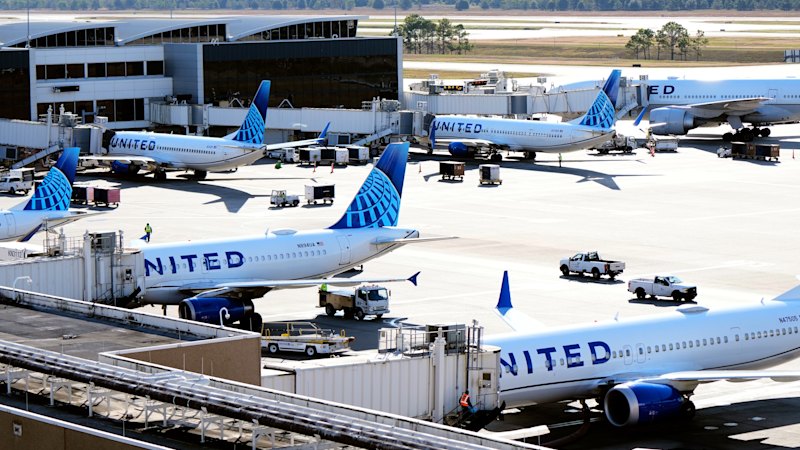
You’re sitting at the boarding gate, coffee getting cold, watching the departure board flip from "On Time" to a grim wall of red cancelations. That was the reality for thousands of travelers caught in the nationwide Federal Aviation Administration ground stop.
When the airspace freezes across the entire United States, people panic. Was it a cyberattack? A massive software glitch? The truth turned out to be far more mundane and infuriating: a routine network upgrade gone wrong at a remote facility.
Transportation Secretary Sean Duffy pointed the finger squarely at defense contractor L3Harris, explaining that technicians were swapping out archaic copper telecommunications lines for modern fiber-optic cables. Somewhere in that messy transition, a router overloaded the system, brought air traffic control communications to its knees, and triggered a safety panic that grounded thousands of flights.
The Copper-to-Fiber Trap
Modernizing American infrastructure sounds great on a PowerPoint slide. The reality on the ground is a fragile patchwork of aging legacy systems interacting with brand-new hardware.
L3Harris has spent years managing critical communication backbones for the FAA. But replacing copper wire with fiber optics isn't like swapping an HDMI cable at home. When you touch decades-old telecommunication networks, unintended feedback loops can happen.
According to federal briefings, the catastrophic error occurred during routine daytime maintenance. Technicians were actively migrating data streams when a router malfunctioned, overwhelming the network architecture.
Government officials quickly ruled out cyberthreats and artificial intelligence failures, narrowing the investigation down to a stark choice: was the hardware itself defective, or did human error during installation cause the overload? Whichever answer the investigation uncovers, the incident exposed how easily a single misconfigured router can paralyze the world’s busiest airspace.
Why The FAA Relies On Contractors
You might wonder why the government relies on defense contractors like L3Harris to manage domestic flight pathways. The simple answer is scale and specialization.
The FAA rarely builds or maintains every proprietary wire and router from scratch. Instead, it outsources critical infrastructure maintenance to massive defense primes that specialize in aerospace electronics and secure defense communications.
These contracts run into the billions, spanning decades. L3Harris inherited deep institutional ties through legacy acquisitions, making them an entrenched fixture of American aviation infrastructure.
When a system fails this publicly, politicians rush to microphones demanding accountability. But firing a contractor or slapping them with fines doesn't fix the underlying vulnerability. The entire ecosystem runs on proprietary tech stacks that few people fully understand outside of the contractors who built them.
The Cascading Cost Of A Five-Hour Freeze
A ground stop doesn't just pause air traffic; it creates a shockwave that lasts for days. When the FAA ordered planes out of the sky, roughly 2,500 airliners were airborne. Air traffic controllers managed a safe, orderly landing for every single aircraft in flight—a massive operational win amid the chaos.
Getting those planes and their crews back to their correct geographic locations is where the system breaks.
A single afternoon shutdown triggers rolling cancelations that cascade across the weekend. Airlines scramble to reposition stranded flight crews, clear gate bottlenecks, and rebook furious passengers.
By the time the FAA cleared the airspace to resume normal operations, travelers faced thousands of delayed or scrapped flights. The economic toll hits regional carriers and major airlines alike, while passengers bear the brunt of lost meetings, missed connections, and wasted vacation days.
What Needs To Change Now
Fixing a broken router is easy; disabling the problematic function on sixty similar routers across the country takes a few hours. Fixing the fragility of American air travel is much harder.
Lawmakers are once again demanding answers and questioning whether multi-billion-dollar modernization funds are actually making skies safer or just lining contractor pockets. If there is an actionable takeaway from the L3Harris incident, it is that critical infrastructure maintenance can no longer be treated like routine IT work.
Critical network transitions should happen during low-traffic windows with rigorous redundancy testing, rather than daytime shifts that risk national gridlocks. Until federal oversight forces contractors to implement foolproof fail-safes, every traveler remains hostage to the next routine maintenance update.