Every July, Kyoto transforms. The humidity spikes, the cicadas scream, and the historic center of Japan’s old capital grinds to a halt. You aren't seeing a tourist trap. You’re witnessing the Gion Matsuri, a ritual that has survived plagues, fires, and the total modernization of Japan for over a millennium.
Most travelers show up for the Yamaboko Junko—the grand procession where massive, multi-ton wooden floats are hauled through the streets. They snap a few photos, complain about the heat, and leave. They miss the point entirely. This festival isn't a performance; it’s a living piece of urban medicine designed to cleanse the city of bad vibes. You might also find this similar coverage insightful: Why Singapore Airlines Just Dethroned Qatar Airways.
The brutal reality of the floats
These aren't just parade props. The floats, known as Yamaboko, are engineering marvels built without a single nail. They use intricate joinery systems held together by ropes and pure physics. When you see one towering over the power lines, remember it’s a 12-ton structure riding on wooden wheels that don't rotate independently.
Steering these beasts is a nightmare. At major intersections, the crew lays down wet bamboo mats to reduce friction. On the command of a chanter, they heave the massive structure sideways in a maneuver called tsujimawashi. It’s tense, loud, and genuinely dangerous. If you’re standing too close, you’ll feel the vibration in your chest. As reported in recent coverage by Lonely Planet, the implications are notable.
There are two types of floats:
- Hoko: The massive, two-story towers topped with long spears (halberds). These are the ones that require dozens of men to steer and house the musicians.
- Yama: Smaller, mobile stages that carry a single life-sized diorama representing a scene from Japanese mythology or history.
It started as a way to stop a plague
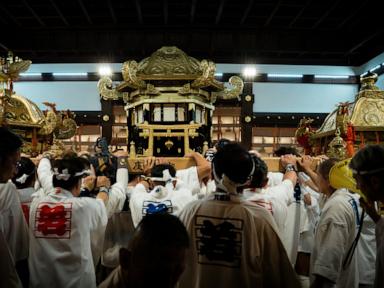
You cannot understand the Gion Matsuri without understanding the Goryo-e ritual. In the year 869, Kyoto was being ravaged by an epidemic. The locals were convinced the spirits of disgruntled nobles were causing the suffering. To appease these angry deities, the emperor ordered 66 halberds—one for each province of Japan at the time—and portable shrines to be carried to the Shinsen-en garden.
The strategy worked, or at least the plague eventually ended. The festival became an annual tradition. Today, the Yasaka Shrine remains the spiritual engine of the event. Even if you never see the main procession, the spiritual heart beats inside the shrine throughout July.
How to actually experience the festival
If you plan to visit, throw out your "sightseeing" itinerary. The Gion Matsuri is a three-week marathon, not a one-day event. The best stuff happens when the sun goes down.
The Yoiyama nights
The three nights leading up to the main processions are called Yoiyama. This is when the streets in central Kyoto close to traffic. The floats are parked at various locations around the Shijo-Karasuma area, fully decorated and illuminated by traditional lanterns.
Neighborhood associations open their doors to display family heirlooms—screens, kimonos, and tea sets—that are usually kept private year-round. This is the Byobu Matsuri (Folding Screen Festival). You can walk directly into these historic townhouses (machiya) and see centuries of history. It feels invasive in the best way possible.
Eat like a local
Don't bother with the restaurants on the main strip. During the Yoiyama nights, the side streets turn into a massive street food festival. Look for:
- Hashimaki: Okonomiyaki served on a chopstick so you can eat it while walking.
- Pickled Cucumber: Served ice-cold on a skewer; it is the ultimate survival food against the Kyoto humidity.
- Taiyaki: Fish-shaped cakes filled with red bean paste, perfect for a quick sugar hit.
Survival rules for 2026
Kyoto in July is a sauna. The heat index regularly hits triple digits. If you aren't prepared, you will tap out by noon.
- Hydrate before you’re thirsty. Grab a pocari sweat or green tea from any vending machine you pass.
- Stake your spot early. For the Yamaboko Junko on July 17th, front-row sidewalk spots are claimed hours before the start. If you want a comfortable view, buy a reserved seat ticket months in advance through the Kyoto City Tourism Association.
- Respect the process. These floats are sacred objects. Don't touch the woodwork, don't climb on the barriers, and please don't get in the way of the neighborhood crews during the tsujimawashi turns.
- Listen to the music. The Gion-bayashi flute and drum music isn't background noise. It’s a rhythmic signal that helps the float crews coordinate their movements.
The Gion Matsuri is messy, loud, and exhausting. It doesn't cater to the polished version of Japan that glossy travel magazines sell. It’s an ancient, neighborhood-driven obsession that refuses to change for the sake of convenience. If you want to see the real Kyoto, show up in July, brave the heat, and follow the sound of the drums.