A courtroom in Damascus just handed down a historic verdict. Ousted Syrian leader Bashar al-Assad has been sentenced to death in absentia.
If you thought the fall of the regime in December 2024 was the final chapter of this brutal conflict, you were wrong. Syria's transitional authorities are now forcing a legal reckoning. The Fourth Criminal Court in Damascus didn't just target Assad. They also condemned his younger brother Maher al-Assad and maternal cousin Atef Najib to death for war crimes and crimes against humanity.
Half a million people died during the fourteen-year war. Now, the judiciary is attempting to put numbers, names, and accountability to that staggering loss.
Inside the Damascus Courtroom
The atmosphere inside the courthouse was heavy. Judge Fakhareddine al-Aryan delivered the verdict during a live-broadcasted session. The court established that Assad functioned as the primary decision-maker behind systematic state-sponsored violence. State agencies, military intelligence, and security apparatuses were weaponized against civilian populations.
While Assad watches from safety in Russia—where he fled after insurgents seized Damascus—others face physical justice. Atef Najib, former head of political security in the southern province of Daraa, stood inside a prison cage during the hearing. Najib became a focal point because his brutal crackdown on teenagers writing anti-government graffiti in Daraa back in 2011 originally sparked the national uprising. Seeing Najib in a prisoner uniform marks a stark visual shift from the decades when the family name guaranteed absolute immunity.
The Legal and Political Reality of In Absentia Trials
Can a trial hold weight when the main defendant is thousands of miles away? Legally, this verdict establishes a formal judicial record. It classifies the actions of the former government under strict international and domestic criminal frameworks. Politically, the ruling serves a different purpose. It signals to millions of displaced citizens and victims' families that the state is officially documenting the atrocities.
Yet, enforcement remains a wall. Russia granted the Assad brothers political asylum after the sudden collapse of the government. Syria's new leadership has formally requested extraditions, but Moscow has shown zero indication it will comply. The death sentence functions as a symbolic anchor for transitional justice. Without custody, execution orders remain on paper.
Why This Verdict Changes the Conversation
For years, skeptics argued that post-regime Syria would slip into lawless vengeance. By setting up formal tribunals, presenting documentary evidence, and allowing public scrutiny, the transitional courts are attempting to project institutional legitimacy. This isn't just about punishing one man. It's about dismantling the culture of impunity that protected the inner circle for over fifty years.
The war left deep scars across every city and village. Mass graves, secret detention facilities, and tens of thousands of missing individuals still haunt the country. Trials like this bring those hidden horrors into public view. Survivors and relatives of victims fill public squares outside courtrooms, looking for closure that a single verdict can rarely provide on its own.
The legal proceedings have only just begun. Other high-ranking military and security officials remain on trial, facing scrutiny for their roles in sieges, chemical attacks, and systematic torture.
Watch how international actors respond to these rulings. The pressure on harboring nations will grow as domestic courts keep churning out indictments. Accountability moves slowly, but Damascus just drew a sharp, permanent line under the past.
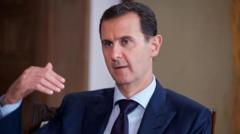
Syria conflict: BBC exclusive interview with President Bashar al-Assad (FULL)
This archival interview provides direct context on how Bashar al-Assad defended his government's military actions and denied civilian atrocities years before his regime collapsed.