France has a giant water problem, and it's threatening to disrupt the European power grid.
Right now, a combination of blistering high-pressure weather systems, record-breaking summer heat, and bone-dry riverbeds is forcing the French state-backed energy giant, EDF, to throttle back its nuclear output. On paper, nuclear energy is touted as a climate-resilient powerhouse. In reality, it is deeply vulnerable to the very climate shifts it's supposed to help prevent.
If you think this is just a local French issue, think again. The European power grid is deeply interconnected. When French reactors slow down, electricity prices spike across the entire continent.
The Physics of the Coolant Crisis
To understand why this is happening, you have to look at how these plants are designed.
Nuclear reactors don't just generate electricity; they generate a massive amount of waste heat. To keep from melting down, they rely on a constant, high-volume flow of cold water to condense steam back into water within their cooling systems.
[Image of nuclear power plant cooling system]
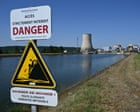
About 70% of France’s nuclear fleet is cooled by rivers like the Rhône, the Garonne, and the Seine. Once the water passes through the plant, it's discharged back into the river.
Here is the catch: when it goes back in, it's significantly warmer.
If the river is already running unusually warm due to a summer heatwave, discharging this hot wastewater raises the river's temperature to levels that are fatal to local fish and river ecosystems. Under strict French environmental regulations, EDF cannot legally discharge water above specific thermal limits—typically around 28°C.
When a river hits that ceiling, EDF has only two choices:
- Curtail production (reduce the reactor's output).
- Shut down the reactor completely.
We are seeing this play out right now. EDF recently had to temporarily shut down a reactor at the Golfech nuclear power station in the southwest because the Garonne River approached its environmental discharge threshold. Similar curtailments are hitting reactors at Saint-Alban, Bugey, and Blayais. Restrictions are also scheduled to hit the Nogent plant near Paris and the Chooz facility near the Belgian border.
In total, France has had to slash gigawatts of nuclear capacity from its grid just when air conditioning use is driving electricity demand to seasonal highs.
The Export Cushion is Thinning
For years, France has acted as Europe’s green battery, exporting massive amounts of cheap nuclear power to neighbors like Germany, Italy, and the UK. During normal winter and spring days, France regularly exports an afternoon surplus of 11 to 12 gigawatts (GW).
But when a summer heatwave hits, that export cushion evaporates.
During recent hot spells, France's afternoon export surplus plummeted to under 3 GW on the hottest afternoons.
Normal Afternoon Export Surplus: 11 - 12 GW
Heatwave Afternoon Export Surplus: < 3 GW
This sudden drop creates a double-whammy for the European energy market:
- Higher Demand: Scorching heatwaves mean everyone turns on air conditioning at the same time.
- Lower Supply: Solar power helps during peak daylight hours, but when the sun goes down and wind speeds drop, the lack of French nuclear exports leaves a massive supply gap.
This shifts the burden of balancing the grid to fossil-fuel plants, forcing countries to burn more gas and coal to keep the lights on. It’s a vicious, self-defeating cycle.
Why This Is Not Just a Passing Weather Event
Some energy commentators argue that these curtailments are minor blips. They point out that over an entire year, river-related shutdowns only reduce France's total nuclear output by a fraction of a percent.
But that argument misses the point entirely.
Grid reliability isn't measured in yearly averages; it's measured in seconds. A localized power shortage on a hot Tuesday afternoon can trigger blackouts or send wholesale electricity prices skyrocketing. As climate change pushes summer temperatures higher, these river-temperature limits will be breached more frequently, more severely, and for longer periods.
What used to be a rare "once-in-a-decade" operational headache is now an annual summer routine.
Moving Beyond River-Cooled Reactors
So, what is the way out of this thermal trap? If Europe wants to rely on nuclear energy as a cornerstone of its decarbonization strategy, it has to adapt.
First, future nuclear plants must be built on coasts rather than inland rivers. Ocean water provides a virtually limitless heat sink that is far less sensitive to atmospheric heatwaves.
Second, existing inland plants need retrofitting. Upgrading to closed-loop cooling towers—which release heat into the atmosphere via evaporation rather than dumping hot water back into rivers—can drastically reduce river water consumption.
Finally, grid operators must stop treating nuclear as a silver bullet. A truly resilient grid requires a diverse mix of offshore wind, solar, long-duration battery storage, and demand-response technology that doesn't rely on rivers staying cold to keep our homes cool.
If you want to track how these river temperatures are affecting European power prices in real-time, you can monitor the daily market updates on European energy exchanges like EEX or check the live grid status maps provided by the French transmission system operator, RTE.