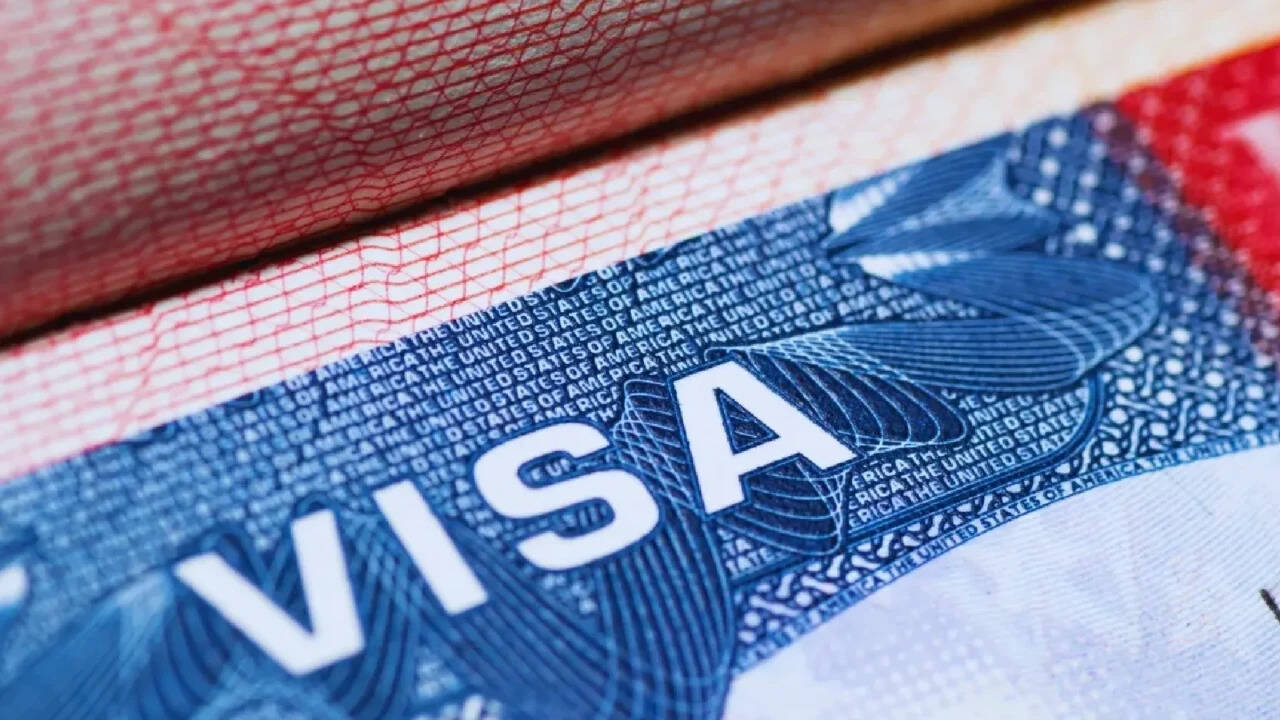
If you're an Indian citizen sitting on a year-long wait for a US visitor visa, the headline sounds like a lifesaver at first glance. The U.S. Department of State rolled out a pilot program that lets B1/B2 applicants pay $750 to jump the line and score an interview within 10 business days.
There is just one massive catch.
The program only launched across Mission Mexico—covering the U.S. Embassy in Mexico City and its regional consulates. If you are applying from New Delhi, Mumbai, Chennai, Hyderabad, or Kolkata, you cannot buy your way out of the line.
For Indian tourists, business founders, and families trying to plan trips across the Atlantic, the news feels like a slap in the face. Why test a paid fast-track option in a country where wait times are relatively low, while Indian applicants still face soul-crushing delays?
The reality behind the new fee, how the Mexico pilot actually works, and what Indian B1/B2 applicants can actually do right now to speed up their timelines tells a very different story.
The Cold Hard Facts About the $750 Fast Track
Let's break down what this new option actually is before you start looking for loopholes.
On June 9, 2026, the State Department published a temporary final rule creating the "Nonimmigrant Visa Appointment Expedite Fee". The six-month pilot runs through December 31, 2026, with a capped limit of 25,000 expedited slots globally.
Here is how it breaks down financially and procedurally:
- The standard MRV fee stays $185. You still pay the normal non-refundable visa application fee when you submit your DS-160.
- The premium addon costs $750. If you're at a participating post, you get an option in your portal to request a "Paid Expedite".
- 10-day turnaround. Once you select an expedited slot, you get a 10-minute hold window to pay the $750 online. If payment clears, you get an in-person interview within 10 business days.
Sounds great on paper. But people are making huge assumptions about what $750 actually buys.
Crucial Reality Check: Paying $750 buys you a date with a consular officer. That is it. It does not guarantee a visa, it does not bypass security checks, and it does not speed up post-interview administrative processing under Section 221(g).
If the officer puts your file under administrative review for extra security clearances, your $750 premium payment won't move that administrative timeline by a single minute. Furthermore, if your visa gets rejected under Section 214(b) for lack of strong ties to your home country, the State Department keeps every penny. It is non-refundable, non-transferable, and non-negotiable.
Why Mexico Got the Pilot Instead of India
The obvious question burning through every Indian immigration forum is simple: why Mexico?
Indian B1/B2 interview wait times have routinely hovered between 200 and 400 days depending on the post, making India the most obvious candidate for a fast-track pilot.
The State Department's logic boils down to operational risk and event logistics.
First, the U.S. government is quietly testing infrastructure ahead of the massive influx of international travel expected for the 2028 Los Angeles Olympic and Paralympic Games. Mexico handles high volumes of cross-border foot traffic, making it a controlled testing ground for software integration and consular capacity caps.
Second, flooding Mission India with a paid expedite option right now would crash the system.
Consulates in India are already running at absolute maximum staffing capacity. If the U.S. offered a $750 fast pass in New Delhi or Mumbai today, tens of thousands of applicants would slam the portal instantly. Consular posts can only reserve a tiny fraction of their daily slots for paid expedites without inflating standard wait times for everyone else. India simply doesn't have the spare counter capacity to absorb that demand yet.
Can Indian Citizens Travel to Mexico to Use the $750 Expedite?
This is where things get tricky.
Technically, third-country nationals (TCNs) can sometimes apply for U.S. visas outside their home country. Many Indian nationals living or working temporarily in North America regularly try to book appointment slots at consulates in Mexico or Canada.
However, booking a B1/B2 interview in Mexico as an Indian resident to hunt for a $750 fast slot is an expensive gamble that usually backfires.
- Third-Country National Restrictions: Mission Mexico frequently restricts B1/B2 first-time applicant slots for non-residents of Mexico. Consulates prioritize Mexican residents. If you don't reside in Mexico, finding even a baseline standard interview slot to apply the $750 upgrade to is nearly impossible.
- Higher Rejection Rates: Consular officers in Mexico are trained on local Mexican economic ties and documentation. When an Indian national resident in India shows up at a consulate in Guadalajara or Tijuana for a tourist visa, officers scrutinize the file much harder. Questions about why you skipped your home consulate will dominate the 2-minute interview.
- No Refund Guarantee: If you fly to Mexico, pay $185 plus $750, and get handed a 214(b) refusal or a 221(g) administrative hold, you're stuck in limbo $935 poorer, plus travel expenses.
Unless you are already legally residing in Mexico on a local work permit or residency card, trying to jump into the Mexico pilot is a terrible strategy.
The Real Status of U.S. Visa Wait Times in India
While India isn't part of the $750 paid pilot yet, the broader picture isn't completely bleak.
The U.S. Embassy in New Delhi and consulates in Mumbai, Chennai, Hyderabad, and Kolkata have taken massive steps over the past year to tackle backlog numbers. They opened specialized consular centers, increased weekend staffing, and processed record numbers of nonimmigrant visas.
Here is what the current landscape looks like for Indian nationals across major visa tiers:
| Visa Type | Primary Goal | Current Wait Reality in India |
|---|---|---|
| B1/B2 (First-Time) | Business & Tourism | High demand. Wait times vary wildly by post, ranging from 180 to 350+ days. |
| B1/B2 (Dropbox/Interview Waiver) | Renewal within 48 months | Significantly faster. Slots open periodically, taking weeks rather than months. |
| F-1 / M-1 | Academic Students | Prioritized seasonally. Summer student slots are protected to ensure arrivals before classes start. |
| H-1B / L-1 | Specialty Work | Domestic H-1B renewal pilots in the U.S. eased some pressure, though local drop-box appointments still require planning. |
Notice the big divide? If you are renewing a B1/B2 visa within 48 months of expiration, you don't need an in-person interview at all. You qualify for the interview waiver (drop-box) path. The real bottleneck is almost entirely concentrated on first-time B1/B2 applicants requiring an in-person interview.
Practical Steps to Get a Faster B1/B2 Appointment in India Right Now
You don't need to wait around hoping the State Department brings the $750 pilot to India. There are concrete, legal methods to move your appointment date forward right now.
1. Monitor for Mass Slot Releases
The U.S. Mission in India releases thousands of interview slots in unexpected bulk batches. These drops don't happen on a strict public schedule. They often happen late at night or early on weekend mornings.
Book whatever distant date is available right now—even if it is 10 months away. Once you have a confirmed appointment, you can log into the scheduling portal to check for rescheduled openings. Applicants cancel or reschedule every single day.
2. Utilize the Free Emergency Expedite Option
Many applicants completely forget that a no-cost emergency expedite process already exists. You do not need to pay $750 if you have a genuine urgent need to travel.
Consular managers at all U.S. posts retain full discretion to grant free expedited appointments for:
- Urgent medical treatment for yourself or a close relative in the U.S.
- A funeral or death of an immediate family member in the U.S.
- Urgent business travel that could not be predicted and involves critical loss of contract or employment.
- Event travel involving significant U.S. national interest.
To request this, you must first book the earliest available regular appointment slot in the portal. Then, click the "Request Expedite" button, state your case clearly, and upload hard proof (hospital letters, death certificates, executive corporate letters). If approved, you get an emergency slot free of charge.
3. Consider Applying in Low-Demand Third Countries with High Approval Rates
If you frequently travel for work or hold legal residency elsewhere (like Dubai, Singapore, or Western Europe), check the wait times at U.S. consulates in those locations. While applying outside your home country carries risk, applying in a country where you maintain long-term legal employment or residence is completely acceptable to consular officers.
4. Keep Your Application Flawless
Nothing destroys a fast timeline like a simple administrative mistake.
Double-check your Form DS-160 before submitting. Ensure your photograph strictly meets U.S. Department of State specifications. Make sure your passport has at least six months of validity remaining beyond your intended stay. An error on your paperwork can push you straight into 221(g) administrative processing, undoing any scheduling progress you achieved.
What Happens Next?
The $750 pilot program in Mexico runs through December 31, 2026. Over these six months, the State Department will analyze data on revenue, system load, and interview scheduling efficiency.
If the pilot proves successful without degrading regular appointment lines, officials have indicated that participating posts could expand. India is widely considered the top candidate for any future expansion phase.
For now, don't fall for third-party visa agents claiming they can "buy" you a $750 fast-track slot in India today. It doesn't exist in Mission India yet. Stick to tracking official slot drops, leverage legitimate emergency expedite requests when qualified, and keep your documentation tight.