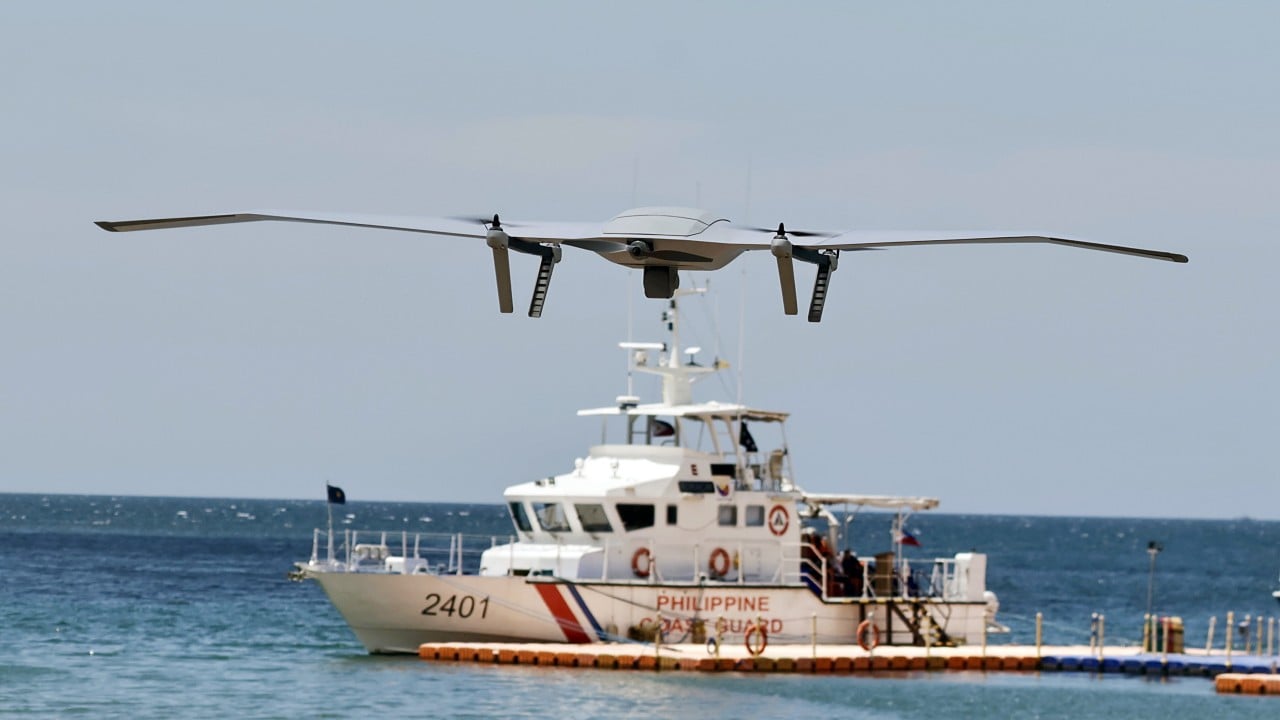
Buying expensive warships won't save Manila from regional maritime bullies. Philippine defense officials finally realize that shifting toward asymmetrical capabilities and low-cost uncrewed systems is the only practical way forward in the South China Sea.
Traditional military buildups take decades and cost fortunes that archipelagic nations don't easily have. Instead of competing ship-for-ship against larger naval fleets, the Armed Forces of the Philippines are pivoting hard toward an interconnected web of aerial, surface, and underwater drones.
The Shift Toward Asymmetric Defense
Defense Secretary Gilberto Teodoro recently laid out a proposed 50 billion peso allocation for military modernization, targeting a 25 percent bump specifically for tech integration. The goal isn't just buying off-the-shelf flying gadgets. It's about stitching those assets into a functional operational network.
You can't just drop a quadcopter into a contested zone and hope for the best. Without secure communication channels and automated intelligence sharing, isolated units become easy targets.
Manila is actively looking at lessons from modern conflicts, including discussions with Ukrainian officials regarding battlefield drone integration. Meanwhile, Washington has started supplying tactical assets like solar-powered maritime surface drones to boost immediate domain awareness.
Building a True System of Networks
The real challenge facing the military isn't acquisition—it's connectivity. Hardware is cheap compared to the software architecture required to run a multi-domain sensor grid.
- Observation nodes: Aerial platforms sweep broad maritime sectors for anomalies.
- Processing layers: Edge computing chips analyze local data even if command links face severe electronic jamming.
- Action units: Surface and subsurface uncrewed vehicles respond dynamically to intrusions within the exclusive economic zone.
Teodoro pointed out that operational know-how and secure network architecture matter infinitely more than raw personnel counts. If data packets get intercepted or jammed by artificial intelligence algorithms deployed by adversaries, the entire defensive structure collapses. That's why current acquisition parameters remain heavily classified.
Overcoming Structural Bottlenecks
Critics often argue that smaller nations lack the industrial base to sustain high-tech attrition warfare. They've got a point. Building a credible deterrence network requires multi-year financial commitments that get squeezed by shifting domestic budgets.
Creative financing and robust bilateral defense pacts are filling the gap. By anchoring modernization efforts to shared security roadmaps with the United States and exploring technical cooperation with partners like Japan and European states, the Philippines is slowly plugging its long-standing surveillance blind spots.
Stop looking at military expansion through the lens of traditional heavy armor. The future belongs to whoever builds the most resilient, decentralized network of autonomous defenders.
Shaping the Future of Defense at Subic Bay
This video provides a look at the inaugural Drone Warfare Summit held at Subic Bay, highlighting how uncrewed systems across air, land, and sea domains are reshaping the defense strategy of an archipelagic nation.