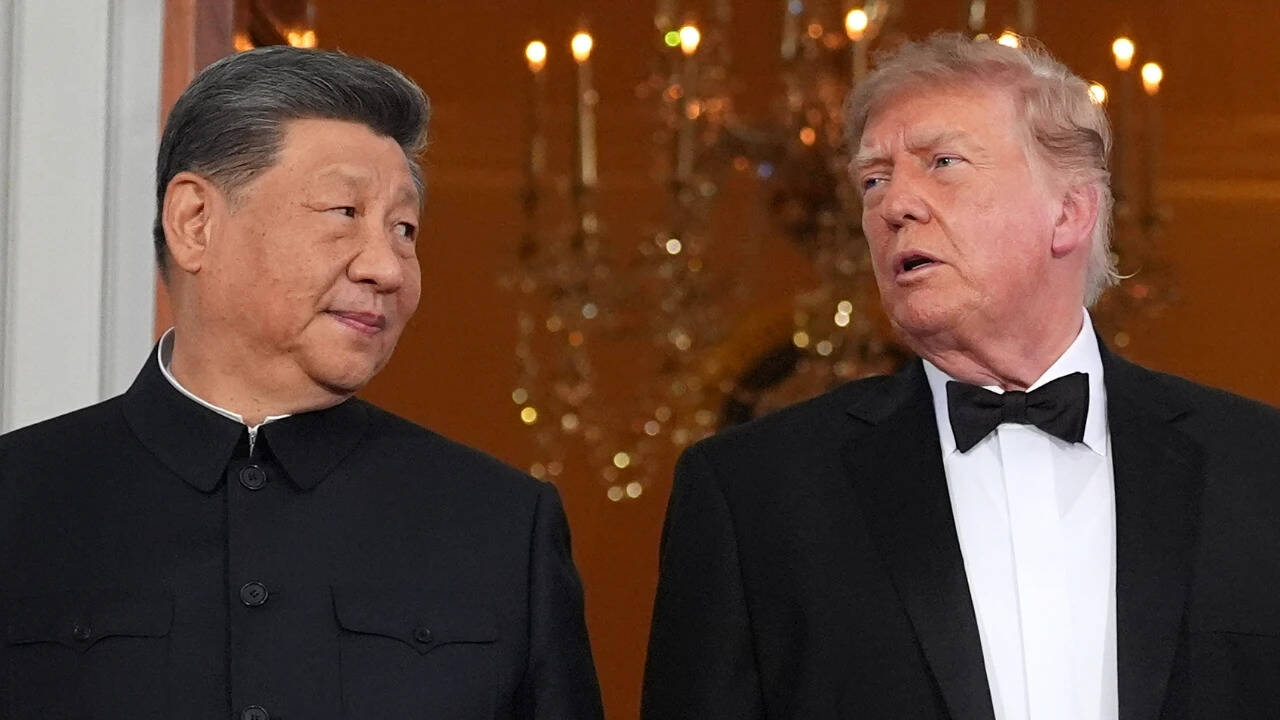
Foreign policy rarely pivots on what leaders shout from podiums. It pivots on what they quietly choose to ignore. When Donald Trump brushed past the issue of Taiwan after his White House summit with Chinese President Xi Jinping, declaring that Xi "understands how I feel" and that the self-governing island isn't a major point of friction, he signaled a subtle shift in how Washington manages its most volatile geopolitical tightrope.
If you look past the standard diplomatic handshakes, this non-event speaks volumes. Taipei is waiting on a stalled $14 billion arms package that has been frozen for months, testing whether the White House will prioritize transactional trade truces over statutory defense commitments. You might also find this similar article insightful: Why Exposing Sexist Professors In Hong Kong Universities Is Actually Great News.
The Reality Behind Closed Doors
Washington and Beijing love a good public standoff. Yet, high-level summits often function as pressure valves rather than arenas for radical confrontation. Trump's casual dismissal of Taiwan as something that is "fine" and "just moving along" misses the profound anxiety pulsing through Taipei. Taiwan's deputy foreign minister Chen Ming-chi recently tried to reassure domestic constituents that Washington still grasps the island's severe military pressures. But reassurance from a junior minister cannot mask the stark reality of frozen hardware.
When a superpower delays a multi-billion dollar weapons package right after leader-level talks, it isn't an administrative hiccup. It's a deliberate signal. Beijing treats Taiwan as a non-negotiable red line, demanding a total halt to American arms sales. Trump's recent comments suggest he's willing to park the issue in a diplomatic blind spot to keep broader economic deals on track. As reported in detailed coverage by TIME, the results are widespread.
What the Headlines Miss About US-China Bargaining
Most media coverage frames US-China summits as binary wins or losses. That framing fails to capture how transactional diplomacy actually operates. Trump treats geopolitics like real estate negotiations. If trade and technology truces can be locked down, thorny sovereignty disputes get pushed to the back burner.
Xi Jinping knows this playbook intimately. By understanding Trump's personal style—one that prizes direct rapport and visible deal-making over institutional orthodoxy—Beijing can manage tensions without conceding an inch on its territorial claims. Trump's assertion that Xi "understands how I feel" reveals a personalized approach to statecraft where mutual respect between strongmen supersedes formal alliance obligations.
The Cost of Strategic Ambiguity
For decades, American policy toward Taiwan relied on calculated ambiguity. Washington promised defensive capabilities without guaranteeing direct military intervention. But today's ambiguity looks less like deterrence and more like distraction.
Consider the concrete stakes:
- A $14 billion arms package remains stalled indefinitely.
- Taipei faces continuous air and naval pressure from Beijing's military apparatus.
- US statutory obligations under the Taiwan Relations Act face unprecedented friction from executive branch maneuvering.
When the executive branch treats a $14 billion defense backlog as a minor talking point, the cost shifts entirely onto Taipei.
Where This Leaves Global Markets and Security
Markets hate uncertainty, but they love predictability even more. Trump's handling of Taiwan provides a perverse kind of predictability for investors tracking US-China trade. It means tariffs and technology curbs remain the primary battlegrounds, while military flashpoints are temporarily muffled.
Yet, kicking the Taiwan can down the road doesn't defuse the underlying pressure. It only compresses it. Every month the defense package stays frozen, the credibility of American security guarantees takes a hit. Taipei knows it, Beijing knows it, and the White House is betting that voters won't notice the trade-off.
Stop treating superpower summits as theater. Watch the hardware, watch the frozen packages, and pay attention to what leaders conveniently choose to leave out of the press conference. Action speaks louder than a casual soundbite on the South Lawn.