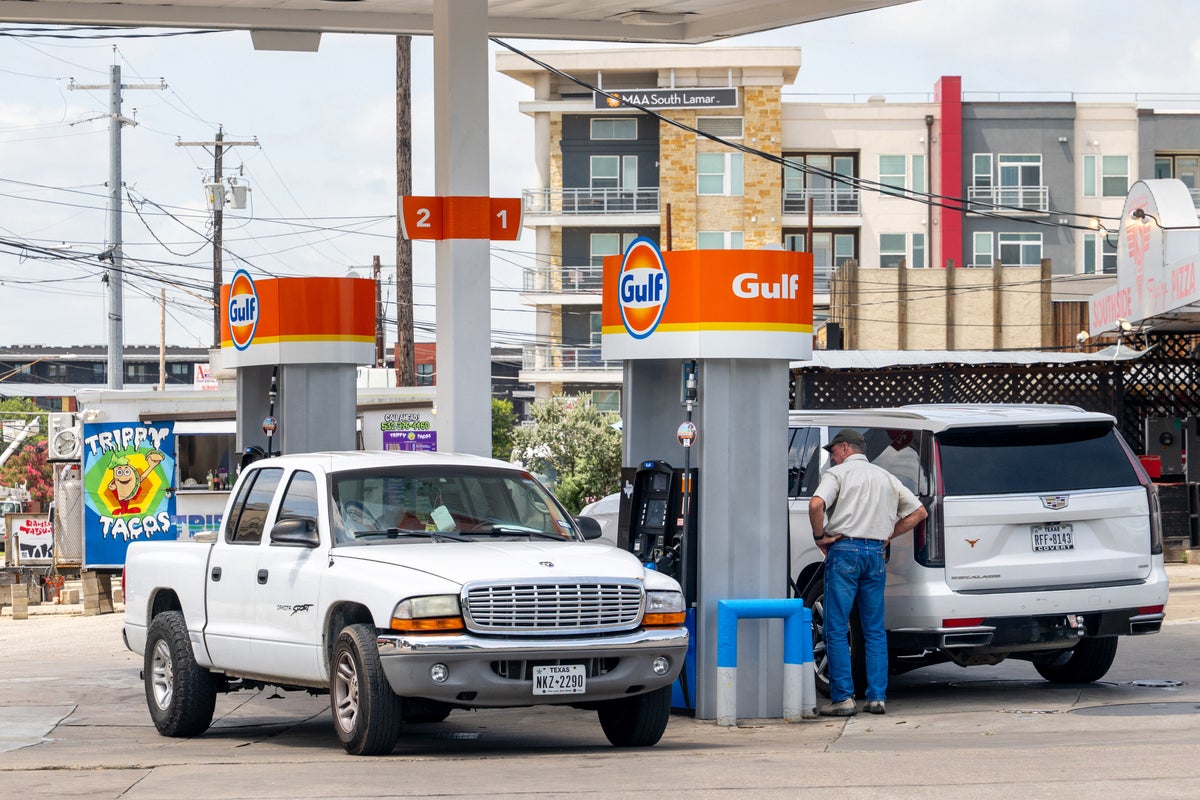
Donald Trump wants gas prices at $2.50 a gallon right now, and he is threatening retail gas stations with "big problems" if they don't deliver.
On Monday evening, the president took to Truth Social to rail against gas station owners, accusing them of illegal price gouging because crude oil has slid down to $68 a barrel. He claimed that because a preliminary peace deal with Iran is holding, the cost of fuel should have plunged instantly. He even noted that he directed the Department of Justice to launch an investigation into these companies.
But shouting at a gas station owner to drop prices doesn't change how global supply chains operate. The reality of how oil moves from an oil field in Texas or the Middle East to a local pump in Ohio involves a massive delay. When Trump claims that retailers are intentionally ripping off the public, he is ignoring the basic math of fuel inventory, refining capacity, and market risk.
Understanding why pump prices are lagging tells us a lot about the friction between political theater and real-world economics.
The Threat From Truth Social
The latest dispute began with a series of late-night posts where Trump laid out a specific target for fuel prices. "Gasoline Retailers must get their Prices down, IMMEDIATELY! They’re too high considering that Oil is now at $68 a Barrel, and heading south," he wrote. He followed up with a warning that failing to do so would result in legal consequences, claiming that "no gouging" would be tolerated.
Trump specifically named a target price of $2.50 a gallon. He also singled out California, telling the state to cut its heavy fuel taxes. This comes just days after his administration announced it was instructing the DOJ to investigate oil companies for keeping pump prices elevated despite a sharp drop in Brent and West Texas Intermediate crude benchmarks throughout June.
Politically, the timing isn't a mystery. The midterm elections are coming up in November. High fuel costs have been a massive driver of consumer anger and inflation sticky points throughout 2026. If voters are still paying nearly $4 a gallon when they head to the ballot box, the administration knows who they will blame.
By targeting the local gas station, the political narrative shifts the blame from foreign policy decisions onto local business owners.
Why Oil Prices Fell While Gas Stuck Around
The conflict with Iran earlier this year sent shockwaves through the global energy market. When shipments through the Strait of Hormuz were disrupted, crude spiked past $120 a barrel. That supply shock meant refineries were buying incredibly expensive crude just to keep up with domestic demand.
Now that a tentative peace agreement has reopened shipping lanes, crude futures have collapsed to under $70 a barrel. But you can't pump crude oil directly into your sedan.
Refineries buy their oil weeks or months in advance. The fuel sitting in the underground tanks of your local station today was made from crude oil purchased when prices were much higher. If a retailer immediately slashes their prices to match today's spot price of crude, they will lose thousands of dollars on the inventory they already paid for.
Economists call this the "rockets and feathers" phenomenon. Pump prices shoot up like a rocket when crude spikes because retailers have to cover the replacement cost of their next shipment. When crude drops, pump prices drift down slowly like a feather because stations are trying to recover their losses and avoid getting burned if oil spikes again next week.
The Inventory Replacement Cost Trap
Most local gas stations operate on razor-thin margins. They don't make their money on the fuel itself. They make it on the energy drinks, cigarettes, and sandwiches sold inside the convenience store.
When a station owner sees crude oil drop, they can't just change the sign on the street immediately. They have to wait until they order a new delivery from their distributor. If that distributor is still working through higher-cost fuel batches from mid-June, the price stays high down the line.
A sudden mandate to drop prices to $2.50 would put hundreds of independent, franchised stations out of business. They simply don't have the cash reserves to absorb a dollar-per-gallon loss on thousands of gallons of fuel currently sitting in their tanks.
Refining Capacity Bottlenecks
Even if crude oil was free, turning it into gasoline requires functioning refineries. The United States has been running near maximum refining capacity for years, and the disruptions from the Iran conflict caused major backlogs.
Refineries outside the US faced severe shortages, forcing some regions to ration fuel or implement work-from-home orders during the peak of the fighting. Getting these facilities back to normal operational status takes time. You don't just flip a switch to start processing millions of barrels of oil at a different price point.
West Coast markets, especially California, face even tighter constraints due to isolated pipeline infrastructure and specialized environmental fuel blends. That is why prices there remain stubborn regardless of what happens to international crude benchmarks.
The Political Math of the Midterms
Blaming corporate greed for inflation is a time-tested strategy used by politicians of every ideology. When prices are high, it's always the fault of a middleman. When prices drop, the politicians take the credit.
The administration spent months telling the public that prices would "drop like a rock" or "snap back" the moment the war ended. Treasury Secretary Scott Bessent and Energy Secretary Chris Wright both echoed these timelines throughout May, assuring Americans that the high prices were just a temporary aberration.
Now that the conflict has quieted down, the expected immediate drop hasn't happened. The Energy Information Administration previously adjusted its average retail price projections upward for the year, showing that the economic ripples of a war last much longer than the active combat phase.
Faced with these stubborn numbers, launching a DOJ probe into price gouging serves as a useful shield against voter anger. It creates the appearance of aggressive action, even if the underlying cause of the price lag is basic logistics rather than a criminal conspiracy.
What Consumers Can Actually Do Right Now
Sitting around waiting for a federal investigation to lower your fuel bill isn't going to help you this week. If you want to stop overthinking gas prices and actually save money, you have to change how and where you buy fuel.
- Ditch the major highway stops. Stations located right off major interstate exits almost always charge a premium because they rely on desperate drivers who need fuel immediately. Drive a mile or two into town to find significantly lower rates.
- Use crowdsourced tracking apps. Tools like GasBuddy or Waze rely on real-time updates from drivers. Prices can vary by as much as forty cents within a three-mile radius because different stations receive their fuel shipments on different days.
- Leverage warehouse clubs. Wholesale clubs buy fuel in massive quantities and frequently use lower gas prices as a loss leader to get you inside the store. The savings often justify the cost of an annual membership if you drive a lot.
- Pay with cash when possible. Many independent stations charge an extra ten to fifteen cents per gallon if you use a credit card to cover the processing fees. Checking the sign for a separate cash price can save you a couple of dollars on every fill-up.
The global energy market doesn't conform to political timelines or social media demands. Prices will likely continue to trend downward throughout July as cheaper crude finally works its way through the refining system, but it will happen because of supply mechanics, not political pressure. Skip the drama on your feed and focus on the real numbers at the pump near you.