When Washington and Tel Aviv launched coordinated strikes against Iran back on February 28, killing Supreme Leader Ali Khamenei, the goal was to eliminate threats and project absolute authority. Instead, the administration managed to hand a massive economic and strategic victory straight to its biggest global competitor.
The recent report from the geopolitical consulting firm Asia Group spells it out clearly. While the closing of the Strait of Hormuz caused a global commodities crisis that battered traditional US allies, Beijing didn't just weather the storm. It excelled. Trump's regional entanglement didn't break Iranian resolve, but it did reveal exactly how China built an economy designed to survive an American disruption. Recently making waves recently: What Most People Get Wrong About The Birthright Citizenship Ruling.
The Strategic Stockpile Play
Before the crisis, the Strait of Hormuz was the lifeblood of Asian energy. Roughly 80% of the oil and 90% of the liquefied natural gas flowing through that narrow channel went straight to Asian markets. When Iran mined the main shipping lanes and restricted traffic under its own "management protocols," regional heavyweights like Japan, South Korea, and India faced immediate supply panic.
China didn't. More insights into this topic are detailed by BBC News.
Why? Because Beijing spent 2025 quietly buying up massive amounts of cheap crude oil while the rest of the world coasted. According to data from the Centre on Global Energy Policy, China's crude imports jumped to 11.6 million barrels a day last year. More than 80% of that extra oil went straight into strategic reserves.
By the time the bombs started falling in February, China sat on a massive cushion of 104 days' worth of import cover. They had enough oil locked away to completely ignore the initial supply shock, leaving them with months of breathing room while regional peers scrambled to keep the lights on.
Clean Energy as a National Shield
It's tempting to think this survival was just about hoarding fossil fuels. It wasn't. The real reason Beijing shrugged off the shock is that it has decoupled its manufacturing sector from foreign oil far faster than Western analysts realized.
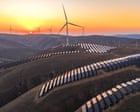
Look at the numbers from the past two years. In 2024, China added 277 gigawatts of solar capacity. In 2025, they shattered that record by installing another 315 gigawatts—more than half of the entire world's new solar infrastructure combined. Right now, Beijing has 1.4 terawatts of operating renewable capacity online.
While fossil fuels still make up about half of China's energy mix via domestic coal, their reliance on volatile Middle Eastern oil and gas is vastly lower than Europe's or its Asian neighbors'. The Asia Group report points out that China's unique combination of 100 days of oil reserves and massive domestic clean energy meant it could tolerate a shut strait without its economy going into free fall.
Turning a Crisis Into a Clean Tech Monopolization
The fallout gets even worse for the US when you look at the secondary economic effects. The war pushed global oil prices through the roof earlier this year, forcing a massive, accelerated global shift toward electric vehicles and renewable energy.
Guess who owns the supply chains for those exact technologies? China.
Beijing fundamentally dominates global manufacturing for solar panels, lithium batteries, and wind turbine components. For years, Western leaders complained that China was dumping cheap clean-tech goods onto global markets. Now, because of a war started by Washington, global demand for those exact Chinese goods is soaring.
Even the shipping restrictions in Hormuz played directly into Beijing's hands. While American and European cargo ships faced drone strikes and threats from the Revolutionary Guard, Chinese-owned vessels were actively granted permission to pass through the strait under Iran's specific protocols. Tehran relies on Beijing to buy 90% of its crude oil, so Chinese shipping lines kept moving while everyone else paid skyrocketing insurance premiums or waited for US naval escorts that arrived too late.
The Geopolitical Narrative Flip
Beyond the factories and the oil tankers, the diplomatic damage to the US is severe. Donald Trump spent May flying to Beijing to meet Xi Jinping, trying to project a unified front for a Middle East settlement. But behind closed doors, Chinese diplomats are using this war as the ultimate proof that the US is an unstable, reckless hegemon.
Every strike on a cargo ship, every drone exchange over Bahrain, and every failure to manage Israeli troops in southern Lebanon serves Beijing’s narrative. They are successfully convincing emerging markets across Southeast Asia and the global south that relying on American security guarantees brings nothing but chaos and inflation.
There are still real risks for Beijing. Analysts at the Atlantic Council point out that the chaos in Hormuz shows just how hard it is to protect maritime supply lines during a hot war, which might give Xi Jinping pause when thinking about an amphibious assault on Taiwan. Furthermore, organizations like the S. Rajaratnam School of International Studies note that China has no desire to actually replace the US as the military policeman of the Middle East. They don’t want the headache of managing regional rivalries.
They don't need to replace the US, though. They just need to let Washington burn through its own credibility while they lock down the economic rewards.
Your Next Steps for Supply Chain Resilience
If your business relies on global logistics or energy stability, you can't afford to treat the Middle East as a localized problem. The trade routes are permanently altered, and the shift toward a Chinese-dominated clean energy market has accelerated by at least five years.
- Audit your energy exposure: Evaluate how much of your logistics chain relies on traditional maritime choke points. If you haven't diversified your shipping partners to include non-aligned state carriers, do it now.
- Accelerate clean tech transition: The price of fossil fuel stability is gone. Transitioning fleet and facility power to renewables isn't an environmental goal anymore; it’s a strict geopolitical hedge.
- Map secondary component sources: With Beijing tightening its grip on the components that power the global green transition, ensure you have secondary manufacturing contracts signed outside of the immediate mainland, focusing on secondary hubs in Vietnam or India.