An amphibious invasion of Taiwan gets all the headline space, but a sea blockade is the scenario military planners actually lose sleep over. Beijing doesn't necessarily need to launch a massive, D-Day-style beach landing to bring Taipei to its knees. Cutting off energy supplies, commercial shipping, and communication lines can achieve the exact same strategic goal with fewer casualties on their side. That's why Taiwan's military exercises have shifted focus toward keeping supply chains open and preserving core combat power under heavy fire.
If you look at recent war games, the core challenge isn't just fighting off enemy warships. It's surviving the initial economic and resource strangulation long enough for allies to respond. Let's break down how Taipei is rewriting its defense playbook to face this reality head-on.
The Real Threat of a Maritime Choke Point
Taiwan imports over 97% of its energy and a massive share of its food supply. An island dependent on maritime trade is inherently vulnerable if hostile naval assets and coast guard vessels establish an exclusion zone.
During recent large-scale military drills, the People's Liberation Army has practiced closing off key shipping lanes, deploying aircraft carriers to lock down the eastern approaches, and using coast guard ships to board commercial freighters under the guise of law enforcement. This grey-zone tactic creates a nightmare scenario. If commercial captains refuse to sail into Taiwan ports out of fear, the economy stops functioning within weeks even without a single missile hitting a civilian target.
Taipei's defense establishment understands that traditional naval battles won't cut it. You can't just line up destroyers to fight a classic fleet action when the opponent's goal is to starve the island out.
Hardening Infrastructure and Decentralizing Assets
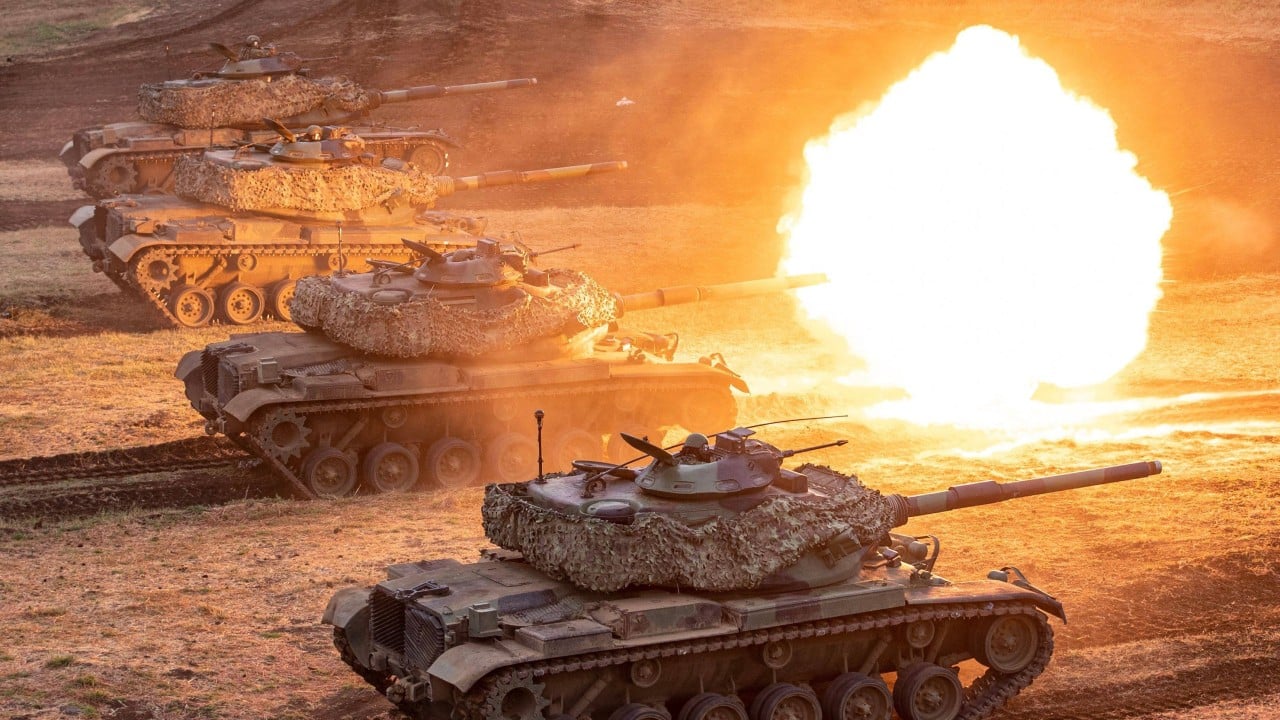
To counter a blockade strategy, Taiwan's Han Kuang exercises and other mobilization drills prioritize force preservation above all else. In the opening hours of a conflict, fixed military bases and major ports would take heavy missile fire.
Military planners are scattering aircraft, mobile radar units, and anti-ship missile batteries into civilian infrastructure, tunnel networks, and rugged terrain. Air force assets routinely practice landing and taking off from highway strips and civilian airports to prevent a total ground wipeout.
Energy stockpiling has also become a massive priority. The government is frantically increasing coal, natural gas, and oil reserves while investing heavily in decentralized renewable energy grids. If centralized power plants go dark, smaller microgrids can keep critical command centers and hospitals online.
Piercing the Iron Ring at Sea
Surviving a blockade isn't a passive game. At some point, forces must push back to let essential cargo through. Taiwan's navy and coastal defense units focus heavily on asymmetric warfare tactics.
Instead of relying solely on expensive, multi-billion-dollar warships that are easy targets for massed ballistic missile strikes, Taipei is leaning into mobile, land-based anti-ship cruise missiles, fast attack craft, and sea-mines. The strategy relies on making the cost of maintaining a tight naval cordon impossibly high for Beijing.
Naval drills simulate breaking through blockade lines by coordinating coastal batteries with remaining air assets to carve out temporary safety corridors. It’s a desperate race against time. Every day a port stays open is a day the island stays in the fight.
The preparations happening right now tell you everything you need to know about where modern military strategy is heading. It isn't just about winning a pitched battle. It's about resilience, logistics, and refusing to let a chokehold succeed.
China's War Games Signal Taiwan Blockade Plan
This video breaks down how recent Chinese military drills and naval maneuvers are explicitly rehearsing maritime blockades to cut off Taiwan from foreign reinforcements.