Words from a podium don't deter hostile armies. Boots in the mud do.
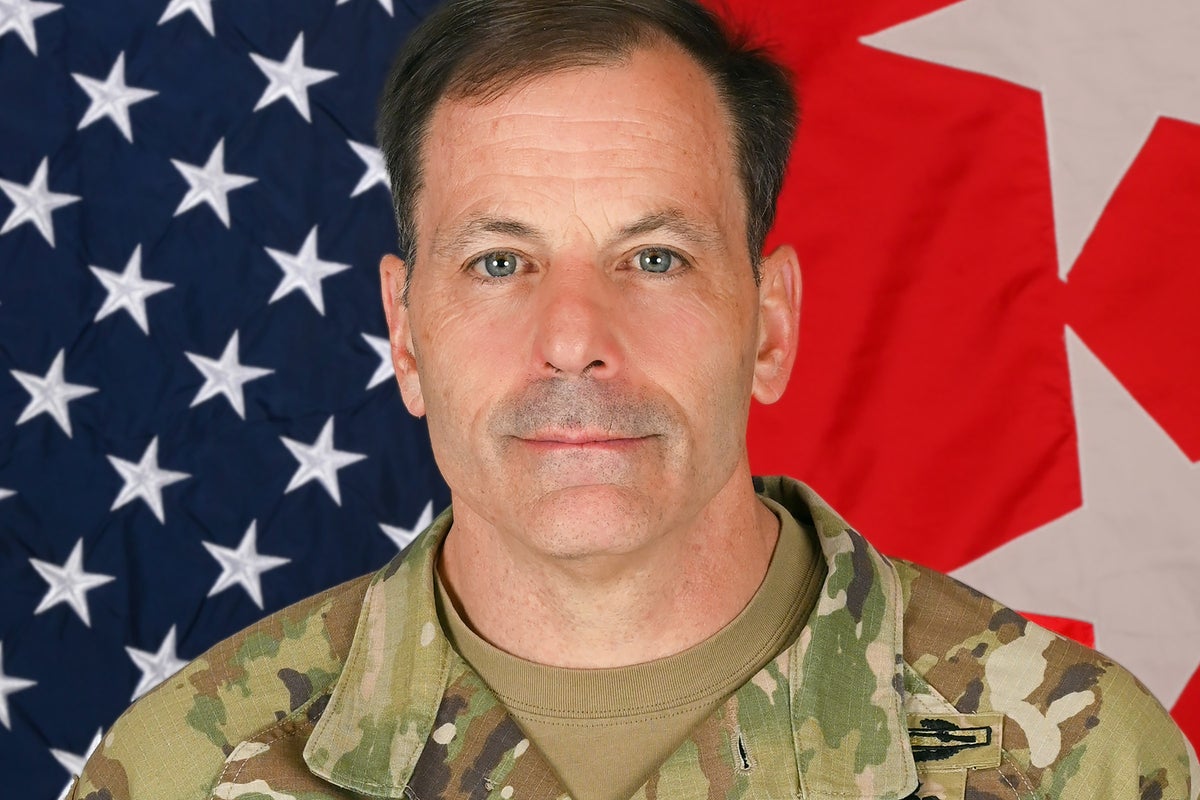
That was the message General Chris Donahue delivered in the Estonian border town of Valga, just days before relinquishing his post. It wasn't just standard military rhetoric. It was a pointed, final statement from one of the most respected combat commanders of his generation. As the chief of US Army forces in Europe and Africa, and the commander of NATO Allied Land Command, Donahue has spent eighteen months managing the volatile front lines of European security. Now, his sudden retirement marks a major shift in how Washington plans to handle its oldest alliance.
People looking at the headlines are asking a simple question. Is the United States abandoning its European allies?
The short answer is no. But the style of American support is changing fast. Donahue used his final public appearance to reassure Washington's allies in the Baltic states that the US will stand alongside them if Russian aggression spills across the border. He was there to mark the creation of a second multinational corps command in the Baltics, a move designed to split the defensive burden and place more regional responsibility on European shoulders. The message was unmistakable. The American commitment remains, but European nations must start running the show.
A Final Message From the Mud in Estonia
Donahue chose his final venue carefully. Valga sits right on the Estonian border with Latvia, a region that feels the immediate chill of Moscow's shadow. The ceremony itself marked a major structural evolution for NATO defenses on the eastern flank. Until now, all alliance troops stationed across Poland, Lithuania, Latvia, and Estonia answered to a single multinational headquarters in Szczecin, Poland. That arrangement worked when deployments were smaller. It doesn't work now.
By standing up a second command zone, NATO can organize and deploy massive forces much faster. This new setup puts two multinational divisions in Estonia and Latvia under the direct operational control of the German-Netherlands Corps, based in Münster, Germany. When fully operational, a corps structure like this commands between 40,000 and 60,000 troops. In normal peacetime conditions, it functions as a streamlined command skeleton. It keeps specialized units like artillery, logistics, and air defense ready so that tens of thousands of combat troops can plug in instantly during a crisis.
German Defense Minister Boris Pistorius joined Donahue at the border ceremony, stating that the new command posture offers visible proof of NATO's collective determination to defend every inch of allied territory. Critics often worry that the alliance is too slow, too bureaucratic, and too reliant on American planning. Donahue’s presence was meant to show that the physical infrastructure of deterrence is already built into the soil. The machinery of defense is turning over to European hands, but the American logistical backbone isn't disappearing overnight.
Pete Hegseth and the Great Pentagon Purge
You can't separate Donahue's sudden retirement from the political whirlwind sweeping through the Pentagon. Defense Secretary Pete Hegseth has spent his first months in office executing an aggressive overhaul of the military's upper ranks. Operating under the banner of "less generals, more GIs," Hegseth has forced out nearly two dozen top military leaders, including high-profile figures like former Army Chief of Staff General Randy George. Donahue is simply the latest four-star officer to see the writing on the wall.
Insiders report that Donahue and Hegseth met in person only once, back in February 2025 in Powidz, Poland. The relationship never warmed up. Hegseth has openly targeted senior officers whom he views as part of the old guard, or those who defended past diversity initiatives, labeling them as part of a bureaucratic culture that distracts from core lethality. Donahue, a traditional warrior who grew up in special operations, defended his troops against claims that the military had grown weak. That position put him directly in the crosshairs of the new administration.
The friction ran even deeper than cultural arguments. The Pentagon is actively reviewing plans to downgrade the US Army Europe and Africa Command from a four-star to a three-star position. This isn't just an administrative demotion. It reflects a fundamental policy shift. Hegseth recently initiated a sweeping six-month review of American forces in Europe, designed to force NATO allies to take primary responsibility for defending their own continent. By lowering the rank of the top American commander on the ground, Washington sends a clear signal. The era of the US acting as Europe's permanent operational manager is coming to an end.
From Kabul to Kyiv The Legacy of America Last Soldier On the Ground
Donahue isn't a typical bureaucrat in a green uniform. He is an elite special operations veteran who spent decades in the dirt. He commanded Delta Force units in Iraq and Afghanistan, surviving some of the most intense close-quarters combat of the post-9/11 era. Later, he took the reins of the historic 82nd Airborne Division.
His name entered the history books on August 30, 2021. As the chaotic American withdrawal from Afghanistan ground to its desperate conclusion, Donahue was tasked with securing Hamid Karzai International Airport. The image captured by a military night-vision camera—showing Donahue clutching his M4 carbine as he stepped onto the final C-17 transport plane out of Kabul—became the defining visual marker of the end of America's longest war.
While political factions in Washington turned the withdrawal into a partisan weapon, Donahue received widespread praise from peers for bringing order to a desperate evacuation crisis. He didn't write the withdrawal policy, but he executed it without losing his cool under catastrophic pressure.
When Russia launched its full-scale invasion of Ukraine in 2022, the Pentagon immediately sent Donahue back to Europe. He was among the very first senior American officers on the ground, establishing critical supply pipelines and advising Ukrainian commanders during the frantic first weeks of the defense of Kyiv. His deep knowledge of unconventional warfare helped the Ukrainian military survive that initial onslaught. Within the ranks, he was widely viewed as a future Army Chief of Staff or a candidate for Chairman of the Joint Chiefs. Instead, his career ends with early retirement papers, a casualty of political restructuring rather than battlefield performance.
Why the Transatlantic Alliance Survives the Shakeup
It's easy to read Donahue's departure as a sign of terminal decline for transatlantic security. That view is too simplistic. The institutional bonds holding NATO together are far deeper than the tenure of any single general or defense secretary. European capitals aren't panicking because they knew this shift was coming. They have been preparing for it for years.
The reality is that Europe is already moving to fill the space. The integration of the German-Netherlands Corps in the Baltics shows that regional heavyweights are finally stepping up. Poland is spending over four percent of its GDP on defense, building one of the most formidable land forces on the continent. Germany has committed to a permanent brigade deployment in Lithuania. These aren't symbolic gestures. They are massive financial and structural commitments that would have been unthinkable a decade ago.
The US isn't cutting ties. It is changing its role from frontline shield to ultimate reserve force. American nuclear deterrence, satellite intelligence, heavy logistics, and strategic airlift capabilities remain completely unmatched. No one in Washington is talking about pulling those assets out of the NATO framework. The goal of the current Pentagon review is to ensure that European armies can hold the line during the critical opening weeks of a conventional conflict, allowing US forces to act as the secondary wave rather than the primary target.
Real Steps for European Defense Moving Forward
With Donahue's deputy, Major General Christopher Norrie, stepping in to handle the immediate transition, European defense ministries must focus on practical adjustments rather than political hand-wringing. The road ahead requires concrete actions to ensure stability during this command transition.
- Accelerate Command Standardization: European militaries must ensure their communication systems and logistical networks integrate seamlessly with the new German-Netherlands Corps structure. Regional commanders cannot afford technical delays when tracking troop movements across the Baltic borders.
- Lock In Long-Term Defense Budgets: Security cannot rely on temporary emergency funds. European nations must cement their defense spending commitments past the standard two percent threshold to prove they can sustain independent operations without relying on American funding.
- Prioritize Domestic Ammunition Production: The conflict in Ukraine proved that modern warfare consumes munitions at an unsustainable rate. Europe needs to build factories on its own soil to guarantee a steady supply of artillery shells and air defense missiles, removing the vulnerability of relying entirely on American supply lines.
The era of predictable military leadership is over. Donahue's exit proves that the strategic architecture of the West is being rewritten from the top down. True deterrence isn't built on speeches or promises. It is built on the willingness of nations to put their own boots in the mud and hold the line themselves.