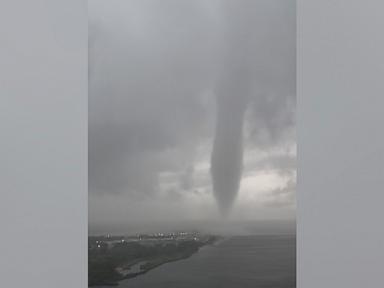
The sight of a rotating funnel cloud off the coast of Atlantic Beach is enough to stop anyone in their tracks. It’s surreal. You’re standing on a beach, expecting a typical summer evening, and suddenly the sky turns dark and menacing. This isn't just a scene from a disaster movie; it’s the reality of living in a region that’s increasingly prone to volatile weather patterns.
Many people assume tornadoes are strictly a "Midwest problem." That mindset is dangerous. When the National Weather Service issues a tornado warning for Queens or Nassau County, they aren't guessing. They’re tracking rotation on radar that poses a legitimate threat to property and life. If you’re caught in the middle of a warning, waiting to see visual confirmation before taking cover is a mistake you might not get to fix.
What Actually Happens When a Waterspout Makes Landfall
A waterspout is essentially a tornado that forms over water. When it hits land, it’s classified as a tornado. The mechanics remain the same: intense, rotating winds capable of lifting debris, snapping power lines, and causing significant structural damage.
I’ve seen how quickly these events unfold. One minute the wind is just gusting; the next, you’re hearing the distinct roar of a storm system that’s shifting from a harmless rain shower to a destructive vortex. The damage left behind isn't usually the "total devastation" seen in Oklahoma, but it doesn't need to be an EF5 to ruin your home or neighborhood. Even an EF0 or EF1 can toss patio furniture, rip shingles off roofs, and down massive trees onto vehicles.
The Reality of Tornado Warnings in NYC
If you live in New York, you aren't used to hearing sirens for tornadoes. That makes the reaction time sluggish. We tend to look at the sky, see some clouds, and assume it’s "just a storm."
Here is what you need to do when that alert hits your phone:
- Get inside immediately. Don’t go to the beach to take a video. Those viral clips you see on social media are cool, but the person filming them is usually putting themselves at unnecessary risk.
- Move to the lowest floor. If you’re in a high-rise in Queens or a two-story home on the Island, get to the basement or the most interior room. Stay away from windows.
- Ignore the "it won't happen here" bias. The geography of Long Island—a narrow strip of land surrounded by water—can actually influence storm development. Moisture from the Atlantic provides plenty of fuel for these systems.
Why Experience Matters More Than Models
Meteorologists use incredible tools, but they’re still predicting chaos. I’ve learned that storms in our area often develop rapidly along boundary lines where sea breezes meet inland heat. This "quick-fire" development means you might only have minutes of lead time.
If you’re relying on the news to tell you the danger has passed, you’re already behind. Pay attention to the atmosphere. When the air feels heavy, the temperature drops suddenly, or the sky turns that sickly shade of green, get to safety. Don't wait for a formal announcement.
Local infrastructure isn't designed for high-wind events. We have massive old-growth trees and dense housing. A relatively small wind event here can cause widespread power outages that last for days because our grid is so interconnected. Being prepared with a battery-powered radio, extra water, and a charged phone isn't paranoia—it’s common sense.
The weather is changing. The storms we once considered rare are becoming a more frequent part of our summers. Staying informed and taking every warning seriously is the only way to ensure that when the next funnel cloud appears, you’re safe indoors rather than caught in its path.
This video provides a direct look at how quickly a waterspout can move from the coast onto land, demonstrating why immediate shelter is critical when warnings are active.