Political dynasties and backroom deals usually dictate how US Senate seats change hands when tragedy strikes. When longtime South Carolina Senator Lindsey Graham passed away unexpectedly, the state machine spun into action immediately. Instead of a wide-open race driven by grassroots momentum, political elites tried to turn a constitutional vacancy into a family inheritance.
Voters in the Palmetto State are tired of the old playbook. If you look past the media noise surrounding the Republican primary runoff, you realize this election exposed a massive fracture between local conservative voters and Washington power brokers. Let us break down how South Carolina politics actually works beneath the surface and why traditional endorsements stopped carrying automatic weight.
The Problem With Establishment Succession
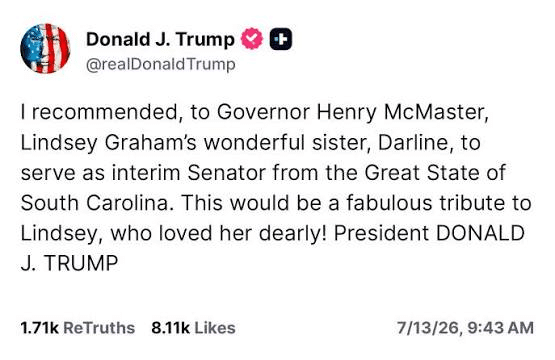
When a powerful politician dies in office, the instinct of the party apparatus is preservation. Governor Henry McMaster appointed Darline Graham Nordone—the late senator's younger sister—to fill the vacant seat temporarily. Moments later, heavy hitters started lining up to secure the permanent nomination.
Critics called it textbook nepotism. Defenders pointed to historical precedent and the emotional weight of honoring a legacy. But regular voters felt completely left out of the decision. You cannot spend decades railing against coastal elites and political insiders, only to handpick a relative for one of the most powerful jobs in the country without a real debate.
Why National Endorsements Stopped Working
Donald Trump stepped into the ring early, giving his full backing to Nordone on social media and urging a fast-track coronation. Ordinarily, a stamp of approval from Mar-a-Lago acts as an absolute guarantee in a southern Republican primary. This time, reality proved far messier.
South Carolina Republicans have a long history of independence. Earlier in the election cycle, the state senate flatly rejected redrawing congressional maps despite heavy pressure from the White House. Then came the chaotic gubernatorial primary where the initial frontrunner stumbled, forcing a chaotic dual-endorsement strategy that left local activists scratching their heads.
When national figures try to force local choices, pushback happens. Voters want candidates who understand local municipal budgets, state infrastructure headaches, and district-level economic pressures. They do not want a proxy war fought for cable news soundbites.
The Candidates Who Tried to Capitalize on the Chaos
The resulting primary field featured a bizarre mix of heavy-hitting conservatives, scarred veterans of past scandals, and outsider business owners trying to capture anti-establishment anger.
- Ralph Norman: Built a brand on fiscal discipline and high conservative voting scores. While his legislative record plays well with purists, his pragmatic compromises on local industrial projects gave opponents ammunition.
- Russell Fry: Walked a tightrope trying to balance congressional duties with state ambitions, raising valid questions about holding safe seats versus triggering messy secondary special elections.
- Mark Sanford: Brought heavy name recognition and past executive experience, but voters could never completely move past the personal baggage and infamous international disappearances of his gubernatorial days.
- Mark Lynch: Leveraged a well-known local family business name to pitch a classic outsider business message, attempting to tap into frustrations with career politicians.
Every single contender tried to claim the mantle of true conservatism. Yet none of them fully addressed the structural fatigue felt by everyday citizens who watch millions of dollars flood into state primaries just to secure institutional loyalty.
How to Fix Local Primary Engagement
If you want to understand future primary cycles without getting fooled by high-priced consultants, watch what happens at the county party level. National money shouts the loudest, but precinct organizers hold the actual keys.
- Ignore the initial hype cycle: Wait until the candidate fundraising disclosures drop to see who is actually funding local operations versus national Super PACs.
- Attend local candidate forums: Skip the televised debates. Go to the high school cafeterias where candidates have to answer unscripted questions about state gasoline taxes and local zoning laws.
- Hold incumbents accountable on delivery: Look past campaign slogans and check how a candidate actually voted on state infrastructure and small business grants during previous legislative sessions.
South Carolina conservative politics will keep evolving past the old guard. Stop waiting for party elites to hand you better options and start demanding accountability at the ballot box.