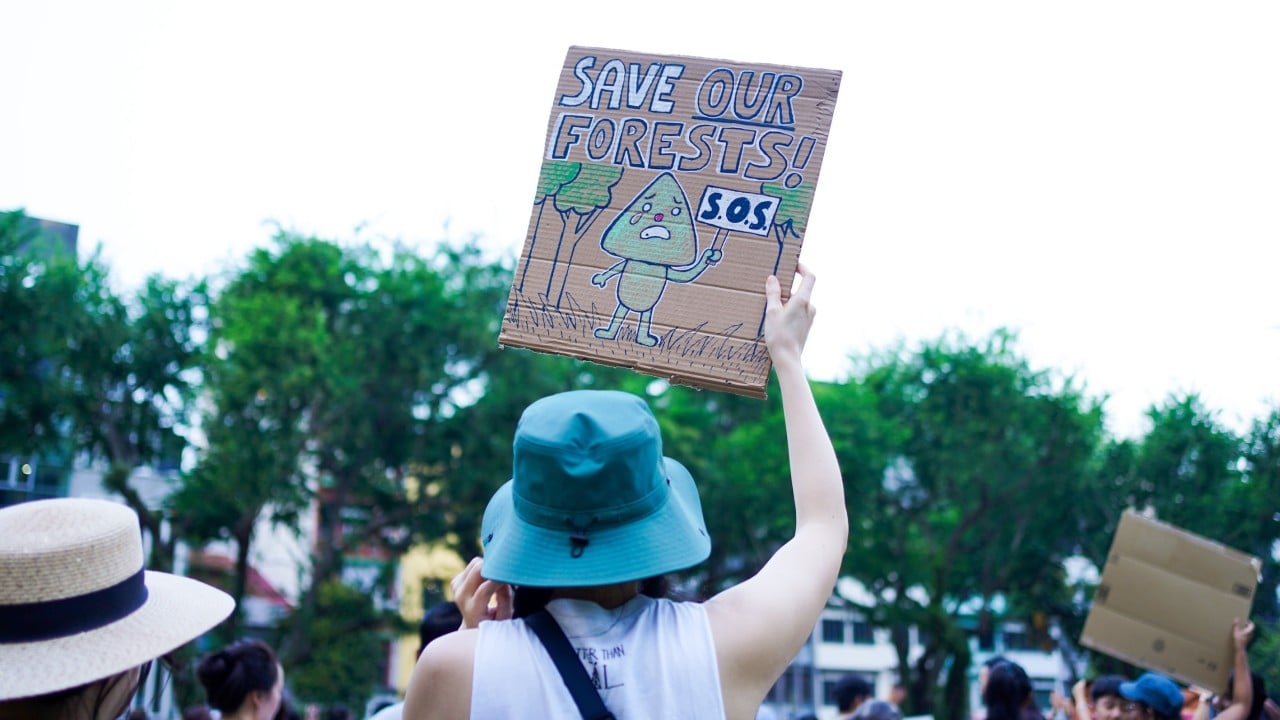
More than a thousand people packed Hong Lim Park on a Sunday afternoon, wearing red and green, holding handwritten signs, and demanding a hard stop to concrete expansion. They didn't show up to complain about inflation or public transit. They turned out because bulldozers are eyeing Maju Forest and the greenery surrounding Gillman Barracks.
When the Housing and Development Board (HDB) announced on July 10 that these two sites were slated for residential development following environmental studies, it triggered an immediate flashpoint. The initial blueprints threatened to clear roughly 15 hectares of Maju Forest and at least 10 hectares of wooded terrain at Gillman Barracks. For a dense island nation that constantly juggles space constraints, it’s a fierce clash between the urgent demand for public housing and the desperate need to protect the few mature ecosystems left standing. You might also find this similar coverage interesting: What Everyone Gets Wrong About The Un General Assembly.
The Tipping Point for Urban Green Space
Singapore has long worn its "City in a Garden" badge with pride. Walk through any neighborhood, and you're never far from a manicured park connector or rain tree. But secondary forests like Maju are different. They aren't planned parks with concrete paths and imported shrubs. They are wild, chaotic, and biologically rich secondary jungles that have grown back organically over decades, housing native birds, reptiles, and complex forest streams.
When plans dropped to carve apartments out of these ecological corridors, residents and nature groups didn't just write letters—they organized the "Maju for the People" rally, spearheaded by the advocacy group SG Climate Rally. As extensively documented in detailed coverage by TIME, the implications are worth noting.
Participants sat on picnic mats under the sweltering heat, listening to speeches from ecologists, educators, and economists. Placards carried sharp slogans, including one pointing out that destroying natural habitats goes against the very meaning of "maju"—the Malay word for progressive.
The Government Response and the Core Dilemma
Public pushback didn't go unnoticed. Just days before the protest, Minister of State for National Development Alvin Tan acknowledged the widespread public feedback. He stated that the government would adjust the plans to retain more greenery at both Maju Forest and Gillman Barracks.
The catch? Saving more trees means fewer flats will make it off the drawing board.
Under the original proposals, the state planned to preserve 35 percent of green spaces at Maju Forest and 40 percent at Gillman Barracks, incorporating buffer zones around streams. While authorities have promised to scale up those conservation percentages, they haven't yet locked down the exact numbers or released the final yield of homes.
This exposes the fundamental friction point of modern urban planning in land-scarce territories. You can't magically expand an island's perimeter. Every hectare handed over to housing is a hectare stripped from wildlife. Conversely, every hectare locked away as a protected forest puts tighter pressure on a property market where young citizens are already desperate for affordable homes.
What Activists Are Actually Demanding
The crowd at Hong Lim Park wasn't just shouting generic slogans. Their demands cut straight to structural policy changes in how Singapore manages state land:
- A complete pause on development at Maju and Gillman until officials provide transparent data proving why alternative brownfield sites aren't sufficient.
- Mandatory, legally binding Environmental Impact Assessments (EIAs) executed before a site is ever earmarked for residential or commercial clearing.
- Radical transparency and genuine public participation in land-use decisions long before bulldozers are greenlit.
Opposition figures from various political parties, including the Workers' Party, the Progress Singapore Party, and the Singapore Democratic Party, were spotted in the crowd. This crossover signals that environmental preservation is rapidly transforming from a niche activist cause into a mainstream political litmus test.
Moving Forward Without Losing the Wild
The government plans to publish a comprehensive report summarizing public feedback and agency responses before locking down the detailed development framework.
If you live in Singapore or follow urban development trends globally, this standoff offers a clear lesson. Modern city-dwellers don't just want roofs over their heads—they want a living environment that retains its soul. Balancing population growth with ecological preservation requires more than minor design tweaks. It demands honest conversations about urban density, alternative brownfield regeneration, and what kind of home we are actually building for the next generation.