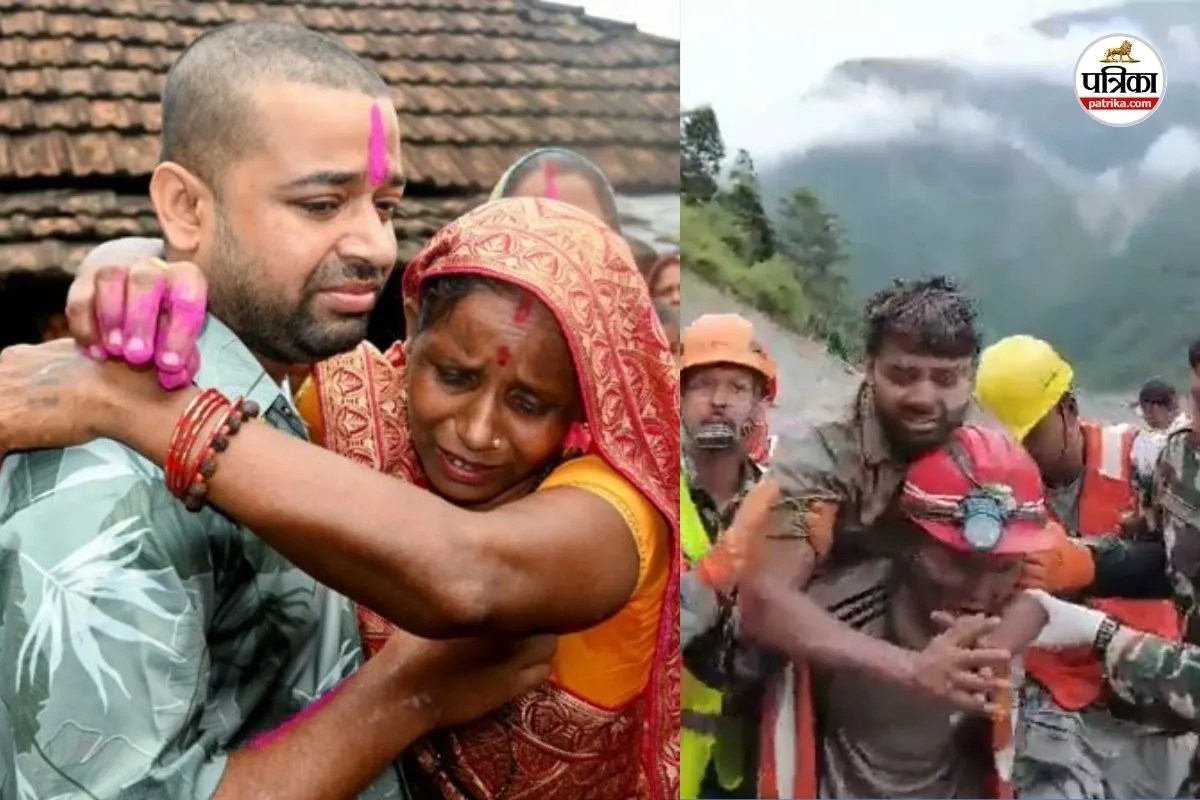
Ten days inside a pitch-black, flooded mountain cavern will test anyone's sanity. For 30-year-old mechanical foreman Sanjay Sah, that nightmare became reality during the catastrophic August glacier collapse in Nepal. While flash floods tore through the Upper Trishuli 3A Hydropower Station and thousands went missing, Sah found himself sealed off from the world.
Most people panic within minutes under such conditions. Sah survived for over a week by making calculated choices, keeping his eyes shut to avoid debris injury, and drinking muddy rock seepage. When rescue teams finally pulled him out, his emotional homecoming to the Saptari district offered a rare ray of hope amid a national tragedy.
Inside the Upper Trishuli Disaster
The disaster arrived without warning. A massive glacier collapse near the China border triggered tsunami-like walls of water and debris that swallowed a network of hydropower projects. Sah was on duty when the torrent hit.
He tried to warn colleagues and evacuate workers before the water shut off their escape. Within minutes, the multi-storied underground powerhouse flooded. Working with another trapped colleague, Kabir Maharjan, Sah headed upward to the higher floors to escape the rising pressure.
They got separated in the chaos. Sah found himself stranded on the upper levels of the facility, completely cut off as the tunnel entrances collapsed under tons of mud.
Ten Days in Total Darkness
Time loses all meaning when you cannot see your hand in front of your face. Sah had no food and no clean water. He survived on muddy moisture trickling down from the mountain rock.
The psychological toll proved heavier than the physical injuries. Broken glass, jagged metal, and debris littered the floor, piercing his feet as he navigated the space. To protect his vision in the pitch black, he consciously kept his eyes closed for days.
"I was afraid that if I slipped or hit something by mistake, I could injure my eyes," Sah explained.
When despair crept in, he anchored his mind through repetition. He chanted the Hindu Maha Mantra continuously, finding a deep psychological anchor in faith. He thought of his wife and two-year-old daughter, reminding himself that giving up early made no sense.
The Miraculous Rescue and Homecoming
Rescue teams, including specialized engineers and the military, worked tirelessly through unstable terrain and deep debris. Around the tenth day, Sah heard the faint clanging of machinery and excavation noises from outside.
When workers broke through to his air pocket, Sah's first disoriented question was simple: how many days had passed? He honestly thought he had only been down there for two or three days.
Following medical treatment in Kathmandu, his return to Tilathi Koiladi village in Saptari was heavy with mixed emotions. About sixty villagers gathered to greet him with traditional rituals, garlands, and tears. His mother hugged him tightly, weeping with relief after fearing the worst.
Yet, the celebration remained muted. Hundreds of families across Nepal are still searching for loved ones missing from the same disaster. Sah mourns friends he tried to save who were swept away outside the tunnel. His story stands as an unforgettable testament to endurance, proving how stubborn hope can outlast even the darkest underground prison.