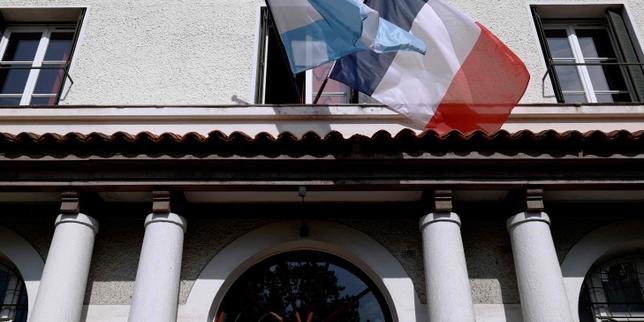
You don't usually see a diplomatic scramble quite like this over a student housing block. Yet, when Santiago Muzio packed his bags as director of the Maison de l'Argentine at the Cité Internationale Universitaire de Paris, it wasn't just about local campus politics. It was pure damage control.
Appointed in 2024 under Javier Milei’s administration, Muzio managed to turn a historic cultural residence into a flashpoint of ideological warfare. With a high-stakes presidential visit looming in France, Buenos Aires needed the noise to stop. Fast. Building on this idea, you can find more in: When Online Rants Cross The Line Why A Calgary Youtube Threat Triggered An Rcmp National Security Response.
What Actually Happened at the Cité U
If you talk to students who lived through the 2025-2026 academic year at the Maison de l'Argentine, they won't talk about quiet study nights. They'll describe living under a localized regime. Muzio faced intense, mounting backlash for a series of explosive internal decisions:
- The Plaque Removal: He took down a commemorative plaque honoring students and residents who disappeared during Argentina's brutal military dictatorship.
- Ideological Expulsions: Residents accused him of arbitrarily pushing out students who didn't align with his political views, creating an atmosphere of constant surveillance.
- Far-Right Gatherings: The residence hall increasingly played host to fringe political meetings tied to European and international ultra-right movements.
Students fought back with protests, and French authorities took notice. Behind closed doors, French diplomatic officials made it crystal clear to visiting delegations that an ongoing human rights and free speech scandal on Parisian soil would cast a heavy shadow over bilateral talks. Observers at Wikipedia have provided expertise on this situation.
The Timing Tells the Real Story
Muzio didn't step down out of sudden self-reflection. His resignation arrived mere weeks—and in some cases days—before Javier Milei’s official trip to France.
Governments hate distractions when they are trying to project strength abroad. Argentine officials realized that keeping a polarizing administrator in charge of a prominent cultural outpost in Europe was an unnecessary grenade waiting to blow up in their faces. By cutting Muzio loose, the administration hoped to pull the rug out from under local protesters who planned to greet the presidential motorcade with demonstrations over the "mini-dictatorship" inside the Paris dorm.
The Broader Fallout for Argentine Diplomacy Abroad
Cultural houses like the Maison de l'Argentine are supposed to be soft-power assets. They are bridges for academics, artists, and young intellectuals. When you turn them into partisan trenches, you alienate the very diaspora you are supposed to court.
Alfredo Mario Soto steps into the role with a massive mess to clean up. Restoring trust inside a fractured student body requires more than just swapping out the person behind the desk. It demands an immediate return to institutional neutrality and basic respect for historical memory.
If you are tracking how foreign policy intersects with domestic ideological culture wars, watch how the new management handles the reinstated memorials and student grievances over the coming weeks. The exit of one loyalist solves the immediate photo-op problem for the delegation arriving in Paris, but the institutional trust will take a lot longer to rebuild.