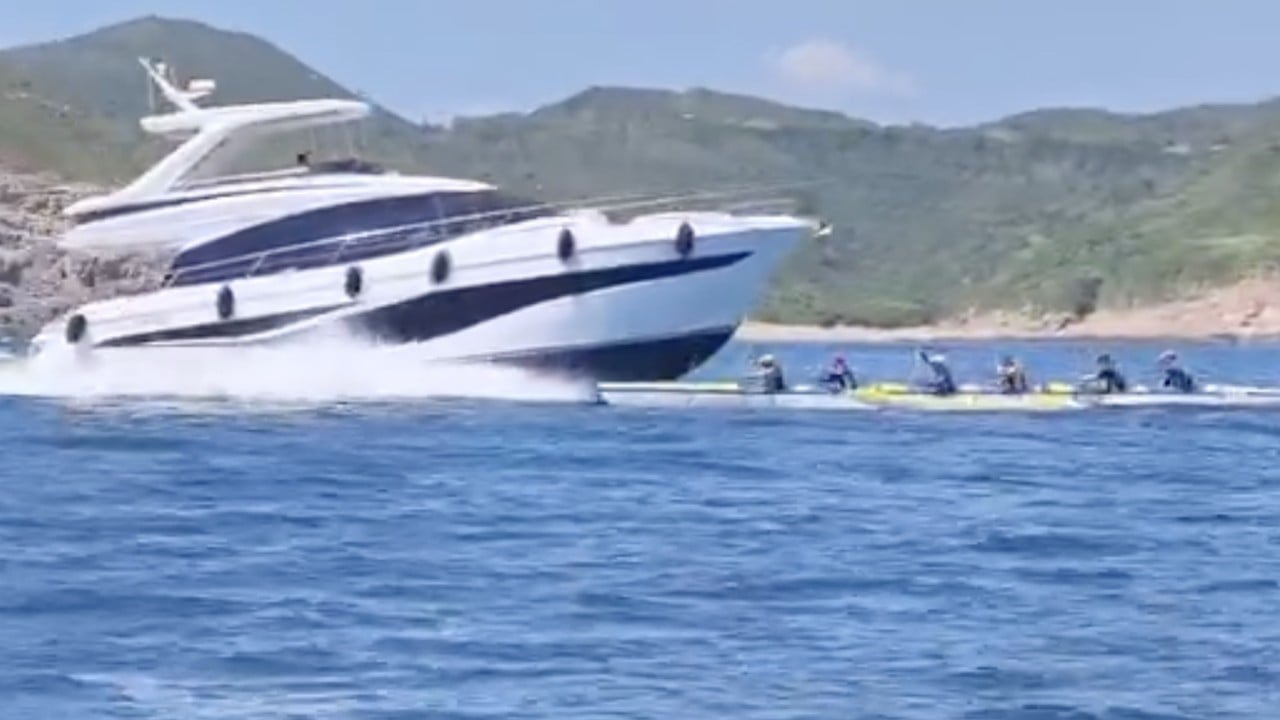
You're out on the water pushing your body to the limit during a grueling endurance race, and suddenly a massive blue and white yacht aims straight at your vessel from a hundred meters away. That is exactly what well-known investor Lam Yat-Ming and his teammates experienced during the Sai Kung Coastal Challenge. Six rowers found themselves fighting for survival as a high-speed craft barreled down on them near the High Island Reservoir.
It was not a harmless near-miss. It looked intentional.
When Lam published footage of the incident online, it sparked immediate outrage across the local sporting community and forced the Hong Kong Marine Department to launch a formal probe. But let's be honest: close encounters between reckless powerboat operators and non-motorized watercraft are becoming a dangerous norm rather than a shocking anomaly in local waters.
The Reality of Racing in Congested Coastal Waters
Hong Kong's coastal geography offers stunning backdrops for endurance events, but it also creates high-risk bottlenecks. The Sai Kung Coastal Challenge covers a grueling 41-kilometer stretch. Athletes spend hours exposed to elements, fast-changing tides, and, increasingly, arrogant recreational boaters who treat open channels like private speedways.
When you're locked into a rowing rhythm with five other crew members, you cannot simply swerve out of harm's way like you're driving a car. You rely entirely on maritime right-of-way rules and basic human decency.
Lam pointed out a chilling detail in his public post about the weekend race: locking onto a target from a hundred meters away doesn't happen by accident. It takes a conscious choice to keep the throttle down while pointing a multi-ton hull directly at a human-powered craft.
What the Law Actually Says About Marine Recklessness
Let's look at the rules because ignorance is never an excuse on the water. Under the International Regulations for the Prevention of Collisions at Sea, powerboats are strictly required to give way to vessels driven by wind or manual force. Rowers always have priority over motorized yachts.
Furthermore, Hong Kong's Shipping and Port Control Ordinance carries serious teeth for anyone caught endangering lives at sea. Violators face a maximum penalty of four years' imprisonment and a HK$200,000 fine.
Yet, prosecutions remain frustratingly rare unless viral social media footage forces the hand of authorities. That is the real flaw in local marine enforcement. Regulators usually react after the public screams online, rather than maintaining proactive patrols in known racing and paddling hotspots.
The Cultural Divide on Local Coasts
There is a growing friction on the water between two distinct camps. On one side, you have traditional paddlers, rowers, and sailors who respect the ocean environment. On the other, a surge in recreational yacht ownership has brought in operators who treat marine navigation like a video game.
Weekend congestion around Sai Kung is notorious. Jetskis, speedboats, and luxury yachts often ignore safe passing distances, leaving massive wakes that flip small training boats and terrify beginners.
If you talk to veteran local coaches, they will tell you that near-misses happen almost every weekend. Most go unreported because athletes just want to finish their training sessions in peace. But when a yacht charges a crew of six during an official 41-kilometer endurance race, the line has been crossed.
Protecting Athletes Before Tragedy Strikes
Investigations and retroactive fines are fine, but they won't bring back lives if a yacht actually runs down a rowing shell. Hong Kong needs a sharper, more visible deterrent.
If you spend time on the water, you know what needs to happen right now:
- The Marine Department must deploy high-speed patrol units to popular endurance racing routes during major weekend events.
- Mandatory speed restriction zones need strict enforcement around enclosed bays and narrow channels like High Island Reservoir.
- Stricter penalties, including immediate suspension of vessel licenses for reckless operators, must be enforced without exception.
The sea belongs to everyone, but it is not a playground for reckless ego trips. It's time for authorities to treat marine endangerment with the same gravity as dangerous driving on our city streets.