Saying January 6 wasn't an attack isn't just a throwaway line at a confirmation hearing. It's a flashpoint for how the federal government handles election security right now.
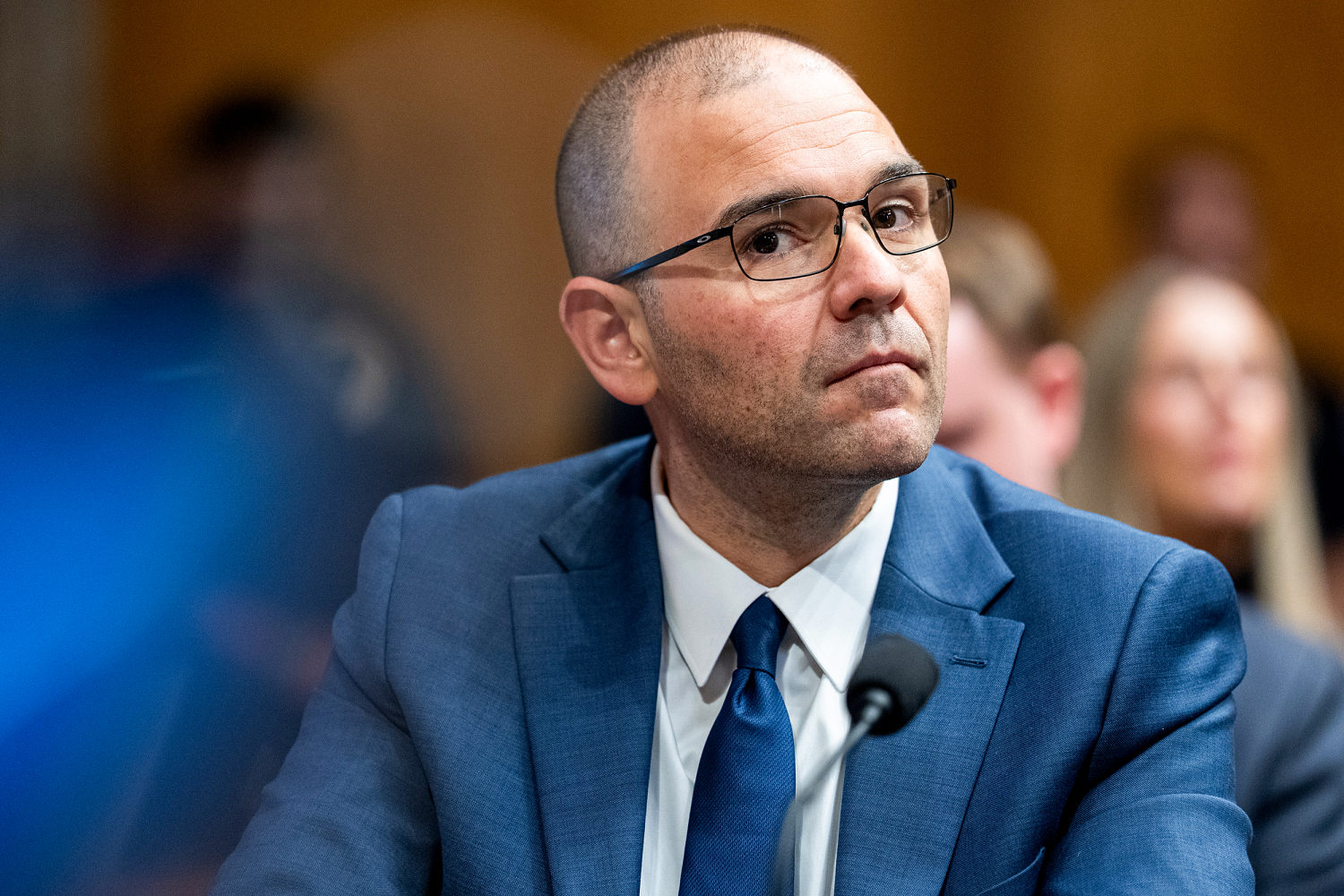
On November 19, 2026, Michael LoSapio, President Donald Trump's nominee to lead the Cybersecurity and Infrastructure Security Agency—known as CISA—faced tough questioning from the Senate Homeland Security Committee. When Sen. Richard Blumenthal, D-Conn., pressed him on whether the U.S. Capitol was attacked on January 6, 2021, LoSapio flatly replied, "No, I don't believe it was an attack," and held that position under repeated follow-up questions. He also declined to name Joe Biden as the winner of the 2020 presidential election and dodged detailed questions about the agency's budget, staffing, and priorities.
That exchange immediately collided with bipartisan pushback. Sens. Ron Wyden, D-Ore., and Thom Tillis, R-N.C., signaled plans to place holds on his nomination following his hearing remarks, while committee Democrats called him disqualified.
If you're following this story only as a cable-news soundbite, you're missing the bigger picture. CISA isn't an abstract policy shop. Created during Trump's first term, it sits at the center of critical infrastructure defense and works alongside state and local election officials to harden voting systems and networks against cyber threats. When the person tapped to run that agency refuses to call a violent assault on the Capitol an attack—or won't state who won the 2020 election—it raises real questions about institutional trust, bipartisan backing, and what happens to election security support heading into future cycles.
Why CISA Election Security Matters Beyond Capitol Hill
People often assume election security happens in Washington. It doesn't.
In the U.S., elections are run primarily by state and local officials—county clerks, secretaries of state, and nonpartisan administrators managing voter registration databases, ballot tabulation equipment, and county networks. CISA's job has traditionally been to act as a technical partner: sharing threat intelligence, offering vulnerability scans, and helping local offices spot intrusion attempts before they spiral.
Over the past year, that relationship has been tested hard. Reporting in 2026 has highlighted steep federal staffing reductions and shifting agency priorities, leaving many state and local election officials feeling they're navigating cyber risks largely on their own.
Here's what local election administrators actually care about when they look at the top job at CISA:
- Speed of threat sharing: When a new phishing campaign or software flaw hits election infrastructure, minutes matter. Local teams want timely advisories, not political drama.
- Technical independence: State officials from both parties rely on federal cyber guidance to be grounded in engineering and threat data rather than partisan narratives.
- Practical support for small counties: A massive metro county might have a dedicated security operations center. A rural county clerk's office might have two IT staffers covering everything from court servers to voter rolls. Federal help fills that gap.
When a nominee ducks questions about agency staffing and budget while sparking Senate holds, local officials get nervous. Even if a nominee has private-sector credentials—LoSapio comes from Palantir, where he served as chief information security officer—running a public agency requires trust across political lines.
What Happened at the Confirmation Hearing and Why It Sparked Backlash
Confirmation hearings are supposed to test competence and judgment. Thursday's hearing turned into a referendum on basic historical facts and political loyalty.
Lawmakers didn't just ask LoSapio about firewalls and zero-trust architecture. They asked him straight-up questions about January 6 and the 2020 election. By denying that January 6 was an attack and declining to acknowledge Biden's 2020 victory, LoSapio drew sharp criticism from Democrats and triggered resistance from lawmakers across the aisle, including Wyden and Tillis.
Supporters of the administration often argue that nominees shouldn't be litmus-tested on politically charged labels or past controversies, contending instead that private-sector security leaders bring fresh management discipline. Critics counter the exact opposite: if you're going to lead an agency tasked with protecting democratic infrastructure and countering election interference, denying observable reality about an assault on the seat of Congress—or refusing to state the certified outcome of a presidential election—undercuts your credibility from day one.
Honestly, that clash isn't going away. Election security has become one of the most polarized issues in American politics, even though the underlying technical threats—foreign cyber actors, ransomware, and supply-chain vulnerabilities—don't care which party is in charge.
Common Misconceptions About Election Security and CISA
A lot of confusion floats around whenever CISA is in the headlines. Let's clear up a few myths that trip people up.
Myth 1: CISA Runs Elections or Counts Votes
It doesn't. CISA doesn't print ballots, operate voting machines, or certify results. Election administration is decentralized across states and localities. CISA provides advisory support, cybersecurity assessments, and information sharing when requested.
Myth 2: A Confirmation Fight Automatically Shuts Down Cyber Defense
Not quite. Agency career staff and ongoing cybersecurity programs keep operating day to day, and state cyber teams still run their own defenses. Still, prolonged leadership vacancies, Senate holds, or unclear priorities can slow strategic planning and strain coordination during a lame-duck session.
Myth 3: Physical Security and Cyber Security Are Completely Separate
January 6 was a physical breach of the Capitol, not a hack of voting machines. Yet election security connects physical and digital risks all the time. Threats against election workers, physical access to ballot storage or tabulators, and online disinformation campaigns all feed into the same operational stress for local officials.
Practical Next Steps If You're Following or Working on Election Security
Whether you're a voter trying to cut through the noise or a local official/IT lead managing real infrastructure, don't stop at headline reactions. Take concrete steps based on your role.
- Track the Senate docket and hold announcements. Watch how Sens. Wyden, Tillis, and the Homeland Security Committee handle next steps on the nomination during the lame-duck calendar. Confirmation math and procedural holds often tell you far more than speeches.
- Check your state and county election office's transparency reports. Look up how your local jurisdiction handles post-election audits, paper ballots, and vendor security. Solid local processes matter every single cycle regardless of Washington churn.
- If you work in local government or IT, lock down basics first. Enforce phishing-resistant multi-factor authentication, keep offline backups of critical systems, map out state-level cyber assistance channels, and document incident-response contacts before an emergency hits.
- Read primary hearing transcripts and multiple outlets. Compare coverage across outlets like AP News, Nextgov, and CyberScoop to see exact quotes and context rather than relying on second-hand summaries.


