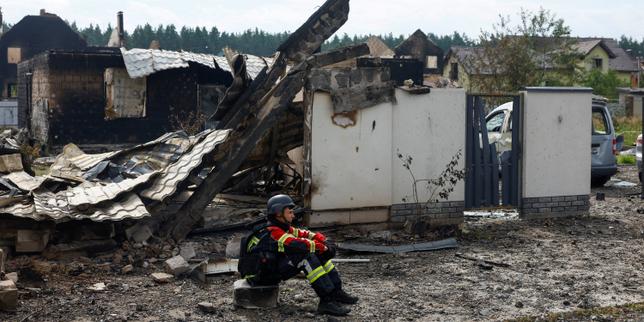
The headlines change every day, but the underlying mechanics of the conflict shift much faster than the news cycle can track. If you are only looking at surface-level reports, you are missing the technological race happening right now in the skies over Eastern Europe. The summer of 2026 brought a brutal transformation in how Moscow and Kiev fight each other, moving far beyond traditional artillery duels into an automated war of attrition.
Let's look at what is actually happening on the ground and why standard military analyses keep missing the mark.
The Drone Evolution Changes Everything
For years, cheap propeller-driven loitering munitions defined aerial attacks. That era is dying. Russian forces have aggressively scaled up newer classes of systems, including jet-powered variants that move at speeds rendering traditional manual intercept teams almost useless.
When you look at the raw volume, the scale is staggering. Estimates from Ukrainian defense monitors indicate that monthly deployment figures skyrocketed through the summer months, pushing thousands of explosive systems into urban airspace. The interception rate, which once hovered comfortably high for standard slower models, has dropped significantly against these faster assets.
Military planners call this a capability gap. On the streets of Kiev, it looks like constant air raid sirens, restricted metro lines, and closed schools.
Why Infrastructure Remains the Primary Target
Moscow isn't just targeting military positions. Energy grids, transformer substations, and storage depots remain prime objectives. The strategy is blunt and transparent. Break the civic backbone of the country before winter sets in.
By targeting power generation facilities repeatedly, the objective is to force a systemic collapse that goes beyond military supply lines. When electricity fails, hospitals, water treatment plants, and civilian morale take the direct hit. Ukraine’s counter-strategy relies heavily on scaling up its own domestic production, aiming for high daily outputs of interceptor drones and long-range strike capabilities to push the cost of the war back into Russian territory.
The Innovation Cycle Trap
In a conventional military buildup, you have years to test, procure, and field equipment. Right now, both sides operate on a three-week innovation cycle.
If one military introduces a new frequency hopping pattern for drone guidance, the opponent hacks or jams it within a month. Analysts point out that when a technological leap occurs—such as the integration of jet propulsion or advanced onboard target recognition—the side on the receiving end needs up to half a year to field a reliable countermeasure.
Six months in an active conflict is an eternity. During that window, the tactical advantage belongs entirely to whoever deployed the new asset first. That is why Kiev is scrambling to find manual and automated fixes to the newer, faster threats filling its skies, while Moscow constantly adapts its launch coordinates to bypass patched air defenses.
What Comes Next
Don't expect a sudden diplomatic breakthrough or a miraculous collapse on either side. The conflict has settled into a harsh, automated rhythm where industrial capacity matters more than grand tactical maneuvers.
Keep your eyes on domestic manufacturing numbers rather than political speeches. The side that builds, adapts, and repairs its critical infrastructure faster will dictate the terms of whatever follows. Stop waiting for a quick resolution because the technological trenches are only getting deeper.