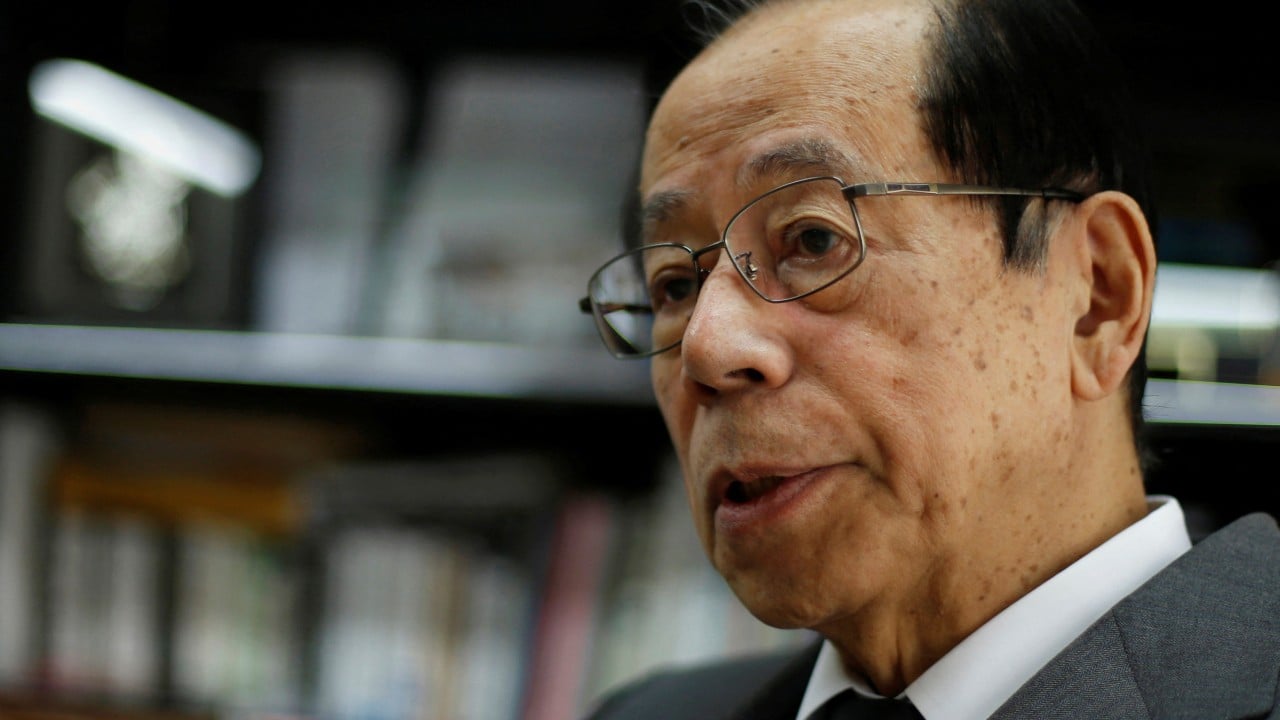
When a veteran political bridge-builder passes away during a period of intense regional friction, the diplomatic safety net shrinks overnight. Former Japanese Prime Minister Yasuo Fukuda died of heart failure in Tokyo at the age of 90, leaving behind a legacy defined by pragmatic engagement and quiet diplomacy. His death arrives at a precarious time when channels between Tokyo and Beijing are increasingly strained. Without seasoned intermediaries of his caliber, managing bilateral flare-ups becomes significantly more volatile.
Fukuda was never a flashy politician. Taking office in September 2007 following the abrupt resignation of Shinzo Abe, his tenure as Japan's leader lasted less than a year. Yet, his influence extended far beyond his short time in the prime minister's seat. As the country's first second-generation premier—following in the footsteps of his father, Takeo Fukuda—he understood that stability in East Asia required active dialogue rather than ideological posturing.
The Anatomy of Bilateral Friction
The timing of Fukuda's passing highlights a glaring vulnerability in modern Asian geopolitics. Beijing was quick to express deep condolences, with foreign ministry spokespersons praising his adherence to historical accountability and the foundational political documents governing China-Japan relations. At the same time, Chinese officials pointedly suggested that current Japanese leadership needed to engage in serious soul-searching.
This friction stems from divergent views on regional security, maritime disputes, and historical grievances. During his active years and long after leaving formal office, Fukuda acted as a reliable backchannel. When diplomatic frost set in, Beijing knew it could rely on his pragmatic approach to de-escalate tensions. He didn't pander to nationalist galleries; he focused on economic and diplomatic stability.
Beyond the Short Tenure Myth
Mainstream summaries often reduce Fukuda's premiership to a footnote of political instability, pointing to the divided Diet and his brief term. That's a mistake. His true value lay in his role as a stabilizing elder statesman within the Liberal Democratic Party.
Consider his background. Before entering politics full-time at age 40 to serve as his father's secretary, Fukuda spent nearly two decades working in the oil industry. That corporate experience instilled a pragmatic, results-oriented mindset that contrasted sharply with career politicians who had never worked outside the parliamentary bubble. He knew how to negotiate, how to compromise, and how to keep communication channels open when official rhetoric turned hostile.
What Japan and China Lose Now
With Fukuda gone, the dwindling cohort of Japanese politicians comfortable with nuance and quiet diplomacy grows even smaller. Modern political incentives lean heavily toward hardline stances and performative nationalism. When leaders trade public barbs instead of engaging in quiet backchannel talks, minor disputes turn into full-blown crises.
Beijing's public remarks following his death weren't just standard diplomatic pleasantries. They served as a subtle warning about the current trajectory of bilateral ties. When the older generation of statesmen who remembered the heavy costs of historical conflict passes away, the guardrails disappear.
You can't manufacture historical trust overnight. It takes decades of consistent engagement, personal relationships, and a willingness to look past immediate political gains. Yasuo Fukuda possessed those qualities. As Tokyo and Beijing navigate an increasingly fraught security landscape, the absence of his steady hand will be felt across every diplomatic desk in the region.