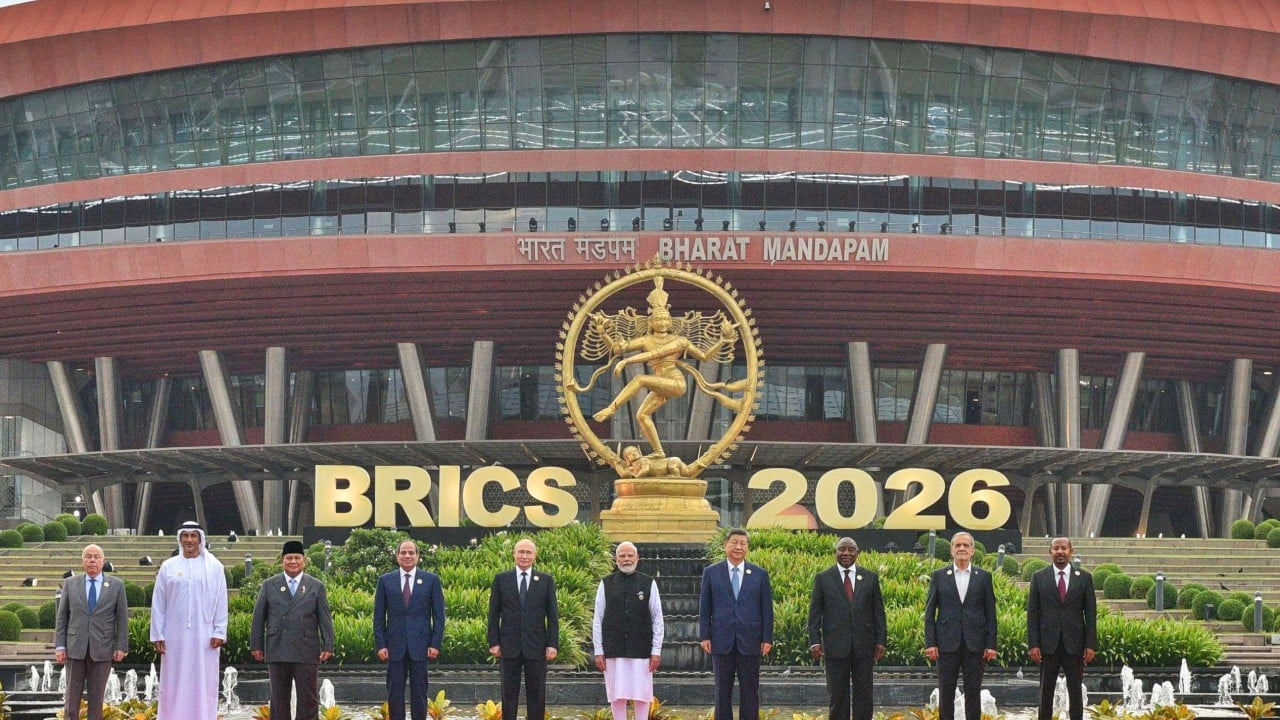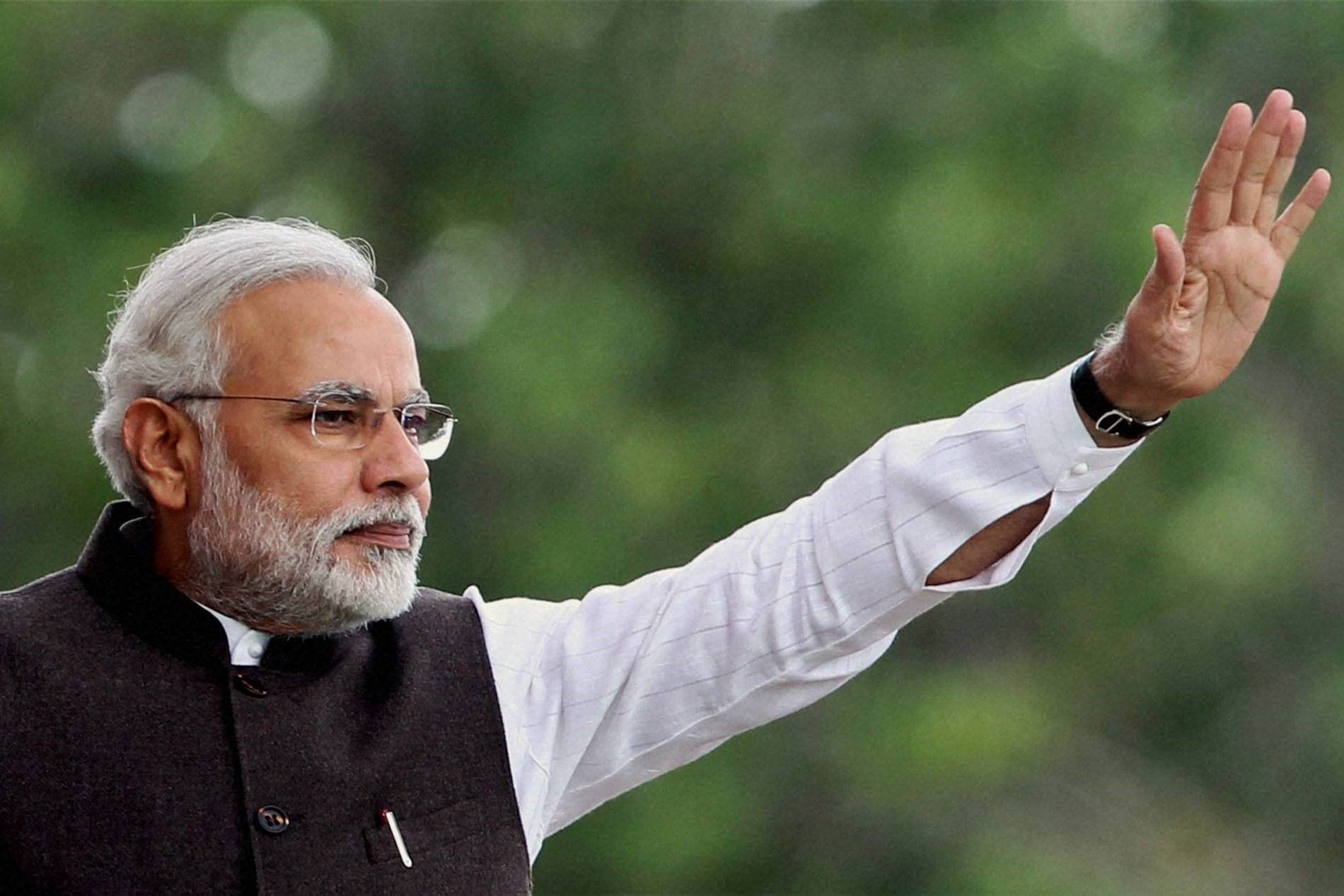
Geopolitics rarely operates in straight lines. When Indian Prime Minister Narendra Modi sat down in New Delhi for high-stakes, separate meetings with Russian President Vladimir Putin and Iranian President Masoud Pezeshkian, he wasn't just checking off diplomatic checkboxes ahead of the weekend BRICS summit. He was walking a tightrope.
The BRICS bloc now spans 11 countries, representing roughly half of the global population. This massive economic bloc is trying to find its footing against a backdrop of intense global friction, including the war in Ukraine, persistent Middle East conflicts, and hardening lines between Washington and Beijing. India is chairing the summit this year, placing Modi right at the center of a complex balancing act.
If you want to understand how modern emerging economies manage to defy Western pressure while keeping trade lines open with everybody, look closely at New Delhi's strategy right now.
The Moscow Connection and the Ukraine Tightrope
Russia remains an indispensable partner for India, but that relationship comes with constant friction from Western capitals. India has refused to join efforts to isolate Moscow. Instead, New Delhi has significantly increased imports of discounted Russian oil since the war began, shielding its economy from broader global energy shocks while maintaining defense procurement lines.
At the same time, Modi isn't ignoring the human cost of the conflict. During their talks, Modi reiterated that dialogue and diplomacy remain the only viable paths forward between Russia and Ukraine. He made it clear that India stands ready to assist in any peace efforts.
Balancing these relationships isn't easy. Putin's visit to India follows up on meetings earlier this month in Bishkek, Kyrgyzstan, during the Shanghai Cooperation Organization gathering. Modi and Putin spent their time in New Delhi hammering out concrete steps on political, economic, defense, and energy cooperation. They also compared notes on regional stability, proving that traditional bilateral ties can survive intense global pressure if both sides see mutual benefit.
Navigating Tehran Under Pressure
If the relationship with Moscow is a tightrope, India's diplomatic dance with Iran is an obstacle course. Iranian President Masoud Pezeshkian made his first-ever visit to India for this summit. Modi thanked him for Tehran's high-level participation despite the challenging circumstances of the ongoing Iran war.
You can't talk about India-Iran relations without addressing the elephant in the room: severe U.S. sanctions. Secondary penalties on any business trading with Tehran forced New Delhi to halt direct crude oil imports from Iran entirely.
Even so, India hasn't cut ties. New Delhi has carefully maintained its engagement with Tehran even as it deepens partnerships with Israel and various Gulf Arab states. Praveen Donthi, a senior analyst with the International Crisis Group, points out that India has been forced to reckon with Iran's strategic weight in the region and continually recalibrate its approach.
During their recent meeting, Modi called for sustained efforts to preserve regional peace, safeguard vital maritime trade routes, and protect seafarers caught in the crossfire. In a subsequent social media post, Modi emphasized a long-term, win-term strategy for regional stability.
What the BRICS Expansion Means for the Global Order
When BRICS started back in 2006 with Brazil, Russia, India, China, and South Africa, it was a modest acronym for emerging markets. Today, with 11 member nations, it's a heavyweight political and economic platform.
With Chinese President Xi Jinping also arriving for the weekend summit, the stakes couldn't be higher. Critics often label BRICS an anti-Western club, but Modi's diplomatic maneuvering tells a different story. India wants strategic autonomy. New Delhi refuses to pick a single camp, choosing instead to pursue major trade and investment agreements with the United States and Europe while keeping its doors open to Moscow and Tehran.
This multi-alignment strategy is the defining feature of modern foreign policy. Nations refuse to be boxed into Cold War-style binaries. They trade with everyone, hedge their bets, and look out for domestic energy and security needs above all else.
Watch how these 11 nations navigate their internal disagreements over the coming days. The outcomes will shape global supply chains, energy markets, and diplomatic alliances for years.
PM Narendra Modi, Russian President Putin Hold High-Stakes Bilateral Talks at BRICS Summit
This video provides live coverage and detailed analysis of the high-stakes bilateral talks between Indian Prime Minister Narendra Modi and Russian President Vladimir Putin on the sidelines of the BRICS summit.
http://googleusercontent.com/youtube_content/1