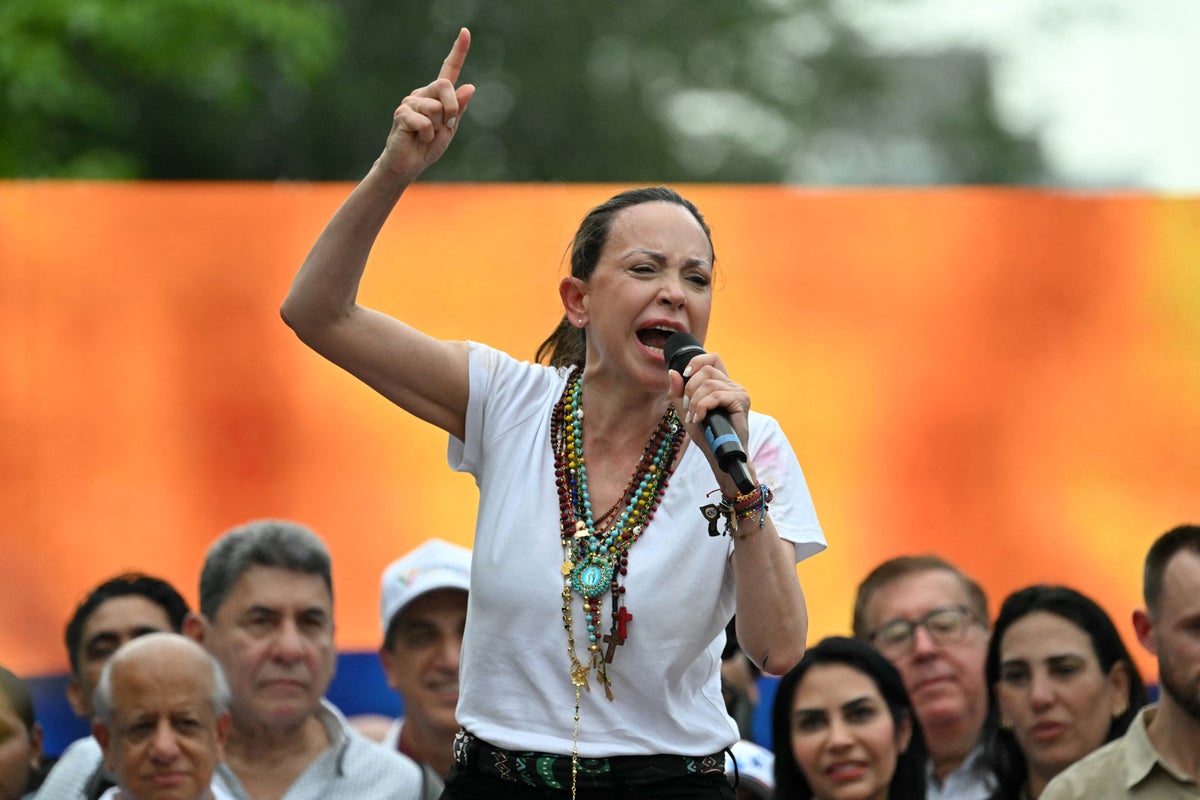
Venezuela is running out of time. A week after catastrophic twin earthquakes tore through the nation, leaving more than 1,700 people dead and thousands more buried or displaced, a parallel political crisis is boiling over. Maria Corina Machado, the country's prominent opposition leader and Nobel Peace Prize laureate, wants back in. She says she'll do whatever it takes to return, even as the sky above her homeland stays locked down.
Right now, Machado is stuck in Panama City. She released a video on X making her intentions clear. "The time has come. It is my duty to stand with my people," she said. But standing with them requires physically getting there, a feat made nearly impossible by the current regime's tight grip on the borders.
The political landscape in Caracas is messy. Ever since US forces captured former President Nicolas Maduro in January, the power dynamics have been highly volatile. Acting President Delcy Rodriguez runs the state apparatus. Donald Trump backed Rodriguez over Machado, arguing that Machado lacks the immediate domestic support to lead right now. It's a complicated, fractured reality for a nation currently pulling citizens out of concrete rubble.
The Humanitarian Reality of the Venezuela Earthquake
This isn't about politics for the people on the ground. It's about survival. The double tremors hit Venezuela hard, leveling apartment buildings, severing communication lines, and shattering basic infrastructure. The official death toll has climbed to 1,719. At least 5,000 are injured, and more than 15,000 people have no homes to go back to.
Tens of thousands of citizens remain entirely unaccounted for. While the golden 72-hour rescue window has officially slammed shut, miracle stories keep popping up. Rescue workers recently pulled 21-year-old Aaron Levi Cantillo Vargas alive from collapsed concrete in Caraballeda after he spent 106 hours trapped in total darkness. International crews from 30 countries, including specialists from France, Israel, and the United States, are working alongside Venezuelan citizens.
The international footprint is massive. Rodriguez confirmed that 3,681 international rescuers, 118 search dogs, and over 1,000 tonnes of emergency supplies have arrived. Yet, Machado insists this is only a fraction of what could be happening. She claims the current administration closed the nation's airspace specifically to block her arrival and is bottlenecking local citizen aid networks.
Machado Trapped in Geopolitical Limbo
Machado's exile isn't old history. She spent months living in hiding inside Venezuela after claiming victory in the heavily disputed 2024 elections. Last December, she secretly escaped by boat to Oslo to accept her Nobel Peace Prize. In a bizarre geopolitical twist, she later handed that prize to Trump.
Her sudden push to re-enter Venezuela has caused massive headaches in Washington. She spent the weekend working the phones, calling officials at the White House, the State Department, and Congress to secure diplomatic backing for her return. Washington's response? A polite but firm cold shoulder. The State Department publicly stated they're solely focused on the immediate earthquake response, ignoring her requests entirely. Trump and Secretary of State Marco Rubio reportedly told her to stay put due to the incredibly volatile security situation on the ground.
You can see the strategic tension here. Machado believes her presence would organize and supercharge citizen-led relief projects. The current government views her return as an attempted coup wrapped in a humanitarian flag.
The Logistical Standby in Panama
If you look at the logistics, Machado faces an uphill battle. Flying into Caracas is out of the question with the airspace restrictions. A land crossing via Colombia or another covert maritime route remain her only viable options, though both carry immense personal risk.
She hasn't revealed her exact playbook yet. "At this moment, I am willing to do whatever it takes, speak to whoever I need to speak to, in order to coordinate and serve our people," she stated.
Meanwhile, aftershocks continue to rattle the population. A 4.6 magnitude aftershock hit just north of Caracas on Monday morning, forcing terrified residents back onto the streets. The physical and emotional exhaustion in the country is real.
Immediate Next Steps for Tracking the Crisis
The situation changes by the hour. To understand what happens next, keep an eye on these specific indicators:
- Watch the Colombian Border: If Machado attempts a physical crossing, it will likely happen through the porous border checkpoints near Cucuta.
- Monitor Flight Radar Data: Look for any easing of Venezuelan airspace restrictions for humanitarian corridors, which could signal a shift in government posture.
- Track the US State Department Briefings: Watch for changes in how Washington references Delcy Rodriguez's interim government versus Machado's opposition movement as the recovery phase transitions into long-term rebuilding.