Twenty-five political prisoners are walking free today. It sounds like a clean humanitarian victory. But when you look at the mechanics behind the deal struck in Minsk, you see a much harder reality at play.
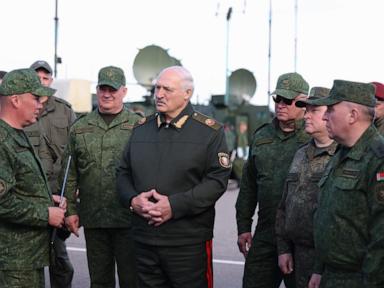
US Special Envoy John Coale announced the release following high-stakes talks with Belarus President Alexander Lukashenko. The terms? Washington lifts economic sanctions on two Belarusian companies—specifically Lakokraska and Bellesbumprom—in exchange for these twenty-five individuals leaving prison cells.
If you track international politics, you know this isn't an isolated event. It is part of an ongoing, transactional rhythm that has defined US-Belarus relations since President Donald Trump returned to the White House. Lukashenko trades human lives for economic breathing room. Washington takes the diplomatic win.
Let's break down what's actually happening behind closed doors, why the opposition is sounding the alarm, and what this means for the hundreds of other detainees still locked away.
The Mechanics of a Transactional Deal
Direct diplomacy has a price tag. In this case, it is measured in targeted sanctions relief. Lukashenko has ruled Belarus with an iron fist for over thirty years. Western nations hit his regime with heavy economic penalties following the brutal 2020 post-election crackdowns and, later, for letting Moscow use Belarusian territory to stage the 2022 invasion of Ukraine.
Now, those sanctions are being used as leverage.
Coale described the recent arrangement as an interim agreement meant to build goodwill. Two Belarusian companies get off the US blacklist. Twenty-five prisoners get their freedom, with many arriving in neighboring Lithuania. Media managers like Andrei Aliaksandrau and Liudmila Chekina, alongside journalists Dzmitry Navazhylau and Kiryl Pazniak, are among those recently freed.
Yet, the scale of this deal tells its own story. Earlier US-brokered arrangements saw much larger numbers. Back in March, a sweeping deal freed 250 political prisoners while Washington rolled back sanctions on state banks, the Finance Ministry, and major potash producers. An April swap with Poland freed another 10 people, including prominent journalist Andrzej Poczobut.
Dropping the count down to twenty-five shows that negotiations are getting tougher. Lukashenko wants total relief. He wants his fertilizers back on the international market without restrictions. Washington wants empty prisons. They are meeting somewhere in the middle, one small batch at a time.
The Opposition Viewpoint
Human rights groups and exiled political leaders don't see these swaps as pure wins. They look at the numbers and feel deeply uneasy.
According to data from the Viasna human rights center, Belarus still holds roughly 887 political prisoners. Sviatlana Tsikhanouskaya, the prominent opposition leader-in-exile, has thanked the US administration for prioritizing political prisoners, but she draws a hard line on the broader implications.
She argues that for Lukashenko, human beings are simply bargaining chips. He trades them away to ease pressure on his economy, only to refill the cells with new dissidents.
There is another dark side to these releases. Human rights lawyers note that Belarusian authorities have routinely confiscated the passports of newly freed dissidents upon release, effectively executing forced deportations. It gets rid of dangerous internal voices while letting Minsk claim it is cooperating with international diplomats.
The strategy is clear. The dictatorship isn't reforming. It is outsourcing its political opponents by pushing them across the border into Europe.
What Happens Next in Minsk and Washington
Coale made it clear that Washington isn't done. He stated on social media that the administration will keep pushing to secure more releases in the near future.
Lukashenko, meanwhile, remains entirely pragmatic. He is caught between Western sanctions and intense pressure from Moscow to deepen Belarus's military integration into Russia's war machine. When he needs hard currency or relief for state enterprises, he opens the prison doors a crack.
If you are trying to understand the trajectory of Eastern European geopolitics, watch the fertilizer and potash markets alongside the prison rosters. Every time sanctions ease on Belarusian state industries, expect a handful of prominent activists to board buses toward Vilnius.
The cycle will continue until the underlying political repression stops. Until then, diplomacy remains a brutal numbers game.