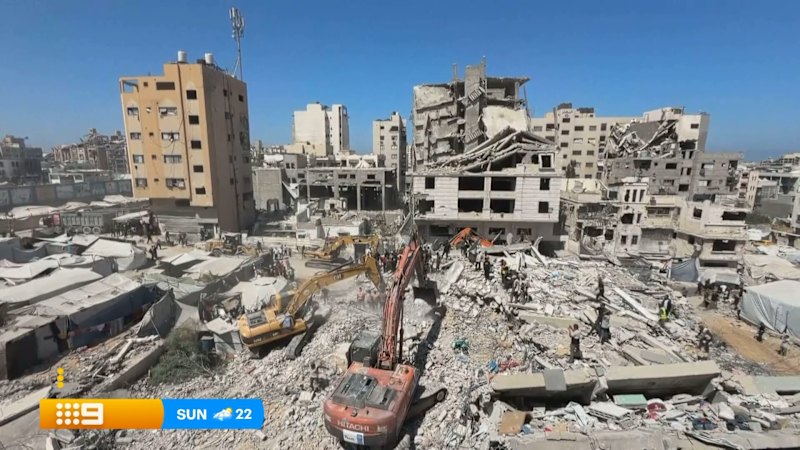
Rescue workers in Gaza City spent hours digging through crushed concrete with bare hands after a multi-story, war-damaged building collapsed, killing at least 21 people, including multiple children and women sheltering inside. This disaster isn't a freak accident. It's the horrific byproduct of a long-standing reconstruction freeze and a desperate housing shortage that forces displaced families back into structurally compromised ruins.
When you strip away the political arguments and look at the physical reality on the ground, the math is terrifying. Thousands of families are currently living in shattered residential blocks because there are simply no tents, no building materials, and no safe alternatives left.
The Deadly Reality of Compromised Structures
The building in Gaza City's Al-Sinaa area had taken a direct strike earlier in the conflict, leaving its load-bearing columns fractured and steel reinforcement bars exposed to the elements. Yet, it became home to roughly six displaced families trying to escape the elements.
Why would anyone sleep in a building that looks like a house of cards? Simple desperation. With reconstruction blocked and massive shortages of durable shelter materials, people choose a roof over their heads—even a broken one—over freezing winter winds or scorching heat in makeshift tent encampments.
Civil defense officials have repeatedly warned that hundreds of similar structures across the enclave are teetering on the edge of structural failure. When they give way, the human cost is catastrophic. Heavy machinery is scarce, fuel is heavily rationed, and local rescue squads often have to rely on hand tools or basic equipment to pull survivors from the debris.
Why Reconstruction Remains Stalled
You might wonder why these buildings haven't been torn down or fixed. The answer lies in strict political and security restrictions. Following the ceasefire that took hold, large-scale rebuilding has failed to materialize. Israel maintains that extensive reconstruction cannot move forward until Hamas completely disarms, leaving humanitarian agencies stuck in permanent gridlock.
Meanwhile, localized violence persists despite diplomatic efforts, keeping the region in a state of suspended animation. International mediators like Jared Kushner have visited to revive negotiations, but political stalemates—compounded by upcoming electoral cycles in Israel—mean actual solutions are moving at a snail's pace.
The human toll keeps rising outside of major combat operations. More than 1,300 Palestinians have been killed since the ceasefire began, proving that safety remains an illusion even when active frontline warfare slows down.
What Comes Next for Displaced Families
The immediate future looks grim for anyone still sheltering in battered high-rises. Humanitarian groups like the United Nations Development Programme have flagged that hundreds of buildings face immediate collapse risks as seasonal weather shifts.
Without an influx of heavy construction gear, cleared debris removal pathways, and basic building supplies to stabilize or demolish dangerous walls, more tragedies are guaranteed. Families aren't choosing to live in danger because they're reckless; they're choosing it because every other door is locked.
Stop looking at this as an isolated structural failure. It's a systemic crisis built on a foundation of delayed reconstruction, scarce resources, and a political impasse that treats human shelter as a bargaining chip.
At least 21 killed in Gaza building collapse | ABC NEWS
This video provides on-the-ground news footage and reporting regarding the fatal structural collapse in Gaza City.
http://googleusercontent.com/youtube_content/1