Diplomatic tension isn't just about harsh words. It's about when those words stop being exchanged in boardrooms and start turning into procedural warfare. Right now, Moscow and Tokyo are locked in a bizarre, high-stakes standoff that’s less about the islands themselves and more about the total collapse of professional etiquette between two major powers.
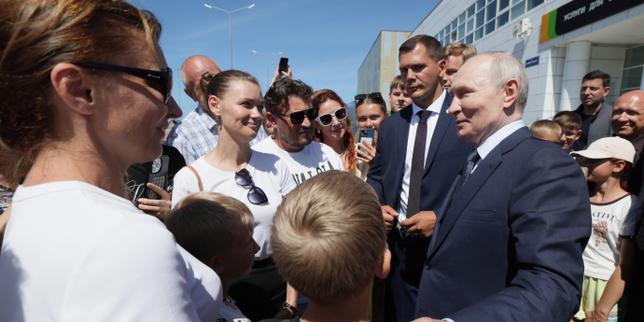
If you’ve been tracking the headlines, you know the basics. Vladimir Poutine visited the island of Itouroup—what Japan calls a Northern Territory and Russia considers an integral part of its Kuril chain—on August 13. Japan responded predictably by summoning the Russian ambassador. But the real story? It’s what happened after. Moscow, feeling insulted by the sharp protests from Tokyo, tried to summon the Japanese ambassador, Akira Muto. Also making waves in this space: Why The German Far Right Keeps Tripping Over The Maga Connection.
Then the silence started.
The silent treatment
Diplomatic protocol is usually a predictable dance. When a country summons an ambassador, that ambassador shows up. It’s expected. It’s part of the job description. So when the Russian Foreign Ministry tried to schedule a meeting with Akira Muto, and the Japanese side replied that he was either "not in Moscow" or "feeling unwell," Moscow didn’t just shrug it off. More insights regarding the matter are explored by The Guardian.
Sergei Lavrov, Russia’s veteran foreign minister, basically called it out publicly. He described the situation as a violation of basic diplomatic norms. You don’t ghost a foreign ministry. It’s messy. It’s unusual. And honestly, it’s a sign that the already frozen relations between these two nations have reached a point where even the pretense of dialogue is failing.
Why these rocks matter
You might wonder why we're still talking about four relatively small islands in the Pacific. It’s not just about the landmass. These islands, seized by the Soviet Union in the dying days of World War II, remain the single biggest obstacle to a formal peace treaty.
For Japan, they are a matter of national pride and historical justice. They aren't going to just let the "Northern Territories" go. For Russia, the islands provide strategic access to the Pacific and serve as a physical marker of their post-war reality. Since the war, no peace treaty has ever been signed. Every few years, there’s a moment where it looks like a breakthrough might happen, only for reality—and geopolitics—to crash the party.
The Ukraine factor
The current cooling of relations isn’t just about 1945. It’s about 2022 and beyond. Japan has been a staunch participant in international sanctions against Russia following the invasion of Ukraine. That changed everything.
Before that, there was at least a slim possibility of joint economic development on the islands. Now? That’s dead. Japan is leaning harder into its alliance with the United States, conducting more joint military exercises, and making it clear that they view Russia’s actions not just as a neighborly dispute, but as a global security threat.
When Poutine visits Itouroup, he isn’t just inspecting a remote outpost. He’s sending a signal. He’s telling Tokyo that despite their sanctions and their American backing, Russia isn't going anywhere.
What to expect next
Don't hold your breath for a diplomatic resolution. When you have an ambassador being accused of skipping a summons due to "sudden illness," you aren't in a phase of negotiation. You’re in a phase of attrition.
The most likely outcome here isn't a sudden escalation into conflict, but a long, slow grind of diplomatic hostility. Expect more "convocations," more public finger-pointing, and less actual communication.
If you’re looking for a takeaway, it’s this: watch the tone of the ministries. When diplomats stop following the standard script of "professional disagreement" and start making public scenes about who showed up to whose office, the situation has moved from a policy disagreement to a personality clash. And in international politics, personality clashes between nuclear-armed states rarely end well.
The islands aren't changing hands anytime soon. But the way Tokyo and Moscow talk to each other? That’s already changing for the worse.