You don't usually see a British prime minister get forced out of office and then immediately announce they're staying text buddies with the president of the United States. It sounds like a bizarre piece of political fan fiction. Yet, as Keir Starmer prepares to hand over the keys to 10 Downing Street to Andy Burnham in less than two weeks, he's actively carving out an unexpected second act as Britain's ultimate backdoor diplomat.
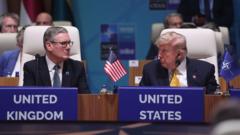
At the NATO summit in Ankara, Starmer revealed that Donald Trump explicitly thanked him for the UK's long-term military contributions and agreed they would "stay in touch" long after Starmer steps down.
It's a massive plot twist. For months, the relationship between the two men looked completely broken. Trump mocked Starmer as a weak leader, publicly savaged the UK as a "deindustrialised welfare zone," and threw a tantrum when London refused to let the US use British bases for strikes against Iran.
Why is a man who just got pushed into resigning by his own jittery backbenchers suddenly positioned as the UK's essential line of communication to Mar-a-Lago?
The answer is simple. In the modern, highly volatile geopolitical theater, traditional diplomacy is failing. Personal networks are everything. By keeping Starmer on speed dial, both London and Washington are quietly admitting that standard diplomatic channels aren't enough to handle the sheer unpredictability of transatlantic relations.
The Secret Diplomacy Behind the Ankara Summit
Most political commentators expected the Ankara summit to be an absolute trainwreck for the UK. Starmer arrived under a cloud of domestic failure, having just announced his retirement after his MPs panicked over a surging Reform UK party. To make matters worse, Starmer arrived empty-handed without a clear, immediate timeline for hitting NATO’s newly agreed target of spending 5% of GDP on defense by 2035.
Trump was widely expected to eat him alive. Before the meetings even started, the US president was grumbling to reporters about European freeloaders and renewing his bizarre, long-standing demand that the US should take over Greenland.
Instead, the exact opposite happened.
According to Starmer, Trump pulled out a chart showing real-terms defense spending over the last decade. The UK sat comfortably in second place behind the Americans. Rather than launching into a public tirade, Trump used his closing remarks to thank Starmer for Britain's material contributions.
The two men met privately, and despite months of brutal public spats over the Strait of Hormuz and the Middle East conflict, they agreed to maintain a direct line of communication.
Starmer framing this as a matter of "duty" isn't just standard political spin. It's a calculated acknowledgment that the incoming Prime Minister, Andy Burnham, has a massive blind spot when it comes to Washington. Trump barely knows who Burnham is. Having Starmer operate as a freelance mediator keeps a vital channel open.
Moving Past the Bitter Public Feuds
To understand why this post-premiership connection matters, you have to look at just how bad things got between Starmer and Trump earlier this year.
When the US escalated its military offensive against Iran, Starmer drew a hard line. He refused to drag Britain headlong into another Middle East conflict, citing the devastating impact it would have on domestic energy bills and the cost-of-living crisis. Trump was furious. He publicly humiliated Starmer, openly questioning the utility of the special relationship and threatening to rip up US-UK trade agreements.
The progressive left in the UK constantly begged Starmer to stand up to Trump's bullying tactics and cut ties completely. But Starmer played the long game. His team knew that a public war of words with Trump is a losing battle.
Even when Trump bypassed Starmer entirely, declaring on social media that Starmer would resign a full day before the prime minister could make his own official statement at Downing Street, Starmer swallowed his pride. He refused to return fire.
That stoic restraint is exactly why Trump is willing to keep talking to him. Trump respects people who handle pressure without whining publicly, even if they explicitly disagree on military strategy.
The Reality of Post-No 10 Power
What happens next isn't just about Starmer staying relevant. It shifts how the UK government handles foreign policy.
Starmer openly refused to rule out a future bid to become the next NATO secretary general. Maintaining a warm relationship with the most powerful man in the alliance is a brilliant job application. If Burnham struggles to build a rapport with the White House, Starmer becomes the indispensable intermediary who can smooth things over behind the scenes.
If you want to understand how this dynamic will shape global politics over the next twelve months, keep a close eye on these three shifting areas:
- The Hypersonic Missile Project: Starmer just locked in a massive $50 billion European partnership to develop long-range and hypersonic missiles. Watch how Trump reacts to this European self-reliance push, and whether Starmer is used to pitch it to Washington as a benefit to NATO rather than a threat to US defense contractors.
- Burnham’s Defense Spending Review: The upcoming UK spending review will dictate exactly how Britain plans to fund its military. Trump will watch this closely. If Burnham stalls on defense spending, expect Starmer to use his private line to manage the fallout before Trump takes to social media to blast the new Prime Minister.
- The Reopening of the Strait of Hormuz: As the conflict involving Iran drags on, pressure on global shipping lanes will intensify. Starmer’s ongoing relationship with Trump means he can continue to advise the White House on European economic sensitivities, preventing erratic policy shifts that could spike global energy markets.
Traditional diplomacy is changing fast. Former leaders are no longer just writing memoirs and giving expensive corporate speeches. They are actively managing global crises because they hold the personal relationships that sitting politicians simply haven't had time to build. Starmer might be leaving Downing Street, but his influence on the transatlantic alliance is nowhere near finished.