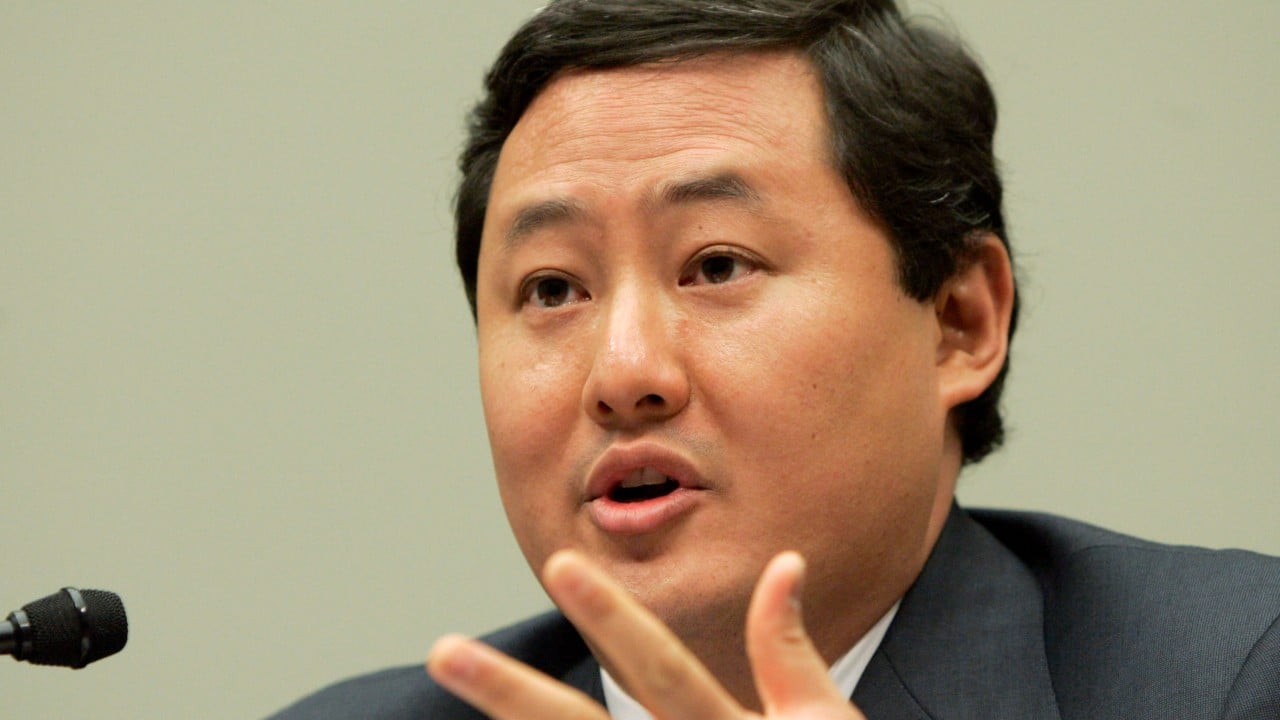
John Yoo is back in the halls of federal power. The UC Berkeley law professor who achieved lasting notoriety for drafting the post-9/11 "torture memos" has officially signed on to advise a Department of Justice team. This isn't a standard policy review. His new mission is directly tied to an ongoing investigation into whether former law enforcement and intelligence officials participated in a criminal conspiracy against Donald Trump.
For anyone tracking the intersection of federal law, executive authority, and political retribution, this move is a massive flashing sign.
The investigation itself is playing out in Florida. Led by former federal prosecutor Joe diGenova, the team is trying to dig up evidence that senior officials weaponized the state apparatus to undermine Trump during the 2016 election and the early days of his presidency. Acting Attorney General Todd Blanche recently confirmed that this exact conspiracy theory is the focus of an active Justice Department inquiry. By bringing Yoo into the fold, the investigators aren't just adding a legal researcher. They're bringing in the modern architect of unchecked presidential power.
If you want to understand where this investigation is going, you have to understand exactly who John Yoo is and how his specific legal philosophy fits into the current administration's goals.
The legal mind behind absolute executive authority
To see why Yoo's appointment matters, we have to look back to the early 2000s. Following the September 11 terrorist attacks, the George W. Bush administration needed legal cover for aggressive counterterrorism operations. They turned to the Office of Legal Counsel, a small but immensely powerful branch of the Justice Department that tells the executive branch what it can legally get away with.
Yoo was the deputy assistant attorney general in that office. He wrote the memos that redefined torture, arguing that "enhanced interrogation" techniques like waterboarding, sleep deprivation, and forced nudity did not violate federal anti-torture statutes unless they caused pain equivalent to organ failure or death.
The legal logic undergirding those memos wasn't just about interrogation. It was about the unitary executive theory. This theory holds that the president possesses total, indivisible control over the entire executive branch, including independent agencies and the Department of Justice itself. In Yoo’s view, when the nation faces an existential threat, the president's constitutional authority as commander-in-chief effectively overrides statutory restrictions passed by Congress.
The Bush administration eventually rescinded those specific memos after intense internal and public backlash. Critics labeled them a historical stain on American law. Yet Yoo never backed down from his core beliefs about presidential supremacy. He has spent the last two decades writing books and teaching law at Berkeley, always maintaining that a strong executive is necessary to protect the country from its internal and external enemies.
Now, that exact same legal philosophy is being applied to a completely different battlefield. The enemy is no longer foreign terror cells. The enemy, according to the current narrative, is the "deep state" cabal that investigated Trump’s ties to Russia.
What the Florida probe is actually targeting
Joe diGenova’s team is not starting from scratch. They are focusing their energy on the long-settled origins of the 2016 Russia investigation. Specifically, investigators have issued a wide net of subpoenas targeting records and communications related to the January 2017 Intelligence Community Assessment. That assessment was the joint product of the CIA, FBI, and NSA, which concluded with high confidence that Russia had interfered in the 2016 election to help Trump defeat Hillary Clinton.
Trump has spent nearly a decade calling that assessment a hoax. The 2019 report by special counsel Robert Mueller did establish that the Russian government interfered extensively and that the Trump campaign welcomed that help, though it didn't find enough evidence to charge a criminal conspiracy between the campaign and Moscow. Later reviews, including one by Inspector General Michael Horowitz and a criminal probe by special counsel John Durham, found plenty of bureaucratic errors and a few instances of misconduct—such as an FBI lawyer doctoring an email—but they failed to find any grand, top-down criminal conspiracy by deep-state actors.
That hasn't stopped the current push for legal payback. The Florida probe is looking at those same events through a radically different lens. They want to prove that the entire apparatus of American intelligence was turned against a presidential candidate maliciously.
To build a criminal case out of bureaucratic decisions, you need an expansive, unconventional legal framework. That is where Yoo comes in. If standard criminal statutes like wire fraud or obstruction of Congress don't neatly fit the actions of former FBI Director James Comey or former CIA Director John Brennan, a creative legal architect can construct an argument that these officials violated their constitutional duties or conspired to defraud the United States by undermining the executive branch itself.
The strategic brilliance of hiring an outsider with institutional weight
Bringing Yoo onto diGenova’s team is a calculated operational choice. The probe faces immense skepticism from career prosecutors within the Department of Justice who view the entire enterprise as a politically motivated fishing expedition. A typical conservative partisan wouldn't carry enough weight to change minds inside the department’s institutional culture.
Yoo is different. He's a tenured professor at a top-tier law school. He knows the internal mechanics of the Justice Department inside out. He understands how to draft legal briefs that look, sound, and feel like legitimate policy work, even when they push the absolute boundaries of established law.
His presence gives the Florida team institutional cover. When critics inevitably blast the probe as a banana-republic style abuse of power, the administration can point to a prominent constitutional scholar to validate their actions. It allows them to argue that they aren't just hunting political enemies; they are conducting a serious constitutional course-correction to restore proper presidential control over rogue agencies.
How this setup differs from the Durham investigation
Many political observers are looking at this new probe and assuming it will end up just like John Durham's investigation: a lot of noise, a couple of minor indictments, and ultimately no major convictions. That assumption misses the fundamental shift in how the Justice Department is operating today.
Durham operated under the strict traditional rules of a special counsel. He had to write reports, justify his spending, and answer to a traditional chain of command that still respected institutional norms. The Florida probe is structured differently. It is operating with direct, overt backing from the very top of the department, as Todd Blanche’s comments made clear.
Furthermore, the legal climate has shifted. The Supreme Court has repeatedly expanded presidential immunity and limited the scope of federal obstruction laws over the last few years. The legal barriers that might have prevented a prosecutor from going after former intelligence chiefs in 2020 have been steadily chipped away. With Yoo advising on the scope of executive authority, the diGenova team is likely to craft much broader indictments that treat policy disagreements and intelligence assessments as criminal acts of subversion.
The immediate checklist for legal watchdogs
If you are trying to anticipate how this probe will unfold and what it means for the rule of law, you need to ignore the daily political theater and watch specific institutional pressure points. The true story will be told in the court dockets and administrative shifts over the coming months.
First, watch the federal court filings in the Southern District of Florida. This is where diGenova’s team is basing its operations. If subpoenas start turning into grand jury indictments, they will land here first. Pay attention to how the indictments define the crime. If they lean heavily on "conspiracy to defraud the United States" under 18 U.S.C. Section 371, look closely at the narrative. That statute is incredibly broad, and Yoo’s influence will likely be visible in arguments that intelligence officials defrauded the government by hiding their true motives or presenting biased intelligence to judges.
Second, track the movement of career prosecutors inside the Justice Department. When political appointees push for legally questionable indictments, the first sign of internal resistance is usually a string of quiet resignations or reassignments among career lawyers. If veteran prosecutors start pulling their names from Florida-based cases, you know the team is pushing beyond accepted legal boundaries.
Third, look for defensive legal maneuvers from the targeted individuals. Former high-ranking officials from the Obama and Trump eras aren't going to sit around and wait to be indicted. Watch for preemptive lawsuits, motions to quash subpoenas, and public statements from defense attorneys representing figures like Comey, Brennan, or former FBI Deputy Director Andrew McCabe. The legal arguments they raise will reveal exactly what kind of documents the Florida team is demanding.
The integration of John Yoo into this criminal probe tells us that the administration isn't content with just firing people or complaining on social media. They are building a legal apparatus designed to legitimize the criminal prosecution of their predecessors. It is an aggressive, high-stakes strategy that uses the very theory of the unitary executive to punish the people who once tried to keep that executive in check. The playbook is being written right now in Florida, and the consequences will shape the Department of Justice for decades to come.