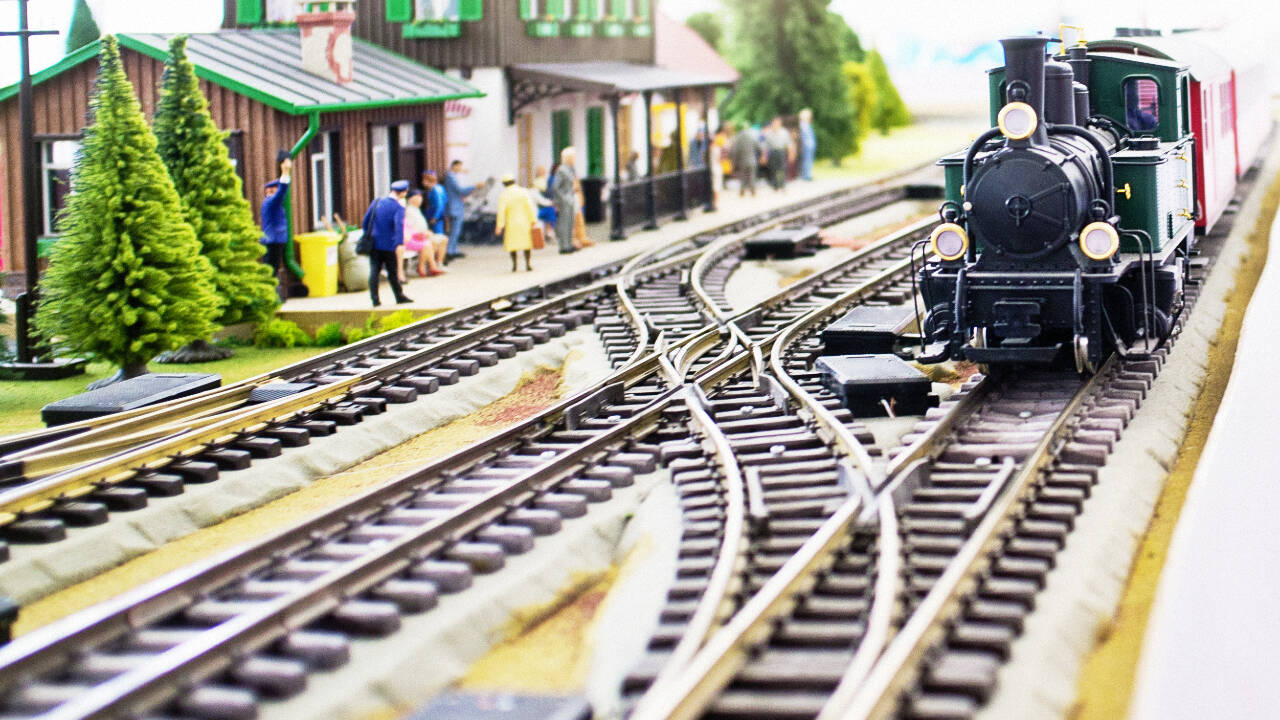
Most hobbies stay small. You buy a few model trains, set them up on a plywood board in the basement, and maybe run them on weekends. Ed St. John didn't care about basements. He started building a live steam railroad right in his backyard in Southern Oregon, and that tiny spark accidentally turned into something massive.
Today, that modest project is known as Train Mountain. It spans 2,200 acres and holds the Guinness World Record for the longest rideable miniature hobby railway. If you have ever wondered how a personal backyard setup evolved into a sprawling 32-mile network of 7.5-inch-gauge tracks, the story comes down to ambitious neighbors, relentless volunteers, and a whole lot of heavy lifting.
How a Backyard Project Spiraled Out of Control
Back in the early days, St. John wanted to build a railroad that he could actually ride. He called his initial project the Over-The-Hill Live Steamers. Word spread quickly among local rail enthusiasts in Medford, Oregon.
People wanted to help. The arrangement was straightforward. St. John provided the raw materials, and a dedicated crew of hobbyists drove out to lay down tracks and build switches. That original loop of track eventually became the Klamath and Western Railroad, which still runs public rides on summer Saturdays.
Building a railroad on private residential land has obvious limits. You run out of space fast. Enter Quintin Breen.
The Neighbor Who Bought the Land Around It
Breen shared the same obsession with trains. Instead of just admiring St. John's setup, he looked at the surrounding landscape and saw potential. Breen started quietly purchasing tracts of land adjacent to St. John's property with a clear vision: expand the tracks far beyond a standard backyard.
By 1992, the pieces clicked into place. The two separate railroad systems were officially joined. Breen eventually acquired St. John's original property, cementing the foundation of what would become a massive private railway empire.
Managing thousands of acres of rugged terrain isn't like running a model train layout indoors. Volunteers had to cut through dense brush, build trestles over uneven ground, and lay miles of heavy steel track. It turned out to be an engineering feat requiring civil construction skills, heavy machinery, and endless weekend labor.
Bringing Global Rail Fans to Southern Oregon
By the year 2000, the property had grown large enough to host the International Brotherhood of Live Steamers. Nearly 100 miniature trains showed up. That initial gathering proved that Train Mountain was more than just a quirky local hangout.
It evolved into the Train Mountain Triennial, a massive international gathering held every three years. Enthusiasts ship custom-built, one-eighth scale locomotives from countries like Germany and Australia just to navigate the grueling 32-mile network of tracks.
Operating a miniature train on this scale isn't a walk in the park. Operators have to deal with realistic signalling systems, yard dispatching, and steep grades that can strain small steam or diesel engines. One mistake on a switch can derail an expensive, hand-built locomotive.
Exploring the 2,200 Acre Property Today
Today, the sprawling site functions as a unique hybrid of a working railroad, a museum, and an outdoor playground. The Train Mountain Institute, a nonprofit organization, oversees the land, focusing on railroad education and preservation.
The site also features the Train Mountain Museum, which houses over 50 full-sized rail cars and vintage maintenance equipment. You can ride the miniature trains to see parts of the forest that cars simply cannot reach, or walk along sections of the line to watch massive hobby locomotives rumble past at scale speeds.
If you want to visit, check the schedule for public run days on the Klamath & Western loop. Pack sturdy boots, prepare for unpredictable Oregon weather, and talk to the volunteers who keep the wheels turning.