You’ve heard the golden rule of drinking out a million times. Alternate every beer with a glass of water. It sounds simple on paper. In practice? Once the second round hits the table, that advice flies right out the window.
Yoho Brewing, a creative craft brewery based in Karuizawa, Japan, got tired of watching people forget the basics. Their fix isn’t a boring lecture or a clumsy mobile app. They built a piece of physical drinkware that refuses to sit straight unless you stay hydrated.
The Engineering Behind the Wobbly Beer Glass
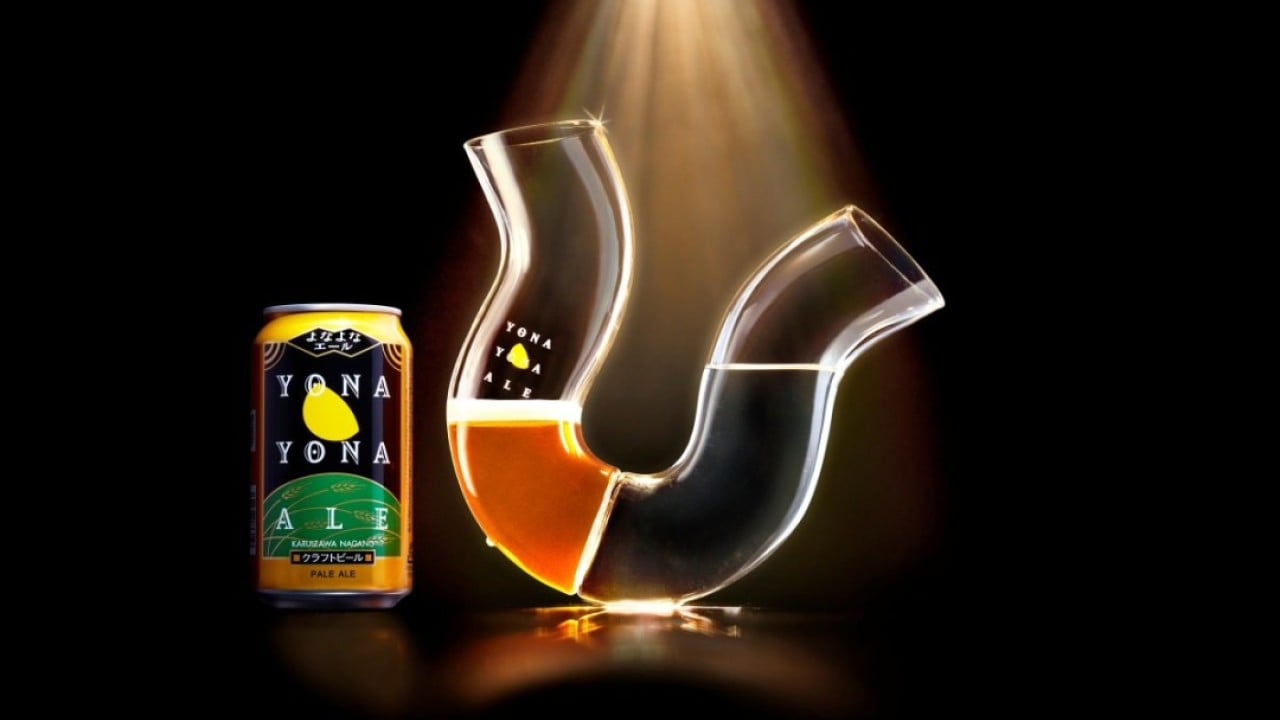
Meet the Furatsuku glass, or the wobbly beer glass. It's a U-shaped vessel split into two connected chambers. You pour beer into one side and water into the other. Each side holds 270 milliliters.
If you down the beer and leave the water untouched, physics takes over. The weight shifts completely. The glass tilts, wobbles, and threatens to spill your drink all over the bar counter.
To keep it stable, you have to sip the water right alongside the brew. When the beer-to-water ratio crosses a 1:2 threshold, the instability becomes impossible to ignore. It’s a brilliant physical nudge that bypasses your fading willpower entirely.
Yoho Brewing didn't rush this to market. They went through seven different prototypes to iron out annoying flaws like liquid overflow and violent tipping. At roughly 13,750 yen (about $86 USD), it's priced more like a collector's item than standard pub glassware. You can find them tested out in around 30 select venues across Japan, including their Yona Yona Beer Works spots in Tokyo.
Why Behavioral Design Beats Moralizing Lectures
Most corporate attempts at promoting responsible drinking feel corporate and dry. They put up tiny warning labels or run ads nobody reads. Yoho's CEO, Naoyuki Ide, called out this exact problem. He pointed out that breweries usually sound way too serious when talking about moderation.
Instead of preaching, Japanese designers leaned into behavioral architecture. This concept uses environmental design to alter human habits without taking away freedom of choice.
You see this principle in other everyday objects. Speed bumps force drivers to slow down without needing a cop on every corner. Grocery stores place healthy snacks at eye level to guide shoppers toward better nutrition.
Yoho used a similar trick earlier with their "Slow Beer Glass." That version featured a narrow pinch in the middle that physically restricted how fast liquid could flow. You couldn't chug even if you tried.
The wobbly glass takes that same philosophy and applies it to hydration. It turns pacing into an active, tactile puzzle.
The Reality Check on Drinking Culture
Skeptics love to call gimmicks out. Online forums filled up with debate the moment the wobbly glass dropped. Some drinkers joked that accidentally sipping the water chamber at an izakaya would ruin the flavor profile of a good IPA. Others worried about awkward spills heading straight for someone's forehead if they misjudged the angle.
And honestly? They're not entirely wrong. You aren't going to see these glasses adopted at a loud, packed rock concert or a chaotic college sports bar.
That misses the point. Novelty drinkware isn't meant to replace standard pint glasses everywhere. It's a conversation starter. It forces an industry fixated on volume to re-examine the rhythm of consumption.
Craft beer culture has spent decades teaching people to appreciate complex flavor profiles, hop bills, and malt structures. Yet people still treat the actual drinking process like a race. If a quirky piece of Japanese barware gets drinkers to slow down and respect their limits, it's doing something right.
Grab a well-crafted beer, respect the balance, and enjoy the night without paying for it the next morning.