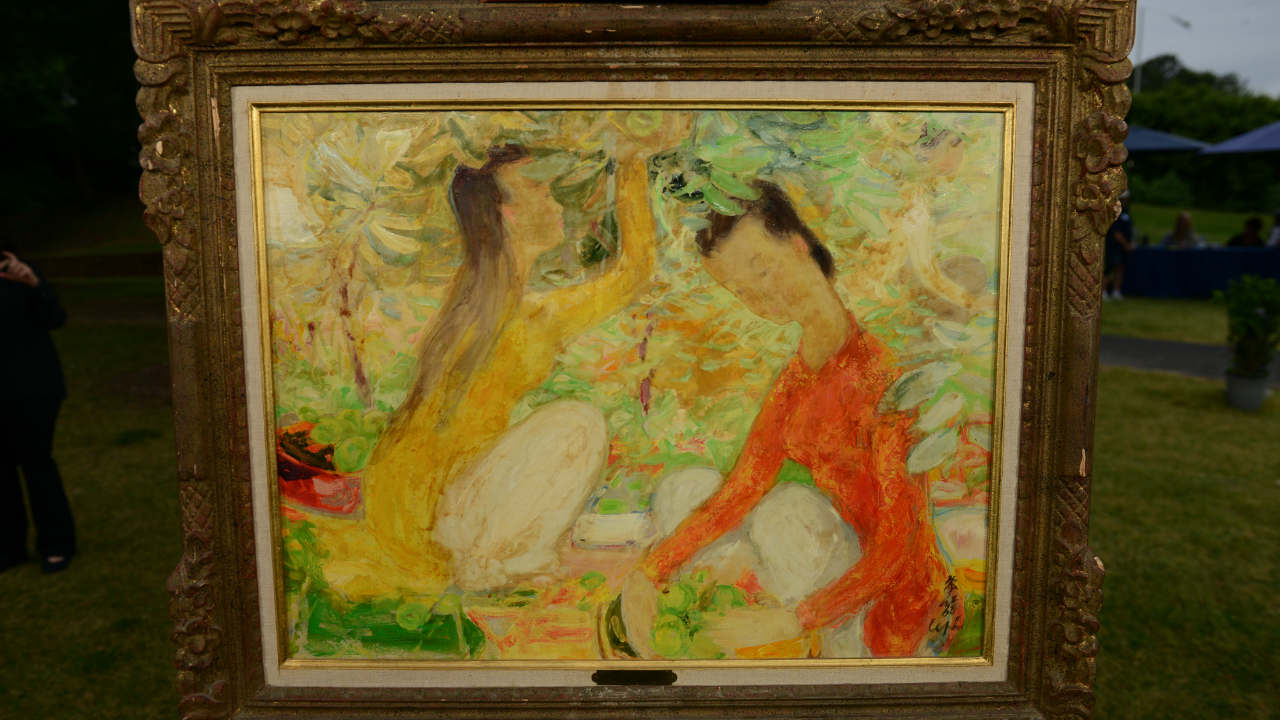
Most thrift store finds end up as dusty clutter or weekend garage sale fodder. You browse the shelves, spot something mildly interesting, and pay pocket change for a dopamine hit. But every once in a while, someone gambles sixteen dollars on a thrift store painting and accidentally hits a massive financial jackpot.
That is exactly what happened to an occupational therapist working at a Level I trauma hospital in the United States. During the height of the COVID-19 pandemic, she turned to thrift store hunting as a way to decompress after brutal shifts treating severely injured patients. On one particular trip to a Goodwill store, a piece of artwork caught her eye. It sat in the painting section, featuring a small plaque that mirrored the museum-style labels you see in high-end galleries. She paid $15.99, took it home, and hung it right above her bed.
She had zero idea she was sleeping beneath a museum-grade masterpiece by renowned Vietnamese artist Lê Phổ.
Why Thrift Store Art Authentication Is So Hard
Most people assume valuable art is locked away in secure estates or guarded museum vaults. Yet, historical masterpieces regularly slip through the cracks of donation bins because thrift store staff lack the time or specialized training to authenticate fine art.
When the hospital worker spotted the painting, the plaque and composition drew her in, but she lacked the art history background to verify its origin. Years later, she brought the piece to an Antiques Roadshow appraisal event at the North Carolina Museum of Art in Raleigh. Fine-art expert Betty Krulik examined the work and immediately recognized its significance.
The painting, titled Cueillette des Pommes Cannelle (translated as "Cinnamon Apple Picking"), is an oil painting on board. While the owner thought it might be an older piece dating back to 1950, Krulik estimated it was likely created during the 1960s. The lower-right corner bore the artist's signature, and a gallery label clung to the back of the frame, providing the ultimate breadcrumb trail for authentication.
The Findlay Galleries Connection and Market Value
Provenance is everything in the art world. Krulik traced the painting's background directly to Findlay Galleries, a historic institution that heavily promoted Lê Phổ's works in the United States.
Lê Phổ was born in Vietnam in 1907, studied at the École des Beaux-Arts in Hanoi, and later moved to Paris. His unique style bridges traditional Vietnamese silk painting techniques with Western European impressionism, creating a distinct visual language that collectors aggressively target at international auctions. He passed away in Paris in 2001, leaving behind a heavily coveted body of work.
When Krulik dropped the valuation numbers, the reality of the thrift store find set in. She estimated that comparable works by Lê Phổ easily fetch between $60,000 and $80,000 at auction. Furthermore, she suggested an insurance valuation closer to $100,000. For a woman who spent $15.99 during a global health crisis, the financial jump was astronomical.
What You Should Look for in Thrift Store Art
Stories like this spark a massive wave of garage sale and thrift store speculation. Everyone wants to find a hidden fortune. If you want to hunt for fine art without wasting your money, you need to know what professionals actually check.
First, ignore the frame and look at the technique. Mass-produced decor art often features flat brushstrokes, mechanical canvas weaves, or glossy printed textures that look like dots under a magnifying glass. Real oil or acrylic paintings show raised brush texture, blending, and artist signature variations.
Second, flip the piece over. Old gallery stickers, exhibition stamps, and framer stamps give away provenance. A frame backing from a known framing house in New York or Paris often indicates the artwork originated from a serious collection rather than a department store bin.
Finally, check signatures carefully. Many valuable pieces feature signatures that look illegible or obscure because artists often signed in cursive or stylized shorthand. Do a quick image search on your phone before passing on a weirdly expensive thrift store canvas.
You probably won't find an eighty-thousand-dollar Lê Phổ behind your local Goodwill's checkout counter tomorrow. But the thrill remains the same. Keep your eyes open, check the back of the frame, and remember that history sometimes hides in plain sight.