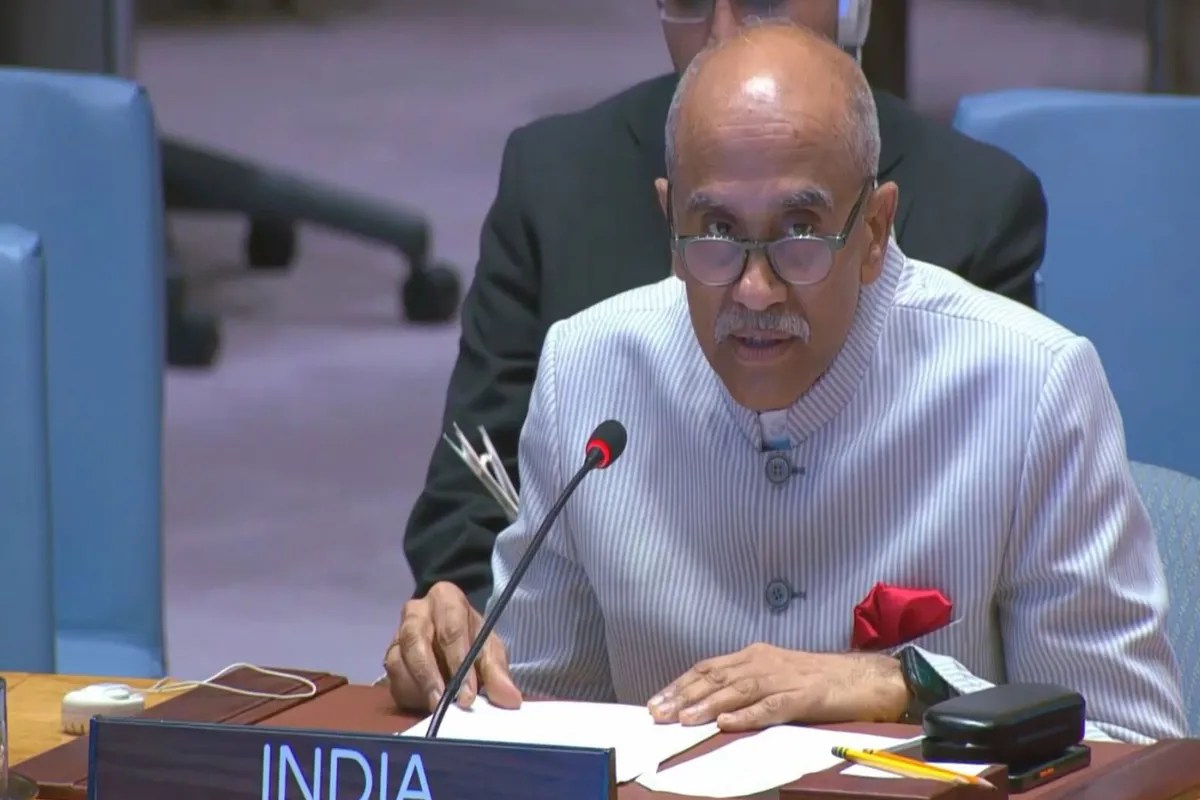
When millions of displaced people get pushed back across a border against their will, the world usually looks away. India didn't let that happen at the United Nations.
India's Permanent Representative to the UN, Parvathaneni Harish, recently put the spotlight back on a crisis the global community prefers to ignore. He addressed the massive, unceremonious forced returns of over three million Afghans and the ongoing menace of militant safe havens. If this scale of displacement happened anywhere else, the outcry would dominate global headlines for weeks. Instead, it gets swept under the rug while terror networks quietly rebuild their foundations.
Let's look at what's really happening behind closed doors at the UN and why this diplomatic push matters right now.
The Brutal Reality of Forced Afghan Returnees
Numbers tell a grim story if you bother to look at them. Statistics from UN reports show that roughly 2.9 million Afghans returned home in 2025 alone. That trend didn't slow down. By late August 2026, another 1.15 million people were pushed back.
Most of these aren't voluntary homecomings. They are forced deportations.
Imagine packing up whatever remains of your life and being forced back into a territory struggling with basic survival, economic collapse, and severe humanitarian deficits. It isn't safe, and it certainly isn't dignified. India rightly pointed out the double standard here. When massive refugee movements occur in other geopolitical hotspots, the international response machinery kicks into high gear with massive funding, oversight, and global media attention. With Afghanistan? Silence.
India isn't just talking. New Delhi has kept its boots on the ground in terms of actual humanitarian aid. Working alongside UN agencies and local authorities, India has supplied essential goods, food supplies, and family tents directly to the Afghan refugee and rehabilitation ministries. You can't fix a humanitarian disaster with empty press releases. You fix it with logistics and continuous support.
Why Terror Safe Havens Remain a Global Threat
Humanitarian suffering is only half the equation. The other half is raw security.
During the UN discussions, India dragged memories back to a lesson the world vowed never to forget: the 9/11 attacks. Think about how the international community rallied after those planes hit the towers. The global coalition promised to rip up terror networks by the roots. Yet, decades later, groups like al-Qaeda keep finding ways to stretch their tentacles beyond Afghan borders.
Harish didn't mince words about historical accountability either. He recalled how long masterminds like Osama bin Laden managed to evade capture before finally being neutralized in Abbottabad during Operation Neptune Spear, alongside other key architects like Khalid Sheikh Mohammed and Ramzi bin al-Shibh.
The takeaway is simple. Terrorists thrive when they have physical geography that shelters them and a political climate that looks the other way.
The Core Problem Nobody Wants to Name
You can't talk about lasting peace in South Asia while ignoring the infrastructure of extremism. Safe havens provide training, funding, and operational planning space. If you leave a vacuum, radical groups fill it.
India's stance at the UN boils down to a blunt truth: the environment that nourishes and protects terrorists must be dismantled permanently. It's easy for western nations to treat Afghan security as a distant regional problem. It's much harder to deal with the reality that unmonitored territories quickly transform into global launchpads for fresh attacks.
Regional stability won't happen by accident. It requires persistent diplomatic pressure, strict enforcement against terror financing, and refusing to normalize regimes that harbor violent extremists.
Take a close look at how major powers respond in the coming months. If they keep prioritizing short-term convenience over long-term security, history will repeat itself.
Stop treating Afghan displacement and radical safe havens as separate issues. They are two sides of the same coin, driven by instability and neglected by a weary international community. India's message at the UN serves as a wake-up call. Pay attention before the cost catches up to everyone else.