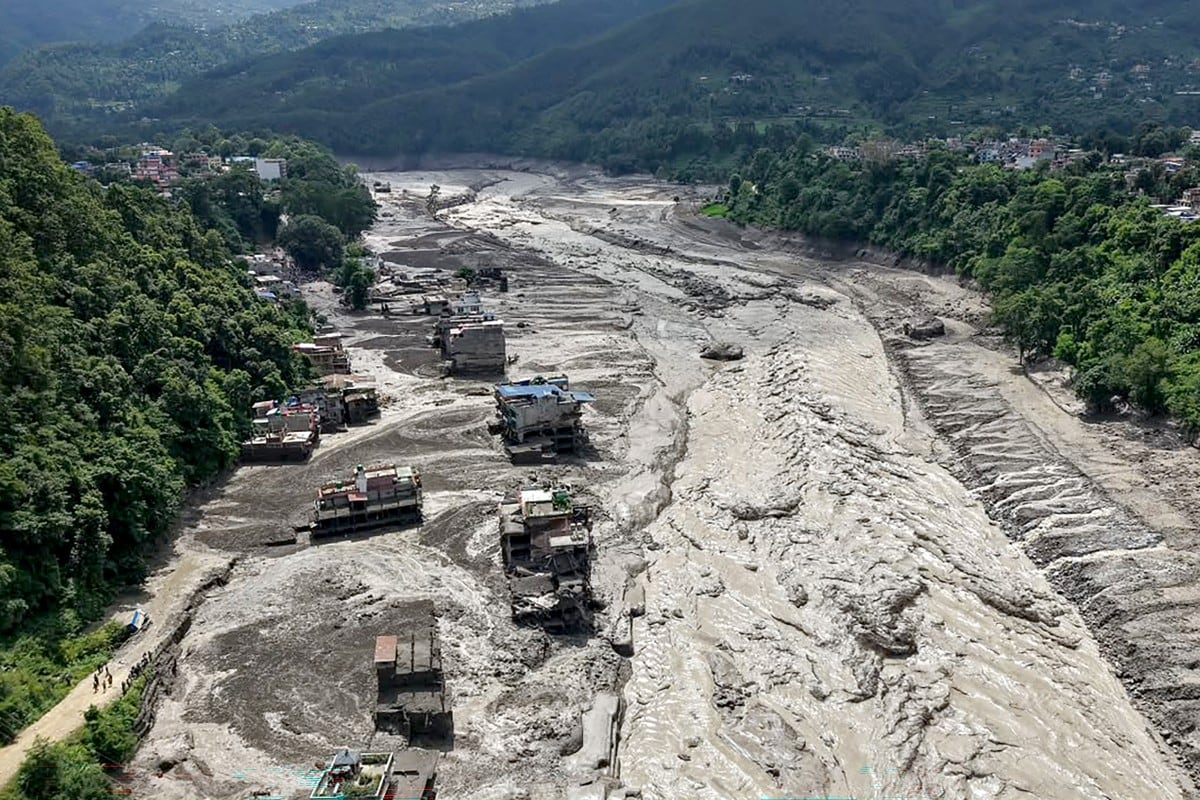
You don't get much warning when a mountain river turns into a wall of ice and sludge. One minute you're opening your shop or walking a pilgrimage trail, and ten minutes later, an entire market town is erased. That is the terrifying reality of the recent catastrophe along the Nepal-Tibet border, where a glacial collapse triggered a massive flash flood. At least 359 people are confirmed dead, and over a thousand remain missing across the rugged Himalayan valleys.
Rescue workers are finding bodies hundreds of miles downstream, but the scale of the destruction makes standard emergency response look painfully slow. If you've been following the updates or trying to track down missing loved ones, you already know the official numbers only tell part of the story. Let's break down what actually happened, why the terrain makes survival a long shot, and what this disaster reveals about the fragile future of the roof of the world.
How the Disaster Unfolded So Fast
The disaster began without warning when an ice and rock mass collapsed in the high Himalayas, sending a violent torrent down the river systems toward Nepal's Rasuwa district and Tibet's Gyirong county. According to the U.S. Geological Survey, it wasn't an earthquake, but a sudden glacial event that sent a tsunami of freezing water, mud, and debris roaring down mountain valleys.
Survivors in border towns like Timure and Dhunge bazaar recount hearing a terrifying roar before a wall of brown sludge swallowed homes, vehicles, and roads. The volume and velocity of the water gave people virtually zero time to evacuate. Within minutes, multi-story buildings were submerged in sediment up to their second floors, leaving behind a scarred landscape of sand, pebbles, and debris hanging from power lines.
The Nightmare of Search and Rescue Operations
Finding survivors in the aftermath of a Himalayan flash flood is an absolute logistical nightmare. Over 5,000 army and police personnel have deployed to the region, but their path is blocked by reality: roughly 40 kilometers of paved highway and around 80 bridges have been completely swept away or severely damaged.
Helicopters from the Nepali army are doing heavy lifting, pulling stranded people off hilltops and rooftops, but low-hanging debris and treacherous weather frequently ground air support. Ground teams are relying on sniffer dogs to comb through thick layers of mud, but hope is fading fast for the more than 1,000 individuals still unaccounted for.
The demographic of the missing compounds the tragedy. The affected corridor is a major route for trekkers and international pilgrims traveling toward Mount Kailash. Hundreds of foreign nationals—including citizens from India, the United States, Australia, Britain, and Canada—are among the missing. Families are flooding helplines and local authorities are preparing DNA testing kits because many recovered bodies are entirely unidentifiable.
What the Region Faces Next
Disaster management experts point out that this is far from an isolated incident. The fragile Himalayan ecosystem is under extreme stress, with unstable ice systems threatening densely populated communities across South Asia. Rising temperatures and changing weather patterns mean glacial lake outbursts and sudden flash floods are becoming a recurring nightmare.
Neighboring countries are rushing in supplies. India has dispatched military aircraft carrying dozens of tonnes of emergency medical kits, food, and solar lamps, while countries like the United States have pledged emergency funding. Yet, physical reconstruction will take years. Entire transport links connecting trade and tourism routes between Nepal and China are gone, and local economies reliant on visitors have been reset to zero.
If you are tracking relief efforts or looking to support humanitarian organizations active on the ground, stick to verified international agencies like the Red Cross or established UN relief teams currently coordinating medical supplies and temporary shelters in the hardest-hit districts.
Animation Shows How Nepal Flood Tragedy Unfolded
This video provides an animated visual breakdown of how the devastating flash flood swept through the mountain valleys and market areas along the Nepal-Tibet border.
http://googleusercontent.com/youtube_content/1