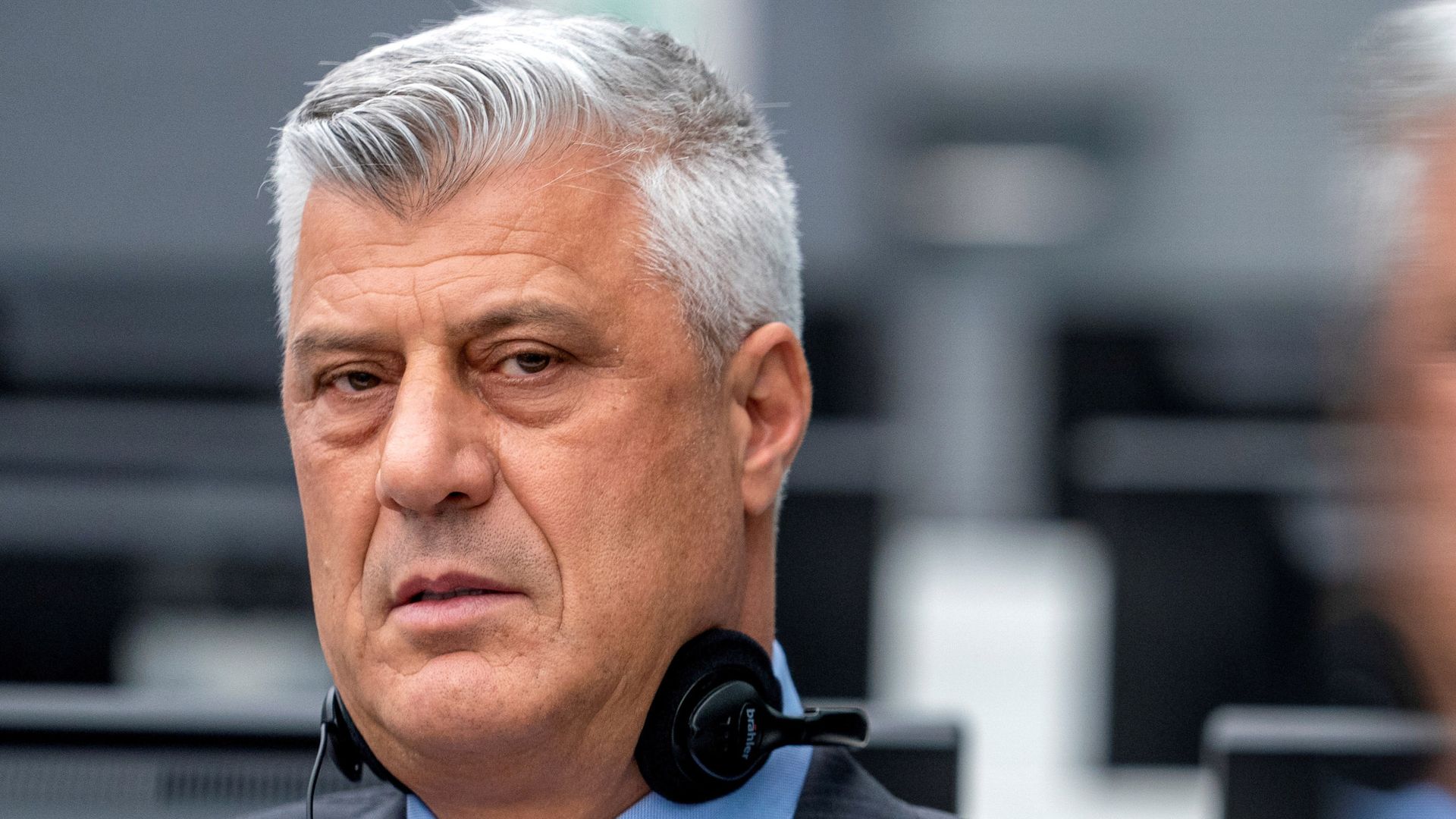
Hashim Thaci didn't just lose a court case; a foundational myth of modern Kosovo fractured in real time at The Hague. A special tribunal handed Kosovo's former president a 25-year prison sentence for war crimes and crimes committed during the violent collapse of Yugoslavia in the late 1990s. If you've followed Balkan politics for decades, this verdict hits like a seismic tremor. Thaci went from being fêted by Western diplomats at Rambouillet to sitting quietly while judges detailed a joint criminal enterprise involving arbitrary detentions, torture, and dozens of murders.
Let's look past the sterile headlines. How did a guerrilla commander dubbed "the Snake" become president, only to end up locked behind international prison bars? And what does this ruling mean for a region that still hasn't healed its deep historical wounds?
The Fall of Commander Snake
During the 1998-1999 war against Slobodan Milosevic's regime, Hashim Thaci headed the political directorate of the Kosovo Liberation Army (KLA). He was young, sharp, and ruthless when survival demanded it. NATO's 1998–99 intervention stopped ethnic cleansing by Serbian forces, saving thousands of ethnic Albanian lives and setting the stage for Kosovo's 2008 independence declaration.
To most ethnic Albanians back home, the KLA leadership are sacred national heroes. Criticizing them was long treated as a political death sentence. But the Kosovo Specialist Chambers—a hybrid court operating under Kosovo law but based in the Netherlands to shield witnesses from intimidation—spent years unspooling a darker reality.
Presiding Judge Charles Smith laid out the verdict with cold precision. Thaci, alongside high-ranking co-defendants like Jakup Krasniqi (who also received 25 years), was found criminally responsible for a joint criminal enterprise. The tribunal pinned down responsibility for:
- The arbitrary detention of 385 individuals.
- Torture and cruel treatment affecting hundreds of victims.
- The murder of 96 people, largely political rivals and civilians deemed collaborators with Serbian security.
Prosecutors originally pushed for a staggering 45-year sentence. While 25 years is technically lighter than the maximum demand, at age 58, it effectively means Thaci will spend the remainder of his active life behind bars.
Why This Trial Stunned Pristina
If you walk through Pristina today, you won't see a population celebrating international justice. You'll see massive crowds holding red-and-black Albanian flags, staring at massive countdown clocks and giant screens, chanting the acronym for the KLA.
To ordinary Kosovars, targeting KLA leaders feels like rewriting history to paint the victim and the aggressor with the same brush. Serbia slaughtered an estimated 13,000 people—mostly ethnic Albanians—and displaced roughly a million more. No Serbian leader of comparable stature has faced a domestic reckoning of this magnitude for state-sanctioned atrocities during that exact window.
That double standard is precisely why resentment runs so high. Thaci's defense argued right up until the end that the KLA was never a tightly centralized, corporate-style military machine where a political director could micromanage rogue local units. "Throughout my life, I stood with the people of Kosovo defending freedom," Thaci told the courtroom in February. The judges didn't buy it, ruling that his immense authority as a commander meant his public backing of the operation made him culpable for its abuses.
What Happens Next for the Balkans?
The geopolitical fallout will ripple across Southeast Europe for years. Kosovo's fragile relationship with Serbia remains frozen, with Belgrade still refusing to recognize its neighbor's sovereignty. EU-mediated normalization talks have sputtered along for over a decade with few breakthroughs.
With Thaci and other historic heavyweights locked away or fighting separate legal battles—such as upcoming trials over witness intimidation—a generational political vacuum has opened up in Pristina. A new political class is stepping in, untethered from the immediate aura of the 1990s guerrilla trenches.
Yet, the core dilemma remains unresolved. Can a country build a stable, prosperous democracy on foundations built by men who are simultaneously honored as liberators and convicted as war criminals?
International courts can hand down 25-year sentences, but they cannot manufacture domestic reconciliation. Until both sides of the ethnic divide confront their own ghosts honestly, the shadow of the 1990s will keep dictating the future.