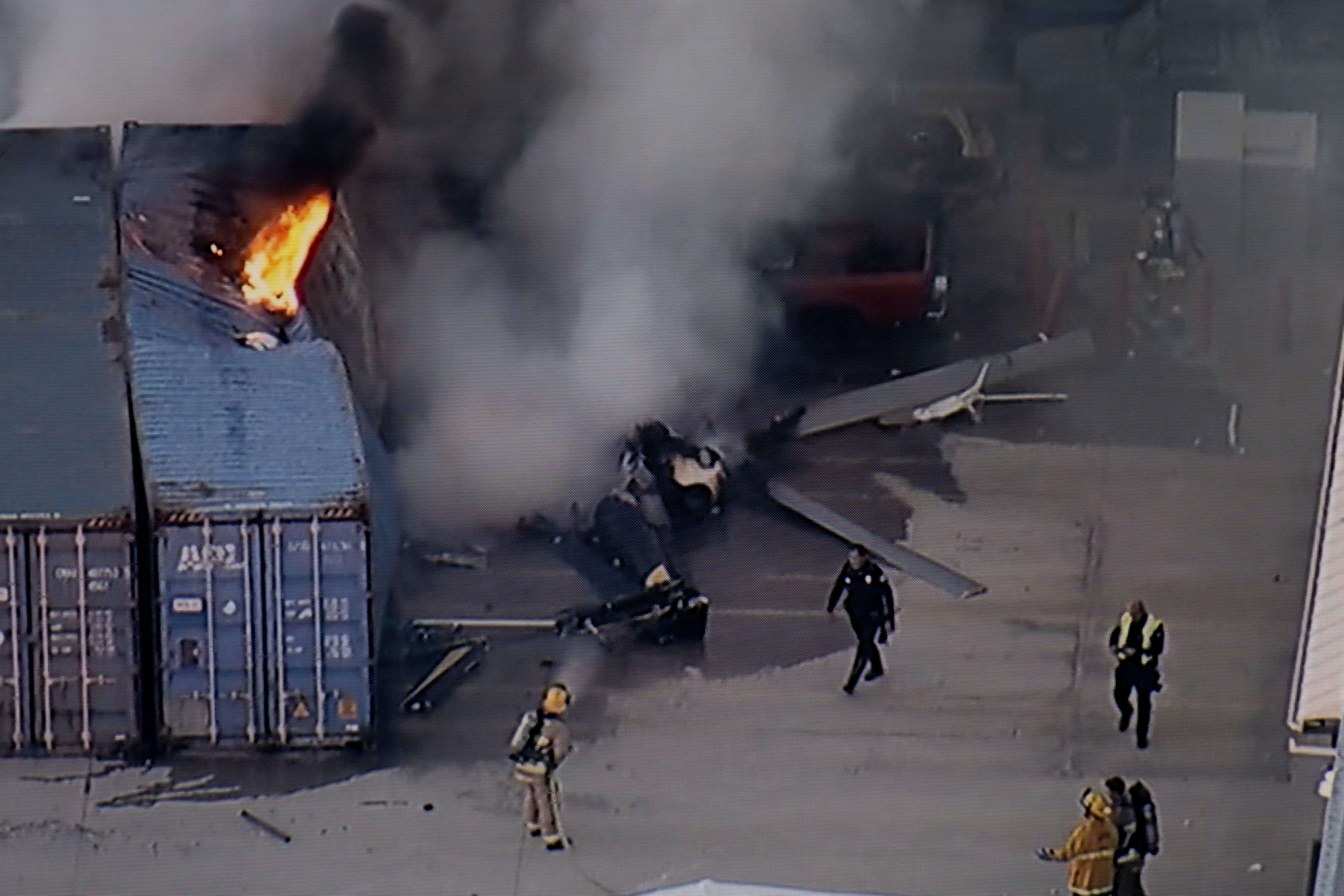
Working journalists understand the invisible risks tucked into everyday assignments, but seeing a routine news gathering flight turn into a fatal catastrophe hits differently. When an NBC4 Los Angeles helicopter plummeted into the Chatsworth neighborhood in the San Fernando Valley, it wasn't just another breaking news alert. It turned into a deeply personal tragedy for newsrooms everywhere, ending three lives and plunging an already chaotic accident scene into absolute horror.
If you are looking at the timeline of events that Tuesday evening, the sequence is harrowing. Roughly two hours before the aircraft went down, a horrific crash unfolded when an SUV slammed directly into a Los Angeles Metropolitan Transportation Authority bus, leaving two people dead and six others injured. News crews rushed to cover the aftermath. Then, the situation mutated into a multi-tiered disaster.
The Tragic Chain of Events in Chatsworth
The helicopter went down near a commercial building just before 7 p.m., exploding into flames upon impact. Officials from the Los Angeles Fire Department confirmed that at least three people lost their lives. One of the victims was standing outside in a parking lot near the commercial building when the aircraft crashed.
Debris rained down across a tight radius. At least four cars and two storage containers on the ground caught fire after the aircraft ignited. More than fifty firefighters rushed to the scene to battle the blazing wreckage. Captain Branden Silverman of the LAFD noted that the helicopter was severely destroyed, making it difficult during the initial hours to determine the exact number of occupants inside the fuselage versus those on the ground.
What makes this incident so striking is the sheer concentration of catastrophe in a single neighborhood. The crash site sat about a mile and a half away from the initial bus collision that the crew was dispatched to cover. Instead of reporting on a tragedy, the reporters and pilot became the headline.
Investigating the Los Angeles Aviation Disaster
Whenever an aviation disaster strikes a populated area, the scrutiny becomes immediate and intense. Federal authorities stepped in right away to figure out why the aircraft fell out of the sky.
The National Transportation Safety Board alongside the Federal Aviation Administration launched formal investigations. Investigators look at a massive stack of variables during these types of inquiries. They examine:
- Maintenance logs and mechanical history of the aircraft model
- Air traffic control communications and radar tracks
- Weather conditions and visibility metrics in the San Fernando Valley at the time
- Pilot experience, flight hours, and duty schedules
Eyewitness accounts and video footage recovered from local security cameras also play a heavy role in rebuilding the final moments of the flight. Aviation experts know that news helicopters operate under unique pressures. They often fly at lower altitudes, hover in tight spaces, and maneuver rapidly to capture breaking angles, which narrows the margin for error when mechanical failures or spatial disorientation occur.
The Human Toll on the Newsroom
The hardest part of covering an aviation accident involving journalists is the heavy emotional weight carried by surviving colleagues. During a live broadcast on NBC4 Los Angeles, anchors had to choke back tears while confirming that their own company chopper went down. Hearing trusted coworkers deliver news about their own team members dying on the job shatters any sense of professional detachment.
Accidents like this force media organizations to re-evaluate safety protocols for aerial news gathering. Helicopters remain vital tools for capturing live aerial perspectives of major events, but the human cost demands constant vigilance.
As federal agencies comb through the charred remains in Chatsworth, the focus shifts toward answers. Families of the victims, emergency responders, and news staff across the country are left waiting for clarity on what caused the aircraft to fail. Safety improvements usually follow disasters of this magnitude, but they arrive too late for the lives lost on that Tuesday evening.