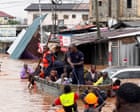
It rained for three days straight, and then the ocean of mud arrived.
By late June, the heavens opened over the Gulf of Guinea. Densely populated coastal hubs stretching from Abidjan to Lagos were hammered by a relentless downpour. In some cities, more than 140mm of water fell in less than 24 hours. That is not just a heavy storm. It is an entire month of rain dumped on concrete in a single day. Read more on a connected subject: this related article.
Entire neighborhoods submerged. Roads turned into rushing brown rivers. People watched their homes, markets, and vehicles wash away. Dozens drowned, and thousands were forced to flee with whatever they could carry.
Most people look at these recurring West Africa floods and blame bad luck, or simply shrug it off as the price of a tropical rainy season. They are dead wrong. This is not natural. It is a man-made crisis, supercharged by global emissions, and the newest science proves it. Additional journalism by The Guardian explores related views on this issue.
The Math Behind the Deluge
We finally have concrete numbers on how much fossil fuel burning contributed to this disaster. The World Weather Attribution (WWA) group, an international team of scientists who analyze extreme weather in real-time, just released their assessment of the three-day deluge. Their findings are terrifying.
Global heating has made this level of rainfall five times more likely than it would have been in a pre-industrial world.
WWA Key Findings: June 2026 West Africa Deluge
- Increased probability: 5 times more likely due to warming
- Observational trend: 3-day downpours are 23% more intense today
- Model-simulated increase: 4% direct signal from greenhouse gases
- Current global warming: 1.4 degrees Celsius above pre-industrial levels
- Expected recurrence: Every 2 to 4 years
If you look at the historical weather observations, the intensity of these three-day heavy rain events in the region has surged by roughly 23% since systematic record-keeping began. The climate models, which famously struggle to capture the sheer scale and volatility of tropical rainfall, still showed a clear 4% increase in intensity directly tied to human emissions.
Lead author Joyce Kimutai, a researcher at Imperial College London, points out that because models consistently underestimate tropical precipitation trends, finding such a clear climate fingerprint in the simulations is incredibly significant. Human warming made this disaster wetter, faster, and far more destructive.
Why Coastal Cities are Unprepared for a Hotter World
The water came for everyone, but it hit the poorest the hardest.
The physical reality is that the atmosphere holds about 7% more moisture for every degree Celsius of warming. With the global average temperature now sitting at 1.4°C above pre-industrial levels, the sky is effectively a giant, loaded sponge waiting to be wrung out. When the rainy season hit between May and July, the Gulf of Guinea became the perfect storm.
But climate science is only half the story. The sky dumps the water, but the ground decides where it goes.
The Concrete Trap
Cities like Accra, Lagos, and Abidjan have experienced explosive population growth over the last two decades. People need places to live, so informal settlements expand rapidly. Green spaces get paved over. Natural floodplains are replaced by concrete and asphalt, leaving rainwater with absolutely nowhere to go.
Silted Drains and Trash
Most of these major coastal hubs rely on drainage networks built decades ago, designed for a different population size and a completely different climate era. To make matters worse, poor municipal waste management means these vital channels are often choked with plastic waste and silt. When the 140mm deluge hit on June 20, the water met blocked drains and immediately bounced back into the streets, swamping homes in minutes.
The Human Toll Across the Coastline
The numbers tell a story of systemic devastation across multiple countries. This was not a localized event. It was a regional catastrophe that paralyzed entire economies.
- Côte d’Ivoire: The country has suffered immensely, with 59 people dead since the rains began in May. Landslides in informal settlements like Attécoubé in Abidjan literally swallowed houses built on steep, unstable hillsides.
- Ghana: At least 34 people lost their lives in the June floods, with emergency services scrambling to rescue over 400 stranded residents in Accra alone.
- Togo: Five deaths were recorded as water swamped neighborhoods, exposing the critical vulnerability of low-lying coastal infrastructure.
- Nigeria and Liberia: From the sprawling slums of Lagos to Monrovia, the floods inundated vital informal markets, ruining the livelihoods of thousands of small-scale traders who have no insurance and no safety net.
This is a recurring nightmare. Every single time the dark clouds roll in, the dread returns. Residents in these cities are living in a constant state of low-grade panic, wondering if the next storm will be the one that takes their home or their life.
The Hypocrisy of Global Climate Justice
Let us talk about the giant elephant in the room. Who actually caused this?
West Africa is responsible for a microscopic fraction of global greenhouse gas emissions. The industrial powerhouses of the global north built their wealth by burning fossil fuels, filling the atmosphere with the carbon dioxide that is now drowning towns in Togo and Côte d’Ivoire.
This is the definition of climate injustice. The people paying the ultimate price with their lives and livelihoods are the ones who did the least to cause the problem.
Friederike Otto, a prominent climate scientist at Imperial College London, has been outspoken about this dynamic. She notes that the climate is changing faster than these countries can possibly adapt. She insists that while local adaptation is incredibly urgent, the real solution requires industrialized nations to cut their own emissions immediately. Until those global emissions stop, these extreme events will continue to intensify.
How to Stop the Drowning
We cannot stop the rain, but we can change how we survive it. Continuing with the status quo is a death sentence for coastal West Africa. Cities need to completely re-engineer their relationship with water.
First, we need radical urban planning reform. Governments must stop ignoring the growth of high-risk informal settlements on hillsides and floodplains. That means providing safer, affordable housing options elsewhere and actively restoring natural wetlands to act as sponges.
Second, waste management is a matter of life and death. Clearing municipal drains of plastic silt cannot be an afterthought or something done once a year before the rainy season. It needs to be a continuous, heavily funded public service.
Third, the global north must pay up. Wealthy nations have a moral and financial obligation to fund loss, damage, and adaptation strategies in the global south. This isn't charity. It is reparations for a warming planet. Local governments need access to low-interest climate finance to rebuild resilient bridges, construct massive storm-drain networks, and implement high-tech early warning systems that can evacuate people before the water rises.
The era of calling these events "unprecedented" is over. They are the new baseline. We either adapt our cities and hold polluters accountable, or we watch the next rainy season wash away what remains.