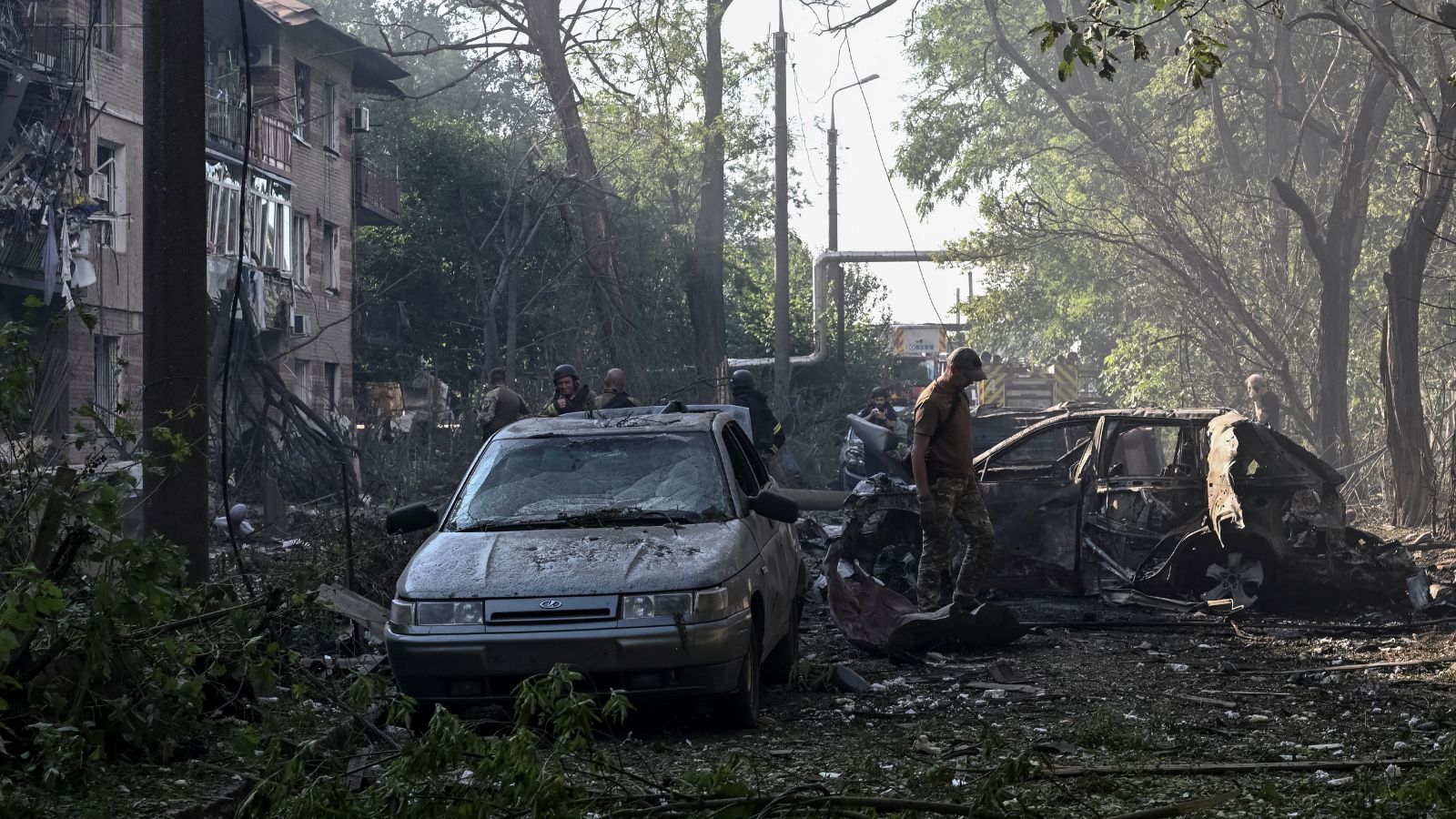
The fragile peace in the Middle East didn't even last a month.
If you thought the Islamabad Memorandum signed at the Palace of Versailles in June would actually end the war with Iran, you were wrong. The diplomatic illusion is dead. In its place is a terrifying new cycle of violence, and it's spreading across the Persian Gulf and the Strait of Hormuz like wildfire.
Right now, the United States is launching wave after wave of intense air and naval strikes against Iranian military targets. Tehran is firing back, targeting American installations and hitting Gulf Arab states with missiles and drones. The strategic waterway that carries a fifth of the world’s liquefied natural gas and oil is basically a live combat zone.
This isn't just another flare-up. It's the collapse of a high-stakes peace deal and a direct clash over who controls the global economy's most vital choke point. If you are trying to make sense of why we're back on the brink of a massive regional war, here is exactly what’s happening on the ground, why the diplomacy failed, and what it means for your wallet.
How We Got Here: From the February Blasts to the Versailles Mirage
To understand why the current fighting is so intense, we have to look back at how this war started.
On February 28, 2026, the US and Israel launched a massive, coordinated military campaign codenamed Operation Epic Fury. The goal was to destroy Iran's nuclear and ballistic missile capabilities. The initial strikes were devastatingly effective. They targeted leadership compounds in Tehran, reportedly killing Supreme Leader Ali Khamenei and a large portion of the military high command.
What followed was forty days of relentless combat. Iran struck back at US bases and regional allies, and they temporarily shut down the Strait of Hormuz. Realizing that a prolonged conflict would trigger a catastrophic global depression, international mediators scrambled to find an exit ramp.
That exit ramp was supposed to be the June 17 Islamabad Memorandum.
Signed remotely by President Donald Trump at Versailles and Iranian President Masoud Pezeshkian in Tehran, the deal was a temporary fix. The terms were simple:
- Iran would stop attacking commercial ships and keep the Strait of Hormuz open.
- The US would unfreeze billions of dollars in Iranian assets and ease oil sanctions.
- Both sides would use a 60-day window to negotiate a permanent nuclear agreement.
Critics immediately blasted the deal, calling it a desperate act of appeasement because the US had failed to achieve its ultimate goal of total regime change. But for a brief moment, the oil markets stabilized. Shipping companies breathed a sigh of relief.
That relief lasted less than three weeks.
The Trigger: Tolls, Tankers, and a Battle for the Sea Lanes
The peace deal didn't fail because of a sudden misunderstanding. It failed because the core issues of sovereignty and money were never truly resolved.
Under the terms of the interim agreement, Iran asserted that it had the right to manage maritime traffic through the Strait of Hormuz. Tehran took this a step further, suggesting that it should be allowed to charge transit fees or tolls on foreign vessels passing through its territorial waters.
The US and the international community flatly rejected this. To bypass Iranian demands, the US military and the UN's International Maritime Organization tried to enforce an alternate shipping route. This route ran closer to the coast of Oman, safely outside the reach of Iran's coastal defenses.
Iran saw this alternate route as a blatant violation of the peace deal. Their response was swift and violent. Iranian forces began harassing and attacking ships using the Omani route.
The breaking point came when Iran launched cruise missiles at two tankers, the Mombasa and the Al Bahiyah, setting both vessels ablaze. A crew member went missing, and several others were wounded. Immediately after the attack, Iran's Revolutionary Guards declared that the Strait of Hormuz would remain completely closed to commercial traffic "until the end of American interventions in this region".
Trump's reaction was typical of his foreign policy style. He declared the June peace deal "over".
But he didn't just order airstrikes. He threw a massive financial curveball into the mix. Trump announced that the US was reinstating its naval blockade on Iranian ports. Then he added that the US military would begin collecting a 20% "reimbursement" or toll on cargo passing through the Strait of Hormuz to pay for American security operations.
Suddenly, a localized security dispute turned into a literal battle for economic control of the world’s most important shipping lane.
Inside the Escalation: CENTCOM Strikes and Iranian Blowback
The military response from the US has been massive. According to US Central Command (CENTCOM), American fighter jets, naval warships, and drones have hit dozens of military installations across southern and western Iran.
The strikes have focused heavily on coastal infrastructure to dismantle Iran's ability to launch anti-ship missiles and deploy suicide drones. Bombs have rained down on key coastal hubs:
- Bandar Abbas: Iran's primary naval base near the strait.
- Qeshm Island: A strategic island used as a launching pad for Iranian fast-attack craft.
- Abu Musa, Jask, and Konarak: Coastal outposts housing radar sites, air defenses, and missile batteries.
On Saturday night alone, US forces hit 140 targets. The next night, they launched another heavy wave of strikes. CENTCOM insists these operations are purely defensive, meant to protect commercial sailors and maintain the freedom of navigation. Admiral Brad Cooper accused Iran of acting like a pirate state, pointing out that several commercial ships had been struck, leaving civilian mariners dead or missing.
But Iran is refusing to back down. They know they can't match the US military in a conventional dogfight, so they're using asymmetric warfare to raise the pain threshold for everyone else.
Shortly after the US strikes began, the Revolutionary Guards launched drone and missile barrages across the Gulf. They didn't just target US military sites in Kuwait and Bahrain. They also targeted key infrastructure in the United Arab Emirates, Qatar, and Jordan.
Kuwait reported that its border posts and an offshore oil platform were hit. The UAE's air defenses were forced to intercept incoming threats, leaving local populations on edge and reporting minor injuries from falling shrapnel.
Iran’s message to its neighbors is loud and clear: if our oil can't flow through the Strait of Hormuz, yours won't either.
The Economic Fallout: What This Standoff Means for Oil and Shipping
This military escalation is a nightmare scenario for the global economy.
The Strait of Hormuz is only 21 miles wide at its narrowest point, yet it is the arterial vein of global energy. In peacetime, roughly 20 million barrels of oil pass through it every single day. There are very few realistic bypasses. Pipelines across Saudi Arabia and the UAE can only handle a fraction of that volume.
The moment the news of the renewed strikes and the tanker attacks hit the wires, global energy markets panicked. Brent crude oil and US benchmark WTI both jumped, with WTI surging above $74 a barrel and Brent hitting a one-month high of over $84.
While these prices are still below the $120 peaks we saw during the early days of the war in March, the upward trend is dangerous. High energy costs act like a hidden tax on everything. They drive up transportation costs, make manufacturing more expensive, and feed right back into the inflation that central banks have been fighting for years.
For shipping companies, the risk is becoming unbearable. Insurance premiums for vessels transiting the Persian Gulf have skyrocketed. Some major maritime carriers are already ordering their fleets to avoid the area entirely, routing ships all the way around the southern tip of Africa instead.
That detour adds weeks to transit times, burns massive amounts of extra fuel, and dramatically drives up the retail cost of goods worldwide.
What Happens Next: Preparing for a Long Blockade
The big mistake the US and its allies keep making is assuming that military pressure will force Iran into a corner.
Tehran’s leadership views control of the Strait of Hormuz as their ultimate survival tool. As an adviser to the supreme leader recently put it, the ability to shut down the strait is more valuable to Iran than "dozens of atomic bombs". They are willing to absorb immense military damage and economic hardship because they believe the West will break first under the pressure of soaring energy prices.
So, how do we navigate this crisis? If you are an investor, business owner, or energy consumer, here is what you need to focus on right now:
- Watch the Insurance Markets: The true indicator of risk in the Gulf isn't military press releases—it's maritime insurance rates. If war-risk premiums continue to rise, expect a total halt of commercial shipping through Hormuz, regardless of what CENTCOM says about keeping the channel open.
- Prepare for Supply Chain Volatility: The disruption isn't just about oil. The Gulf is a major transit route for consumer goods, agricultural products, and chemicals. Diversify your supply lines now to avoid getting caught in the shipping bottlenecks that are bound to worsen over the next few weeks.
- Hedge Against Energy Inflation: With Trump's 20% toll proposal and the new naval blockade in place, the era of cheap, stable energy is temporarily on hold. Businesses should look into locking in energy contracts or looking toward alternative power sources to shield themselves from sudden price spikes.
The hard truth is that there is no quick military fix to this crisis. The US can bomb radar sites and missile batteries all day long, but as long as Iran has access to asymmetric drone technology and cruise missiles, they can make transiting the Gulf a deadly gamble.
The Versailles peace deal was a fragile band-aid on a deep, systemic wound. Now that the band-aid has been ripped off, we are looking at a long, grinding war of attrition in the world's most critical maritime channel.