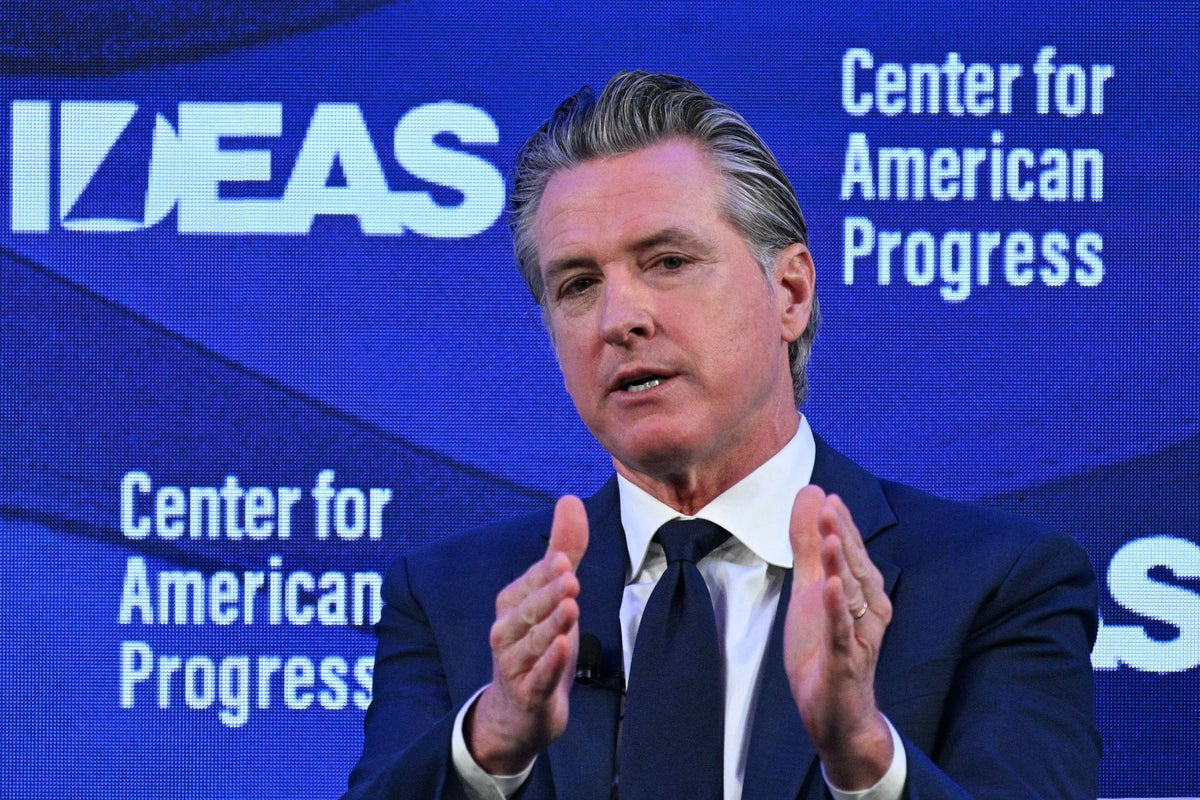
Gavin Newsom wants you to look at California and see a model for America. His critics look at the exact same state and see a warning sign.
The California governor just signed a massive $352 billion state spending plan. It is his final budget before leaving office in January, and it lands right as he considers a presidential run. For anyone trying to figure out what a Newsom presidency would look like, this document is the blueprint. It shows a leader who loves big progressive victories but isn't afraid to use accounting tricks and targeted tax hikes to kick difficult financial choices down the road.
Conservatives are already using the record-breaking price tag as ammunition, calling it a preview of a reckless federal spending spree. Newsom paints a completely different picture. He released a video address bragging about free school meals, expanded broadband access, and minimum wage hikes for fast-food workers. He basically dared the rest of the country to match California's scale, declaring that responsibility and ambition can live on the same balance sheet.
But a closer look at the numbers shows that balancing this massive budget required some serious financial gymnastics.
The Illusion of a Clean Balance Sheet
California is currently riding an economic high. A surging stock market and strong national economy handed the state a massive $60 billion revenue windfall. In a normal state, a windfall like that means a massive surplus. In California, it barely covered the holes.
Despite the cash infusion, Newsom and democratic legislative leaders had to scramble to cover structural deficits. They avoided deep, immediate cuts to social services, but they didn't actually solve the underlying spending problem. They just delayed the pain.
The final deal pushes billions of dollars in planned cuts to Medi-Cal services, dental benefits for undocumented residents, and clinic reimbursements into July 2027. Conveniently, that is well after Newsom leaves the governor's mansion. The next administration will have to deal with the fallout.
To make the math work right now, the budget relies on targeted tax increases that avoid the political third rail of broad income tax hikes. The plan implements a new sales tax on computer software, caps business tax credits, and increases taxes on commercial healthcare providers. It also holds back $3.9 billion in constitutionally guaranteed funding from K-12 schools as a cushion in case the state's economic forecasts are too optimistic.
A National Preview or a Local Warning
This strategy is exactly why national Republicans are hyper-focused on Sacramento. They see California's fiscal management as a preview of how Newsom would handle the federal budget. If you can't structurally balance a state budget during a massive stock market boom, how do you expect to manage national debt?
The nonpartisan Legislative Analyst's Office even raised a red flag, pointing out that running operating deficits during a revenue boom of this magnitude is a major warning sign.
Yet, Newsom's allies argue this is exactly how government should work. The budget adds 22,700 state-funded childcare slots and doubles down on homelessness funding with $900 million for counties. For progressive voters nationally, these aren't examples of reckless spending. They are essential investments. Newsom is betting that primary voters will care more about the programs he protected than the accounting mechanisms he used to pay for them.
What This Means for the Next Governor
By shielding immigrant communities and healthcare programs from cuts this year, Newsom secures his progressive legacy as he exits the state stage. He gets to walk away pointing to a record $23 billion in total state reserves, including $14.4 billion in the state's Rainy Day Fund. It looks great on a campaign brochure.
The reality for the next governor is much less glamorous. The budget explicitly sets up a scenario where operating deficits are projected to exceed $10 billion annually through 2030. The next administration will immediately face the compounding pressure of the delayed 2027 healthcare cuts and structural spending that consistently outpaces stable tax revenue.
Newsom has successfully insulated his political timeline from California's structural budget reality. If he makes a run for the White House, he will point to the $23 billion in reserves as proof of his discipline. His opponents will point to the billions in borrowed money, corporate tax hikes, and delayed cuts as proof of a shell game. Both arguments are rooted in the exact same budget.
If you want to track how this fiscal strategy holds up, keep a close eye on California's tax revenue reports over the next twelve months. The stability of software sales tax collections and corporate revenue caps will tell us whether this budget is a sustainable model or a temporary patch.