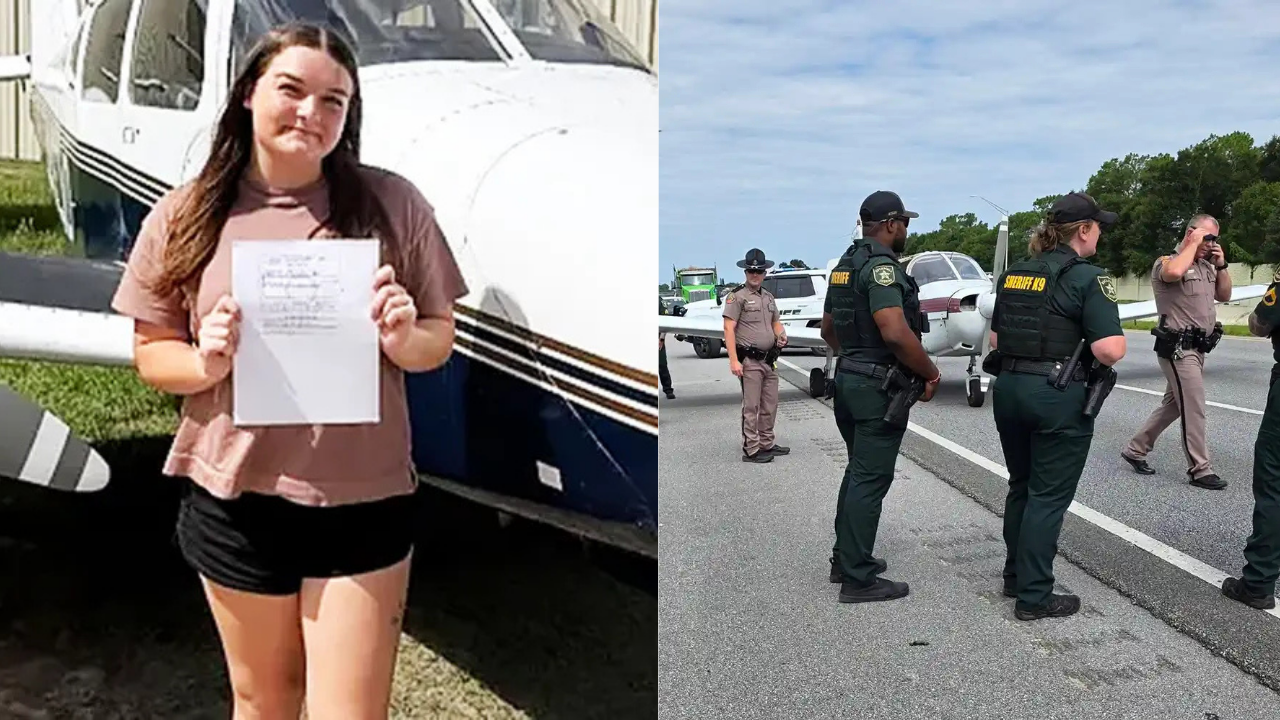
Engine failure over a crowded highway leaves you with seconds to live, not minutes to think. When 21-year-old flight instructor Emily Shelton faced this nightmare over Pensacola, Florida, she didn't panic. Instead, she threaded a single-engine Piper aircraft through moving traffic and under an overhead sign to put her student down safely on Interstate 10.
Most people assume emergency highway landings happen in Hollywood movies or quiet rural stretches. This one happened on a busy Monday morning commute. Let's look at what actually went down, how proper training saved two lives, and why aviation experts are calling this a masterclass in airmanship.
When the Cockpit Fills With Smoke and Silence
The flight started like any other standard training routine out of Pensacola. Shelton was flying with a student who was logging his very first flight lesson. That is baptism by fire of the highest order.
Cruising aloft, things went sideways fast. The cockpit filled with the distinct, alarming smell of burning oil, and instrument panels flashed a grim reality: oil pressure had plummeted to critically low levels.
Air traffic control audio paints a picture of absolute professional calm. Shelton realized immediately that turning back to the airport was mathematically and mechanically impossible. The engine was dying, altitude was bleeding off, and options evaporated by the second.
She looked down at Interstate 10 near Ninth Avenue. It wasn't an ideal runway. It was choked with morning commuters, semi-trucks, and steel sign gantries. But it was the only piece of flat, open pavement within gliding distance.
Threading the Needle Through Heavy Traffic
Executing a forced landing on a highway requires precise calculation. You can't just point the nose down and hope for the best. You have to manage energy, avoid power lines, clear overhead structures, and find a gap in moving vehicles large enough for a wingspan.
Dashcam footage captured by truck driver Eric Jordan showed just how razor-thin the margins were. Shelton guided the Piper aircraft cleanly under an overhead highway sign gantry, skimming above traffic before setting the wheels down smoothly on the asphalt.
Even more impressive? Once the plane touched down, she managed to steer it safely onto the shoulder, avoiding any collisions with cars. Both occupants walked away completely uninjured.
Naturally, internet culture took over shortly after. Shelton went viral on TikTok with a brilliantly casual post-flight reaction directed at delayed commuters: "My fault for the traffic guys."
What Pilots Say About Highway Landings
Aviation veterans immediately weighed in on the incident, and consensus pointed straight to exceptional training. George Sigler, a retired Navy and commercial pilot who also works as a flight instructor, noted that while highways are never a pilot's first choice, the crew simply had no alternative.
With roughly 1,300 flight hours under her belt, Shelton's experience allowed her to prioritize the most critical rule of emergency management: fly the airplane first. Panic kills engine-out situations faster than mechanical failure ever could.
Most student pilots freeze when things go wrong. Having an instructor with deep situational awareness next to them turned a potential catastrophe into a textbook emergency landing story.
If you ever find yourself facing high-stakes pressure, take a page from the cockpit. Assess your constraints, discard the options that won't work, and execute the best available choice with absolute conviction.