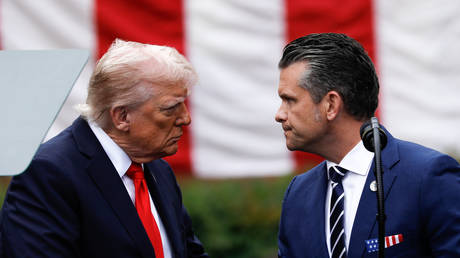
The headlines hit hard over the summer of 2026. Word leaked from a Cabinet retreat at Camp David that President Donald Trump had laid into Defense Secretary Pete Hegseth over a critical shortage of military munitions. According to reporting from The Washington Post, Trump felt completely blindsided. He thought the issue of dwindling missile stockpiles had already been solved, only to discover it was actively boxing in military options regarding the ongoing conflict with Iran.
Naturally, the administration went into overdrive to kill the story. White House Press Secretary Karoline Leavitt labeled the claims as "100% fake news," insisting the interaction literally never happened and that the president has total confidence in his defense chief. Pentagon spokesperson Sean Parnell echoed that stance, calling reports of internal finger-pointing and empty warehouses entirely fictional.
So, what is actually going on behind closed doors?
The Reality of Strained Stockpiles
You don't need insider clearance to realize that modern high-intensity conflicts burn through inventory at a staggering pace. When a military starts firing hundreds of Tomahawk cruise missiles and chewing through thousands of Patriot and THAAD air defense interceptors in a matter of weeks, supply chains feel the squeeze. Independent defense analysts, including researchers at the Center for Strategic and International Studies, have pointed out that replacing these specialized systems isn't something you can do overnight. Manufacturing lines take months—sometimes years—to scale up to meet wartime demands.
Trump himself took to Truth Social to push back against the narrative, writing that the United States possesses far more munitions than anyone else on Earth. He even went as far as calling the leak of internal disagreements treasonous. Yet, the underlying operational reality remains hard to ignore.
How Shortages Shape Foreign Policy
When defense inventories run low, strategy has to change. This dynamic helps explain why Trump publicly walked back plans for what he described as the largest military strike against Iran since World War II. When your interceptor counts for critical air defense systems drop significantly, commanders have to calculate every single launch.
You cannot maintain an aggressive posture indefinitely if your restocking rate lags behind your consumption rate. That tension creates friction inside any administration, regardless of how unified a front officials present to the public.
To combat these shortfalls, Hegseth and other top defense officials have requested an additional 67 billion dollars from Congress aimed squarely at replenishing weapon inventories and expanding domestic production capacity. Whether lawmakers can push that funding through quickly enough to make a practical difference on the ground is the real question facing military planners right now.
Don't expect the debate over military readiness to quiet down anytime soon. The friction between political messaging and logistical limits is a permanent fixture of wartime governance.