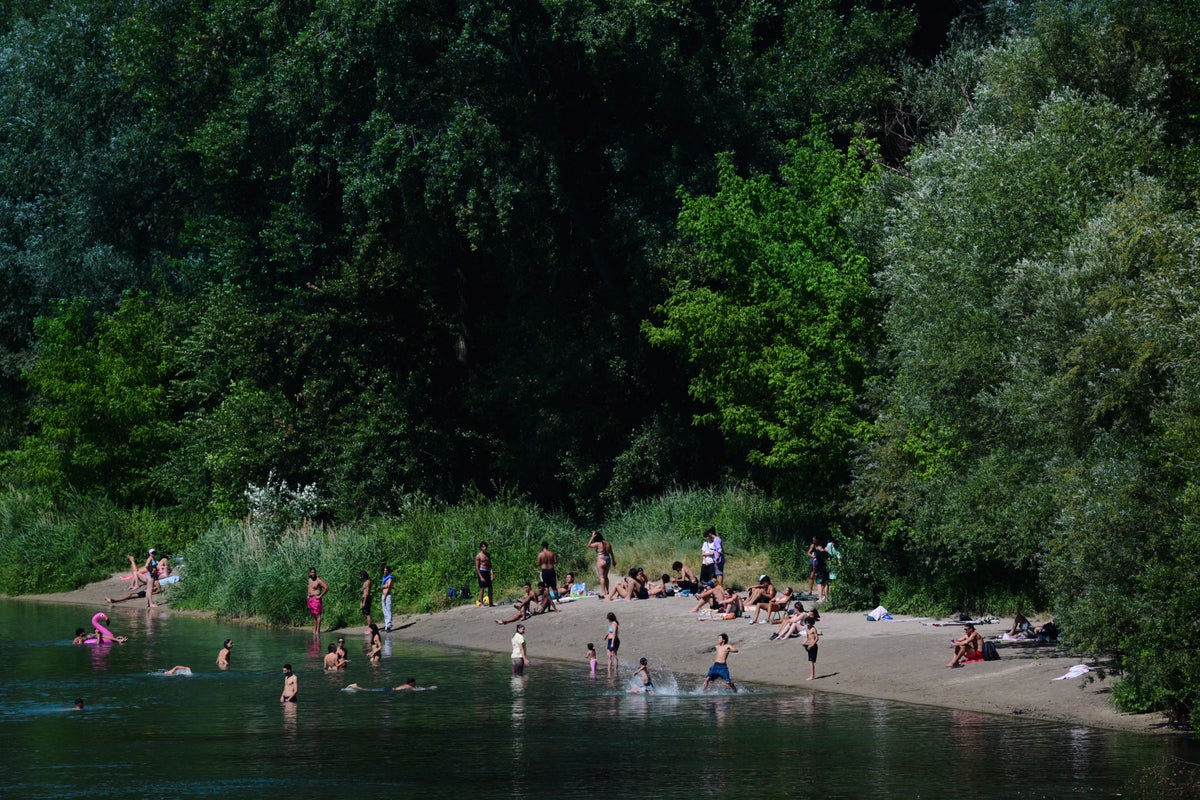
You think you are just cooling off. The air is thick, suffocating, hitting 40 degrees Celsius in the shade, and the water looks like paradise. But moving water does not care about your fitness, your age, or your athletic dreams.
The tragic death of 21-year-old French footballer Kenzo Kies is a brutal reminder of this reality.
On Monday, June 22, 2026, Kies and three friends went down to the banks of the Rhône River near Lyon. They were desperate to escape the extreme heatwave pinning down France. By Wednesday, the young En Avant Guingamp winger was dead, joining a rapidly growing list of heatwave-related drowning victims across the country.
This is not an isolated accident. It is part of a massive summer crisis that has caught local authorities completely off guard.
The Rising Star Who Vanished in the Currents
Kenzo Kies was not just an ordinary swimmer. He was an elite athlete in peak physical condition. Born in Lyon in 2005, he spent his childhood climbing the ranks of the French football system.
He started out in the youth setup of powerhouse club Olympique Lyonnais back in 2010. He spent eight years developing his skills there before moving over to AS Saint-Étienne. He lived and breathed football at Saint-Étienne’s Robert-Herbin Sports Center for seven long years, earning a reputation as a talented, quiet, and deeply respected winger.
Just last summer, Kies signed with Ligue 2 side En Avant Guingamp, joining their reserve team up in Brittany. His whole life was ahead of him.
When news broke of his death, the French football community was shattered. Saint-Étienne released a statement saying their youth ranks are in deep mourning for a young man nobody will ever forget. Guingamp extended their deepest support to his family during what they called a painful ordeal. Next season, Saint-Étienne plans to honor him with a formal tribute at their Geoffroy-Guichard Stadium.
But behind the emotional tributes lies a dark, frustrating reality. Kies died in a section of the river where swimming is strictly illegal.
What Happened at the Feyssine Falls
The emergency calls came in around 5:30 p.m. on Monday. Kies and his friends had gathered near the Parc de la Feyssine, an area known for the Feyssine Falls in eastern France. The heat in Lyon was unrelenting, hovering around 38°C.
The group jumped into the water to cool down. Within minutes, the river turned into a trap.
The Rhône looks calm on the surface in certain stretches, but underneath lies a complex network of violent currents, sudden drop-offs, and lethal whirlpools. The four young men were instantly swept away by the fast, choppy water.
Emergency rescue crews and divers rushed to the scene. They managed to pull three of the young men out of the water. Two of them did not even need medical attention, while a third was resuscitated and hospitalized in stable condition.
Kies was not so lucky. He vanished beneath the surface.
Rescue divers searched the waters frantically. By the time they located and pulled him out, he had been trapped underwater for roughly 50 minutes. Paramedics attempted resuscitation on the riverbank and rushed him to a nearby hospital, but the lack of oxygen had done its damage. Doctors declared him brain dead, and he passed away two days later.
Why Elite Athletes Still Drown
People often wonder how a professional or semi-professional athlete can drown so quickly in a river. You assume that physical strength, lung capacity, and sheer stamina would give someone like Kies an edge over the water.
That assumption is completely wrong.
When temperatures scream past 40°C and you jump into a cold river, your body experiences something called thermal shock, or hydrocution. The sudden temperature drop causes your blood vessels to constrict instantly. This spikes your blood pressure, forces a sudden intake of breath, and can cause immediate panic or even cardiac arrest. If you inhale water during that initial gasp, you are in immediate trouble.
On top of hydrocution, river mechanics are vastly different from swimming pools or even the ocean.
- Undertows and Whirpools: Riverbeds are uneven. Water rushing over rocks and drops creates invisible downward suction that can pin an adult to the bottom.
- Debris Traps: Fallen branches and submerged rocks trap swimmers. Once the current pins you against an underwater obstacle, the force of the water makes it nearly impossible to break free.
- Exhaustion: Fighting a five-knot river current is like trying to sprint up a collapsing sand dune. Even a pro footballer will tire out in less than two minutes.
France is Facing a Water Safety Crisis
The loss of Kenzo Kies is part of a staggering national emergency. France has been cooking under record-breaking temperatures. The national weather agency, Météo-France, noted that the country hit its highest-ever national average temperature for consecutive days this June, with major cities like Paris regularly breaching the 40°C mark.
With public pools overcrowded and air conditioning rare in many traditional French apartments, millions of people are running toward wild waters.
They are ignoring the warning signs.
French Prime Minister Sébastien Lecornu revealed a terrifying statistic on Tuesday. In just one single week starting June 18, at least 40 people lost their lives to drowning in rivers, canals, and reservoirs across the country.
The majority of those victims are young people.
Sports and Youth Minister Marina Ferrari went on national radio to issue a blunt warning to the public. She emphasized that swimming in unsupervised, prohibited areas during a heatwave is not something to be taken lightly. Yet, despite the presence of police patrols and warning signs, locals and tourists continue to bypass fences to access restricted spots along the Rhône, the Seine, and various shipping canals.
How to Protect Yourself in Extreme Heat
If you find yourself in a major heatwave and need to cool off, you have to prioritize basic survival over convenience. Do not assume a body of water is safe just because other people are in it.
Stick to Guarded Zones
Only swim in designated areas where lifeguards are actively watching the water. If a sign says Baignade Interdite (Swimming Prohibited), stay out. Those signs are usually put up because of hidden undertows or chemical contamination, not just to annoy you.
Ease into the Water
Never dive or jump directly into cold water when your body is overheated from the sun. Splash water on your chest, neck, and face first. Give your cardiovascular system a minute to adjust to the temperature difference so you avoid hydrocution.
Look for Shade and Public Cool Spaces
Instead of risking a river, look for municipal cooling centers, air-conditioned museums, or shaded parks. Many European cities have started installing temporary misting stations and keeping public fountains running to help people manage daytime highs without risking their lives in wild currents.
The death of Kenzo Kies is a tragedy that should have never happened. A young talent was lost too soon, leaving a massive void in his family and his clubs. As heatwaves become more intense and frequent, respecting the power of open water is a matter of life and death. Stay out of prohibited rivers, read the posted signs, and do not let a quick dip become your final moments.