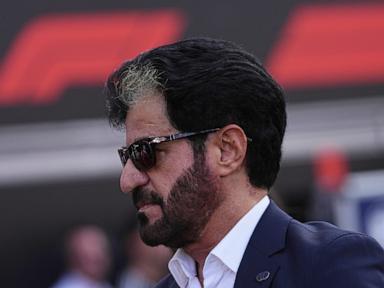
Mohammed Ben Sulayem is not leaving anytime soon. If you thought the governing body of global motorsport valued the classic checks and balances of sports governance, the recent votes in Macau just shattered that illusion. The FIA officially removed the three-term limit for its presidency. This means the 12-year cap introduced by previous president Jean Todt is dead.
The decision comes straight from the Extraordinary General Assemblies in Macau. Member clubs voted overwhelmingly to scrap the rule. On paper, the federation says it is all about administrative consistency. They want the presidency to match other internal boards that do not have term limits. In reality, it looks like a textbook consolidation of power.
This change completely reshapes how international racing operates. It hands immense, long-term influence to an incumbent leader who has never shied away from public friction with Formula 1 teams and its commercial rights holder, Liberty Media. If you want to understand where racing is headed, you have to look at the mechanics of this rule change.
The Sudden Power Shift in Macau
The rule change did not happen in a vacuum. Ben Sulayem took the reins at the tail end of 2021. He secured a second term in late 2025 under circumstances that left many insiders scratching their heads. He ran completely unopposed. Now, with the term limits removed for president of auto racing governing body the FIA, his path to an indefinite stay is open.
The federation argued that removing the cap aligns the presidency with the World Councils and the Senate. When reporters pushed for a deeper explanation of why they abolished limits instead of introducing them to the other boards, the official response was telling. The organization could not give a specific answer. Instead, they pointed to American sports. They cited NFL Commissioner Roger Goodell, who has been in charge since 2006, as an example of how long tenure can build a massive global brand.
But motorsport is not the NFL. The FIA is a complex regulator overseeing everything from grassroots karting to multi-billion-dollar global entertainment properties. Stripping away tenure ceilings changes the entire political ecosystem.
How the Election System Blocks Challengers
Getting on the ballot to challenge a sitting FIA president was already incredibly difficult. The latest updates to the statutes just made it harder. To understand how locked down the position is, look at what happened in the 2025 election.
Under the rules, anyone wanting to run for president cannot just announce a candidacy. They must submit a full "Presidential List" containing ten names. This team must include a president, a senate president, two deputy presidents, and seven vice-presidents representing specific geographic regions across the globe. One of those regions is South America.
During the last election cycle, the list of available, qualified individuals from South America who could fill that specific vice-presidential slot for sport was exactly one person long. That person was Fabiana Ecclestone, wife of former F1 boss Bernie Ecclestone. She was already an active part of Ben Sulayem’s campaign. Because no other South American candidate was available or eligible to join a rival ticket, prospective challengers could not complete their required ten-person slates. Their campaigns died before they even reached a vote.
Critics like Tim Mayer, who wanted to mount a challenge, openly stated that term limits are a vital safeguard against centralized control. Legal challenges also emerged. Swiss racing driver Laura Villars took the matter to the French courts in late 2025, attempting to halt the uncontested election by arguing the rules effectively barred any fair competition.
Instead of opening the doors after that controversy, the assemblies in Macau added extra layers of armor for the incumbent. They introduced two new hurdles for anyone thinking about running in the future.
- Candidates must now demonstrate extensive, verifiable experience within an FIA member club or official body before they can even apply. This stops outside business executives or clean-governance reformers from entering the race.
- The deadline to submit the entire ten-person vice-presidential team has been stretched. Challengers used to have 49 days before the election to finalize their list. Now they need to lock it in 100 days in advance.
Finding ten high-profile international sports diplomats willing to publicly oppose an incumbent more than three months before an election is a massive ask. It requires people to stick their necks out early, giving the sitting administration plenty of time to shore up political support among the voting member clubs.
The Financial Picture Behind the Politics
It is much easier to pass sweeping structural changes when the books look good. Along with the constitutional adjustments, the FIA dropped its latest financial reports. The governing body achieved an operating profit of 6.7 million euros, roughly 7.6 million dollars, for the 2025 financial year. That represents a 43% jump over the previous year.
Ben Sulayem used these numbers to validate his path. He noted that the choices made by members show clear progress toward financial discipline and long-term stability. When an organization is in the black, member clubs are rarely inclined to rock the boat. They receive funding, development grants, and support for their local mobility and sporting clubs. If the money flows consistently, the votes follow.
But financial success in the short term does not wipe away the underlying governance concerns. International sports bodies have a long history of issues when leaders stay in office for decades without real opposition. Look at the history of FIFA or various Olympic committees. The 12-year cap was put in place by Jean Todt specifically to prevent the presidency from becoming a lifetime appointment.
Todt took over after Max Mosley's long, often tumultuous reign ended in 2009. The cap was celebrated as a modernizing step. Throwing it out after just one leadership cycle feels like a major step backward for transparent sports governance.
The Age Limit Problem
There is still one remaining hurdle on the books that prevents an infinite presidency, though few expect it to stay untouched forever. The current FIA statutes say that any candidate for president, along with several other top-tier officials, must be under the age of 70 at the time of the election.
Ben Sulayem is currently 64. When the next election cycle comes around, he will be 68. That means under the current age restriction, he would only be eligible to run for one more four-year term. However, paddock rumors and reports indicate that there is already an active interest in reviewing or removing that age cap next.
If the age limit falls next, the transformation will be total. The presidency will shift from a strictly regulated, time-limited civil service role back into an old-school regime where an individual rules until they choose to walk away.
What This Means for Formula 1
The relationship between the FIA and FOM, Formula One Management, has been tense for years. We have seen public disagreements over everything from potential new team entries like Andretti Global to comments about the commercial valuation of the sport.
Liberty Media wants a stable, predictable partner to maximize entertainment revenue and expand the calendar. Ben Sulayem has frequently asserted the FIA's role as the rightful owner and regulator of the championship, refusing to let the regulator be treated as a simple rubber-stamp committee.
With term limits gone, the power dynamic shifts. F1 executives now realize they cannot simply wait out an adversarial president. In the past, commercial entities could plan around a maximum 12-year window, knowing a change in leadership was guaranteed by the clock. Now, they must figure out how to work with the current administration indefinitely. This could lead to deeper collaboration, or it could set the stage for an even larger ideological war over who truly controls the pinnacle of motorsport.
The change does not stop at the very top either. The removal of these limits affects other specialized groups inside the federation, including the anti-doping committee and the head of the F1 cost-cap committee. These technical roles are vital for maintaining the competitive integrity of racing. Keeping the same individuals in charge of cost-cap enforcement for decades creates a status quo that could favor established teams who understand how to navigate those specific relationships.
Next Steps for Motorsport Observers
If you want to keep tabs on how this power consolidation plays out, stop watching just the track action and start tracking these specific indicators.
- Watch the French court rulings regarding Laura Villars’ lawsuit against the federation. A legal verdict challenging the validity of uncontested election structures could force the assembly to rethink its candidate criteria.
- Monitor the upcoming governance meetings for any proposals regarding the deletion of the age 70 rule. If that amendment appears on the agenda, it confirms the push for a truly indefinite presidency.
- Track the negotiations for the next Concorde Agreement, the binding contract between the FIA, F1, and the teams. The terms of that document will show exactly how much leverage the newly fortified presidency has secured against commercial interests.
The era of the rotating, time-limited regulator is over. Power in motorsport is concentrating at the top, and the rules of the game have fundamentally changed.