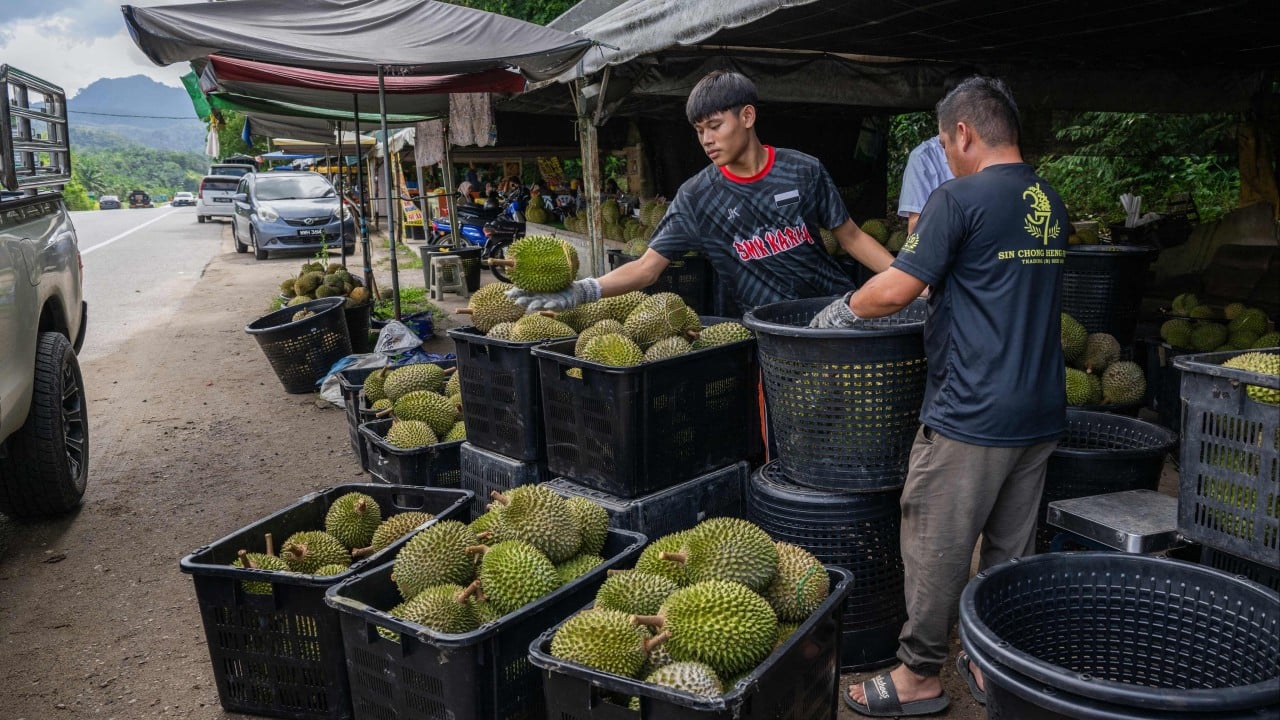
You would think that when a luxury commodity loses half its value overnight, criminals would move on to better targets. That is not happening in the local fruit industry right now. Malaysia is currently riding a massive "durian tsunami," an unprecedented supply glut that has sent prices for premium varieties like Musang King and Black Thorn crashing to historic lows. Yet, Malaysia premium durian thieves are as active and brazen as ever.
From roadside stalls in Penang to remote orchards in Malacca, growers and traders are waking up to find their stocks wiped out. The economics of this black market defy normal logic. When supply skyrockets and retail prices plummet, the street value of stolen fruit drops too. So why are people still risking jail time, dog bites, and violent confrontations over a fruit that is suddenly dirt cheap?
The answer lies in the unique nature of the durian trade, structural changes in farming over the past decade, and the pure convenience of an un-trackable cash crop.
Inside the Durian Tsunami
To understand the theft wave, you have to look at the market crash. For years, premium Malaysian durians were treated like gold. High demand from China pushed retail prices to dizzying heights, sometimes exceeding 90 ringgit ($22) per kilogram for top-tier Musang King. This year, everything changed.
A massive planting boom that started around 2015 has finally matured. Back then, thousands of landowners converted oil palm estates into durian orchards, chasing high export profits. Because durian trees take roughly five to ten years to reach full yield, those massive investments hit the market all at once. Combined with perfect weather that caused simultaneous harvests across Johor, Penang, and Perak, the market became flooded.
Prices collapsed by up to 90 percent in some areas. Musang King has sold for as low as six to nine ringgit per kilogram. Black Thorn dropped from its lofty heights to between 13 and 50 ringgit. Regular village durians are practically being given away.
Why Thieves Keep Striking Despite the Price Crash
Standard economic theory suggests that lower prices reduce the incentive for crime. If a basket of Black Thorn fetches a fraction of what it did two years ago, the risk-to-reward ratio changes. But theory does not protect a farm at 3 am. Thieves are still operating because the entry barriers are non-existent, and the fruit remains instantly liquid.
The Cash Value Factor
Even at ten ringgit a kilo, a mature durian tree holds real money. A single tree can drop dozens of fruits in a single night. If a thief sneaks into an orchard and fills a couple of sacks with 20 or 30 kilograms of fruit, they can easily flip it to unscrupulous roadside sellers for quick cash. It is fast money with zero paper trail.
Pure Vulnerability
Unlike electronics or luxury goods, durians grow out in the open on sprawling acreage. Many older orchards are not completely fenced, relying on traditional boundary respect between neighbors. You cannot lock up a hillside. When the fruit ripens, it falls naturally to the ground in the early hours of the morning. This creates a perfect window for thieves to walk in, pick up the rewards, and walk out before the farmhands even start their shifts.
Rising Violence and Desperation
The nature of these thefts is getting darker. It is no longer just opportunistic hikers grabbing a single fruit. In Jasin, Malacca, a group of machete-wielding robbers raided a durian orchard in broad daylight, threatening two teenage caretakers before loading four massive baskets of premium IOI durians into their car. They even stole a motorcycle to make their getaway.
In Penang, a 27-year-old stall owner named Wenny Ooi reported two consecutive break-ins at her family stall. The first time, thieves walked off with two baskets of prized Black Thorn. Four days later, an armed intruder returned. Ironically, that second thief ended up leaving with a basket of spoiled fruit, but the threat of violence remains a harsh reality for local business owners.
The Flaws in Traditional Orchard Security
Farmers are trying to adapt, but their defensive tactics are hitting hard limits. The geography of rural Malaysia makes absolute security almost impossible.
- Drones: Orchard owners like Tan Chee Keat in Sungai Ara have deployed drones to scan their properties from above. While helpful for spotting flashlights, drones do little to stop thieves who cover their faces and quickly vanish into the dense jungle brush when spotted.
- Guard Dogs: Increasing the number of guard dogs around stalls and farm perimeters helps as a deterrent, but it can only cover static locations. Sprawling mountain orchards are too vast for a few dogs to protect effectively.
- Night Patrols: Farm workers frequently begin collection rounds at 5 am using headlamps. Unfortunately, these lights act as a beacon for thieves lurking in the shadows, letting them map worker movements and raid the opposite side of the hill.
Next Steps for Durian Farmers and Traders
If you run an orchard or a retail operation during this glut, relying on old-school security will cost you. You need to adjust your operational habits to protect what is left of your profit margins.
Shift your harvest timing dynamically. Do not stick to a rigid 5 am schedule that thieves can easily track. Vary the collection times and use night-vision optics instead of bright headlamps whenever possible to keep your movements hidden.
Secure your storage hubs first. Stalls and collection points are softer targets than open fields because fruits are already gathered and sorted. Double down on physical reinforcements, heavy-duty locks, and high-placed, cellular-linked security cameras that alert your phone instantly when motion is detected.
Build a local defense network with surrounding farms. Many traders choose not to report minor thefts because they think the police will ignore them. That is a mistake. Sharing immediate tracking data, vehicle descriptions, and camera footage across a shared group chat allows the community to flag repeat offenders and coordinate with local law enforcement more effectively. Low prices mean every single kilogram counts toward survival. Protect your harvest like the premium asset it still is.