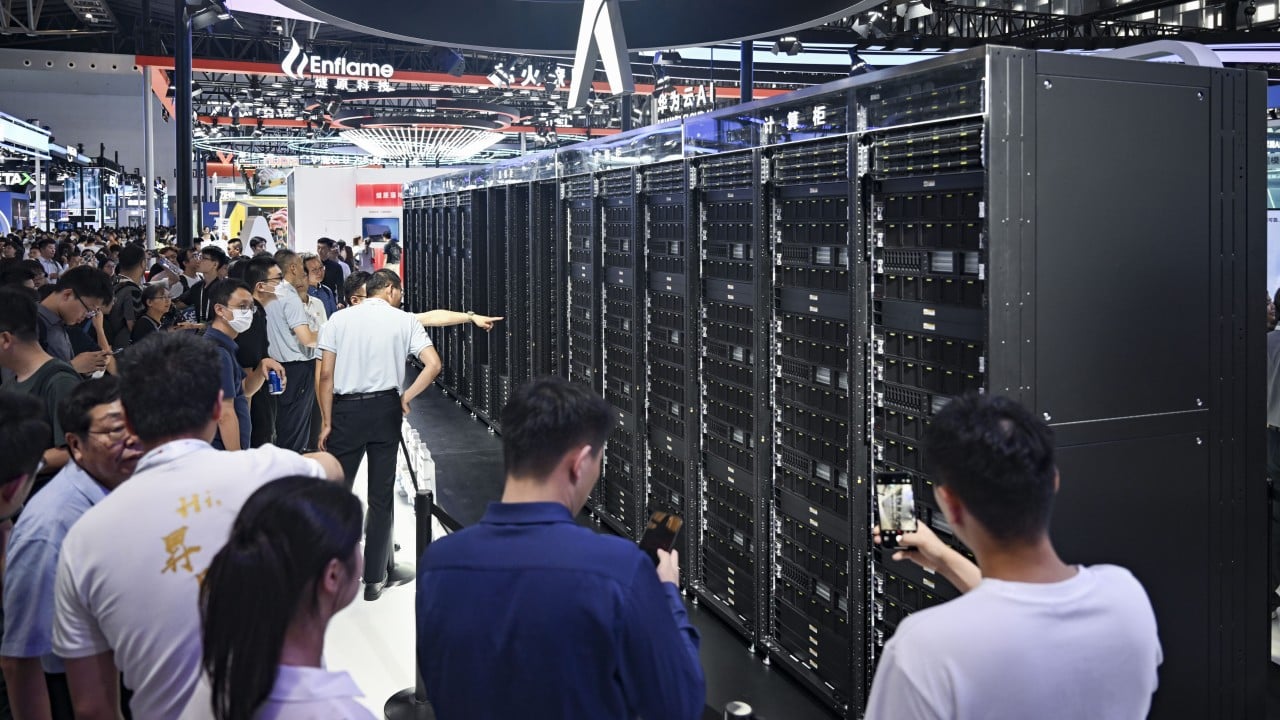
Tech giants are spending billions building massive data centers to power the artificial intelligence revolution. But they forgot to check the forecast. As heatwaves break records across Europe and the United States, the physical infrastructure underneath the cloud is starting to crack. The massive chips required to process AI workloads generate immense heat on their own. When you wrap those servers in a blistering heatwave or expose them to unpredictable tornadoes, the entire system risks a meltdown.
The industry treats climate change like a distant problem for future generations. It isn't. Right now, extreme weather is actively disrupting the global supply of computing power. If tech companies don't rethink how and where they build these digital fortresses, the capital fueling the AI boom could dry up faster than an uncooled server rack.
The Hidden Costs of Frontier Markets
For years, data centers clustered around established hubs like Northern Virginia. Land was available, and the climate was predictable. That era is over. To escape high real estate costs and power constraints, operators are migrating to what the industry calls frontier markets. This year, 64% of data center capacity under construction sits in states like Texas, Ohio, Wisconsin, and Tennessee.
It looks like a smart financial move on paper. In reality, it exposes multi-billion-dollar assets to regional weather chaos they aren't engineered to handle.
Rural and suburban areas often lack decades of reliable localized climate tracking. Developers build without knowing the true environmental risks of the site. According to Zurich Insurance Group, severe weather has become the leading cause of financial loss in its U.S. data center builders' risk portfolio over the past three years. Weather events now drive a staggering one-third of all construction losses for the firm. Patrick McBride, the head of international construction at Zurich, pointed out that the company now insures $3 billion worth of assets exposed to these localized events.
When a tornado sweeps through Ohio or a hail storm hits West Texas, it doesn't just damage a roof. It shreds the massive rooftop cooling systems, HVAC units, and solar arrays that always-on data centers rely on to survive.
Why 79 Percent of Global Data Capacity is At Risk
Data centers are highly sensitive machines. They require a narrow band of temperature and humidity to function without destroying their own silicon. A recent study by climate risk analytics firm First Street revealed that 79% of global data center capacity faces elevated risks from acute climate hazards like flooding, extreme winds, and wildfires.
The threat isn't just theoretical downtime. It hits the bottom line through skyrocketing insurance premiums and emergency repair bills. Joe Macejak, the U.S. property digital infrastructure leader at Marsh Risk, warned that failing to manage these vulnerabilities poses a direct threat to the capital stacks keeping the AI industry alive. Wall Street won't keep funding data centers if insurers refuse to cover them.
Consider what happens during a severe heatwave. Under normal operating conditions, a standard data center uses roughly 40% of its total electricity just to run its cooling systems. When ambient outdoor temperatures spike, that cooling requirement shoots through the roof.
The pressure hits the infrastructure from two sides at once:
- Internal heat generation: Running high-density AI chips requires massive electricity, generating temperatures that can warp hardware within seconds without constant cooling.
- External environmental stress: The outside heat forces cooling pumps to work twice as hard while simultaneous community demand for air conditioning strains the local power grid.
When both happen simultaneously, systems fail. During a recent 38-degree Celsius heatwave in Turin, Italy, underground power cables suffered severe thermal stress. The result was a chain reaction of emergency shutdowns. Michal Tadani, CEO of the analytics platform Rhizome, noted that a single modern facility can consume as much electricity as 100,000 households. When the local grid chokes under a heatwave, the data center goes down with it.
How Big Tech is Forced to Redesign the Cloud
The industry is finally waking up to the fact that climate risk can't be ignored. Operators are scrambling to modify their engineering standards before the next summer season hits.
Companies like Microsoft are building extensive redundant power systems and deploying real-time environmental monitoring tools to track localized grid stress. Hardware manufacturers are also modifying the silicon itself to tolerate hostile conditions. Nvidia redesigned its latest AI server architectures to handle internal coolant temperatures up to 45 degrees Celsius.
That shift matters. Raising the acceptable temperature threshold by a single degree reduces overall cooling energy costs by about 4%.
For the first time, European buyers are explicitly adding a specific climate change factor into their official procurement guidelines. They aren't just buying space for today's weather; they are forcing builders to prove that a facility can operate in the projected temperatures of 2035. Currently, roughly 80% of the world's 9,000 operational data centers sit in regions with sub-optimal climate profiles for high-efficiency cooling. If the industry triples its infrastructure footprint by 2030 as projected, building the same way will guarantee systemic blackouts.
Immediate Steps for Infrastructure Protection
If you run digital infrastructure or manage cloud procurement, stop assuming your vendor has this handled. You need to audit your physical vulnerabilities immediately.
Audit the Local Climate History
Do not rely on regional averages. Analyze the exact historical data for convective storms, flash floods, and localized high-wind events within a two-mile radius of the facility. If the site is in a frontier market, commission independent meteorological modeling instead of relying on outdated municipal records.
Shift to High-Temperature Hardware
When upgrading server racks, prioritize hardware that supports liquid cooling and higher operational thermal thresholds. Moving toward architectures that thrive at higher coolant baselines reduces reliance on vulnerable rooftop chilling units during peak heatwaves.
Secure Alternative Energy Buffers
Relying solely on the public grid during an extreme weather event is a recipe for an outage. Implement on-site power generation buffers, such as industrial battery storage or localized microgrids, capable of sustaining full cooling loads for at least 48 hours without grid assistance.